
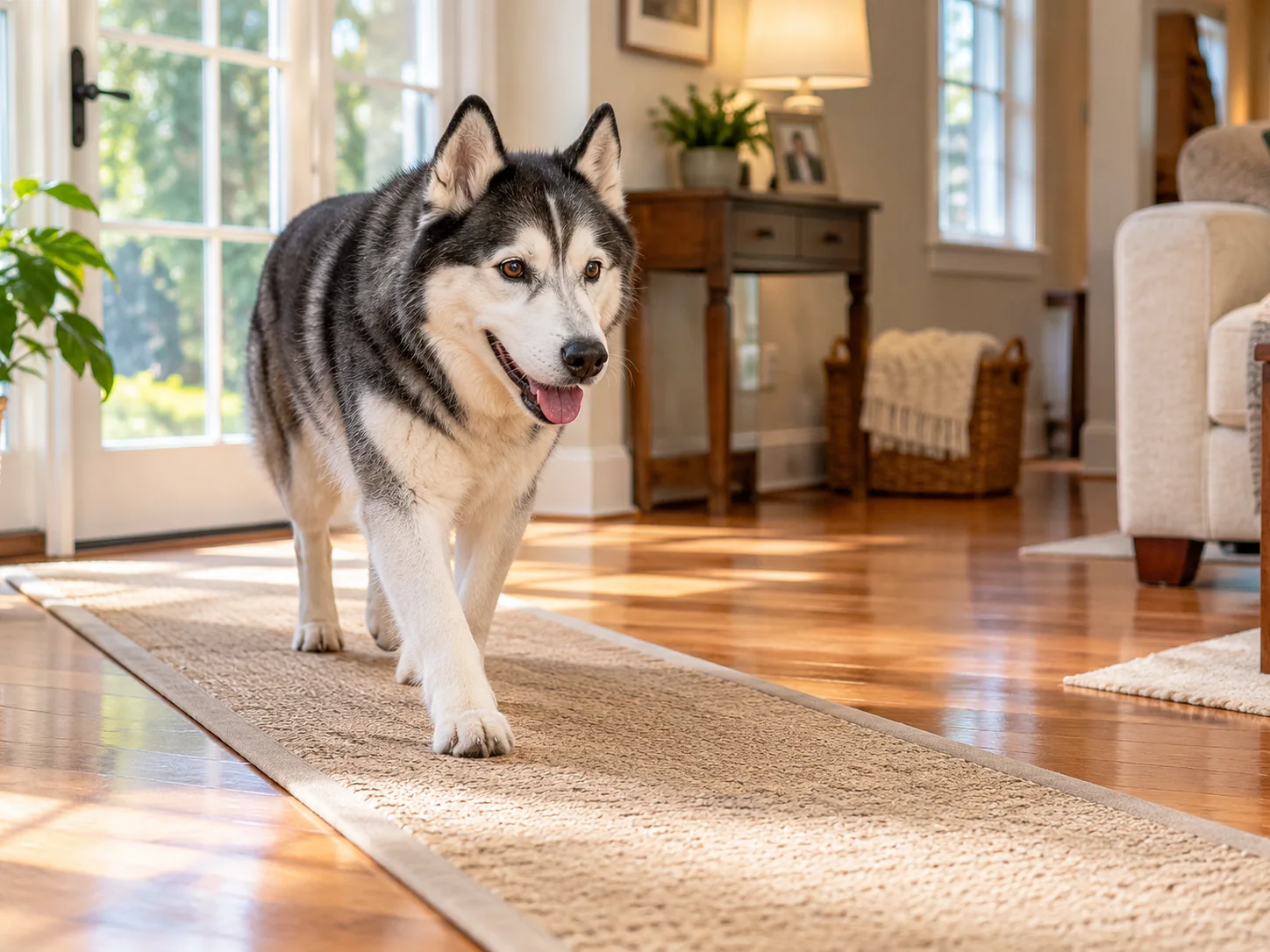
When an older dog starts sliding on hardwood, laminate, or tile, it is easy to jump straight to a product: socks, booties, wax, a runner, a harness, or a new bed. Sometimes one of those tools is useful. But the better first question is simpler:where does the route become difficult?
Direct answer
How do you stop a senior dog from slipping on hardwood floors?
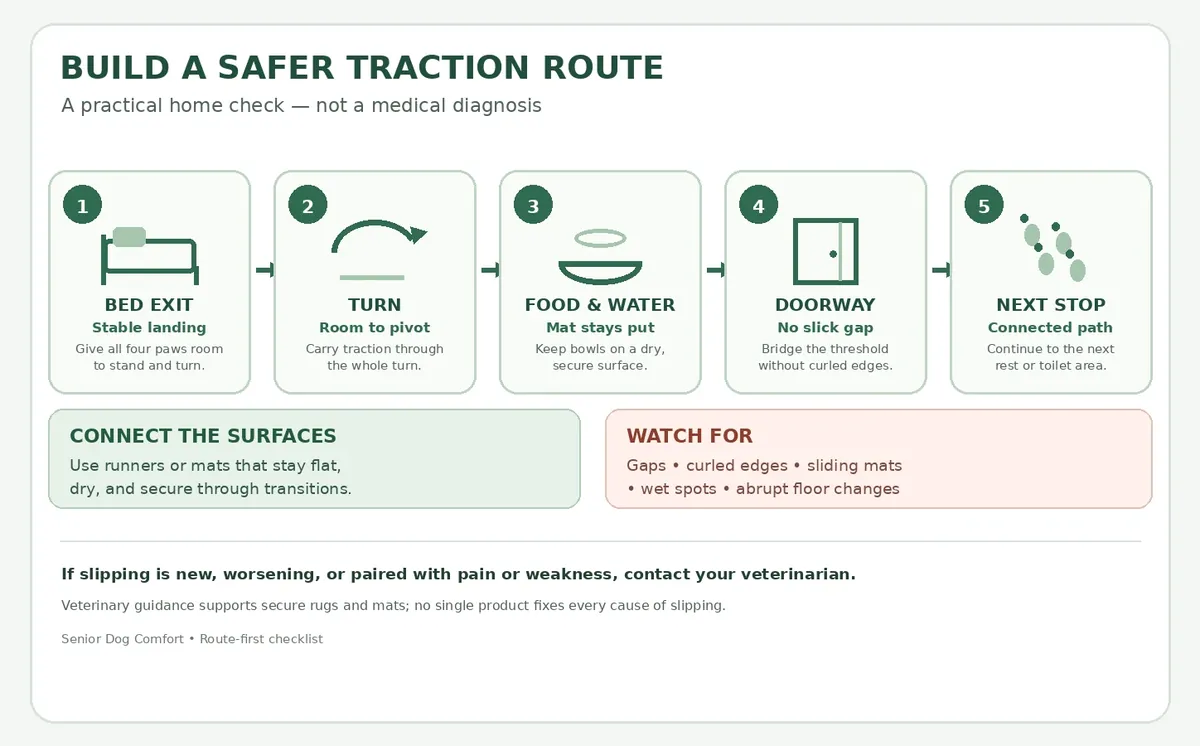
Start by connecting secure footing across the route your dog actually uses: bed exit, turns, bowls, doorways, and stairs. Use stable runners or mats where they stay flat, keep nails and excess paw-pad fur in the grooming conversation, and treat socks, booties, toe grips, or a support harness as optional tools rather than the whole solution. If slipping is sudden, one-sided, painful, or rapidly worsening, contact your veterinarian instead of assuming the floor is the only problem.
1. Watch the route before buying anything
Follow your dog through an ordinary part of the day. Notice the first place the rear paws slide, whether the front paws scramble for grip, and whether trouble appears during straight walking, turning, standing up, or stopping.
Those details matter because different problems call for different changes. A long slippery hallway may benefit from a stable runner. A difficult turn near a bed may need a larger grippy landing area. A dog that struggles while rising may need both traction and a resting surface that is easier to enter and exit.
2. Prioritize the highest-risk transitions
Some areas deserve attention before the rest of the floor. Common trouble spots include the first step out of a dog bed, the turn toward a doorway, the area around food and water bowls, the base of stairs, and the approach to an exterior door.
Start by making those transitions predictable. A few well-placed secure surfaces can be more useful than covering random areas that your dog rarely uses.
3. Make sure traction stays where you put it
A rug that slides under the dog can become another hazard. Look for runners or mats with a backing that stays planted on the actual floor surface in your home. Check them after vacuuming, cleaning, or repeated use because corners can curl and backing materials can lose grip over time.
For temporary mats, test the edge with your foot before asking your dog to trust it. The goal is a stable surface, not simply a softer one.
4. Give turns more room than straightaways
Turning can be harder than walking in a straight line. A senior dog may widen the rear feet, take several small steps, or pivot more slowly. If the grippy surface ends exactly at a corner, the paws may leave the secure area at the moment extra traction is needed most.
Extend traction through the turn and into the next section of the route when possible. Think about where all four paws will land, not just where the dog’s chest is pointing.
5. Check the bed exit and resting area
A supportive bed is less useful if the first step onto the floor is slippery. Give the bed a secure landing zone large enough for your dog to stand, turn, and fully clear the bed before reaching slick flooring.
If the bed itself shifts when your dog steps in or out, address that too. The resting surface and the floor around it should work as one setup. For the mattress itself, compare our orthopedic dog-bed buying guide with the anatomy of a true orthopedic dog bed; mattress support and secure floor access solve different parts of the comfort problem. For the bed base, use the non-slip dog-bed bottom checklist to inspect base material, floor contact and edge loading.
6. Treat paw-wear products as one option, not the entire plan
Grip socks, booties, toe grips, and paw products can help some dogs, but tolerance varies. Fit, rotation, moisture, nail length, paw shape, and how the dog walks all affect whether a product stays useful in practice.
If your dog dislikes wearing something on the paws, improving the floor route may be a more realistic first step. If you do try paw-wear, introduce it gradually and watch for twisting, rubbing, or changes in gait.
7. Keep nails and paw fur in the conversation
Long nails can change how the paw contacts the floor, while excess fur between paw pads can reduce direct contact with a grippy surface. Routine nail and paw care may be part of the traction picture, especially when slipping has increased gradually.
If you are unsure how short nails should be trimmed or how to manage paw-pad fur safely, ask a groomer or veterinarian for guidance rather than making a large change at once.
Quick route check
Walk the path and ask these questions
- Where does the first slip happen?
- Is the problem worse during turns, starts, or stops?
- Does the bed have a secure landing area?
- Do rugs or mats stay fixed under pressure?
- Are doorways and food/water areas covered?
- Does the dog need traction through a corner, not just before it?
- Have nails, paw fur, or a recent mobility change altered footing?
Compare traction options after you map the route
| Option | Best role | What to watch |
|---|---|---|
| Secure runner or mat | Creates a repeatable walking and landing path. | Sliding backing, curled edges, gaps at turns, moisture or bunching. |
| Paw-wear or toe-grip product | Adds traction directly at the paw when the dog tolerates it. | Fit, rotation, rubbing, moisture, gait changes, and whether the dog accepts it. |
| Bed landing zone | Stabilizes the first steps during standing, turning, and leaving the bed. | Bed movement, undersized landing area, or a slick gap immediately after the mat. |
| Support harness | Shares some load during selected transitions when hands-on assistance is needed. | Poor fit, pulling instead of supporting, or relying on equipment when weakness is new or worsening. |
When a support harness can fit into the route
For a dog that needs occasional help rising, crossing a difficult transition, or regaining balance, an assisted-support harness can be useful alongside better traction. It should not replace a secure walking surface, but it can give you another way to support the dog without pulling on the collar.
See our Support Harnesses and Traction for Senior Dogs guide for a broader look at traction and assisted support. You can also browse the Senior Dog Mobility Support category for ramps, steps, traction, and access ideas.
Compare traction options after mapping the route
Once you know where slipping begins, compare products by the surface they secure, how they stay in place, and whether they cover the complete path your dog actually uses. These owner-supplied options are convenient starting points for comparison.
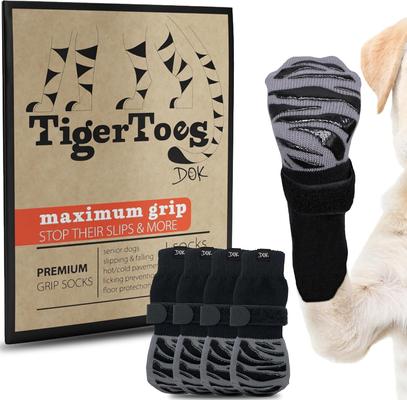 #1DOK TigerToes Anti-Slip Senior Dog SocksGrip-focused socks designed for senior dogs; measure paw size carefully and supervise the first trials.View product ↗
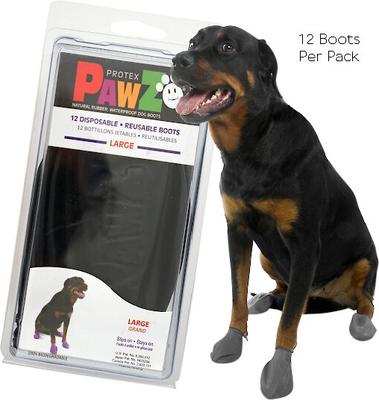 #2Pawz Waterproof Dog BootsFlexible natural-rubber boots that may suit dogs needing paw protection; check fit and watch for discomfort or altered gait.View product ↗
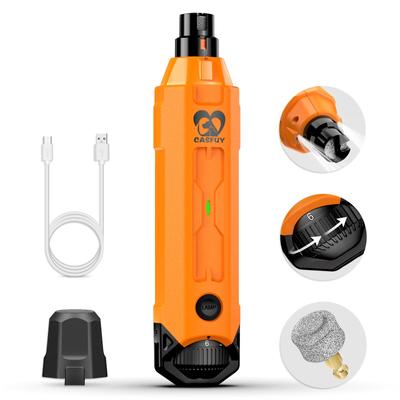 #3Casfuy Upgraded Quiet 6-Speed Nail GrinderA rechargeable nail grinder with six speeds and two LED lights; introduce it gradually and trim only within your comfort level.View product ↗
Pay attention to sudden changes
Flooring can expose a mobility problem that was less obvious on carpet. If slipping is new, rapidly worsening, one-sided, paired with pain, weakness, knuckling, collapse, or a major change in how your dog stands or walks, contact a veterinarian. Home traction changes can make movement easier, but they do not explain the reason for a sudden mobility change.
What veterinary guidance supports—and what it does not
The 2023 AAHA Senior Care Guidelines include rugs or yoga mats for better footing among possible home modifications for senior pets. VCA Animal Hospitals likewise recommends secure, non-slip rugs and runners and cautions against raised edges that could trip a dog. These sources support improving footing; they do not establish one universally best mat material, a medically proven coverage percentage, or a guarantee that a product will prevent every fall.
If it is safe, a short video of your dog moving naturally at home can help you describe the change to your veterinarian. AAHA notes that home-environment videos can assist mobility assessment; do not deliberately recreate a slip to film it. See the AAHA guidance on evaluating senior pets. This is practical home-care information, not a diagnosis.
Start small, then re-watch the route
After making one or two changes, watch the same route again. If your dog moves more confidently, you have useful information about what was helping. If the problem simply moves to the next slick section, extend the secure path rather than assuming the first product failed.
The goal is not to fill the house with gadgets. It is to make the important everyday path feel predictable from the first step to the final landing.
A two-minute traction audit: check the route room by room
Use this quick audit after you have watched your dog’s normal route. The aim is to remove predictable slipping points without creating new trip hazards for your dog or the people who share the home.
- Bed and first steps: Put a stable, non-slip landing area where all four paws can settle before the dog turns or walks away. If the bed shifts when you press its corners, secure it or move it to a safer spot.
- Hallway and turns: Cover the path, not just the middle of the room. Keep runners flat, use a suitable non-slip backing, and make sure edges do not curl or slide when nudged by hand. Avoid a loose throw rug that bunches under paws.
- Food and water: Place bowls on a stable, washable, non-slip mat. Check the approach and the turn away from the bowls; a grippy bowl mat does not solve a slippery path leading to it.
- Doorways and outdoor transitions: Check for a change in surface, a raised threshold, wet paws, or a sudden turn. Add a stable mat on each side where practical and keep the walking path clear.
- Stairs, furniture, and vehicle access: Do not rely on a runner to make an unsafe staircase safe. Block access when needed and discuss a ramp or support harness with your veterinarian if your dog cannot manage a transition comfortably.
Do a stability test before inviting your dog across: press and tug each mat from several directions, walk across it yourself, and inspect the edges. Recheck after vacuuming, washing, or moving furniture. If a mat shifts under your hand, it is not ready for a senior dog who is already unsteady.
Finally, observe the same route again without coaxing your dog to move faster. Note whether the change helped, whether a new difficult spot appeared, and whether slipping also occurs on carpet or outdoor ground. A short, naturally captured video can help your veterinarian assess a change; never deliberately recreate a fall for a recording.
If a ramp is part of the route: use the 7-point senior-dog ramp safety checklist to check angle, traction, stability, width, edges, and landing space.
Related traction check: A stable runner still needs to pass its own buying checks. Use our seven-check non-slip rug and runner guide for backing, edge curl, washability, transitions, and in-home stability.