


Quick answer: walk the routes your senior dog uses every day and check the surface at the exact points where slipping is most likely: getting out of bed, turning, approaching food or water, crossing a doorway, and changing floor surfaces. Secure traction aids should lie flat, stay in place, and leave a clear path. If slipping is new or worsening, arrange a veterinary check rather than treating it as a flooring problem alone.
How this differs from our main hardwood-floor guide: the route-first hardwood traction plan explains how to identify and improve the walking route. This companion checklist helps you audit the home one location at a time and record what needs attention first. It is a practical home observation tool, not a veterinary assessment or a guarantee against falls.
Start with one calm walkthrough
Choose an ordinary time when your dog is relaxed. Watch a normal trip from resting spot to water, favorite room, and outside door without calling, pulling, or encouraging extra movement. Note hesitation, short steps, feet spreading unusually wide, a sudden detour, paw scrabbling, or a need to brace against furniture. Do not recreate a slip to test the floor.
Write down the location, the surface, and what happened. Fix the clearest environmental hazard first, then observe normal movement again. Change one thing at a time when practical so you can tell whether a mat or route adjustment actually helps.
The seven room-by-room checks
1. Bed exit: secure the first landing
Look at the first few steps after your dog rises from a bed or resting spot. A stable bed can still be surrounded by slippery flooring. Place a low-profile, non-slip mat or secured rug where the paws land, with enough coverage for the dog to stand and turn without stepping straight onto a slick patch. Check that the mat itself does not slide, bunch, or curl at the edges.
If the dog struggles to rise, repeatedly slips, or appears painful, do not assume a mat alone will solve it. Ask your veterinarian whether pain, weakness, or another mobility issue needs assessment.
2. Hallway: cover the useful route, not just a small patch
Follow the whole route through the hallway. A short rug that ends before the turn or doorway can leave the most difficult steps uncovered. Where a runner is appropriate, check the backing against your actual floor, keep the edges flat, and make sure doors do not catch it. Avoid loose layers that shift when pushed by a paw.
Test the mat gently with your hand and foot before relying on it, and recheck it after cleaning. Product descriptions such as “non-slip” are not a substitute for checking how the item behaves in your home.
3. Turns and corners: eliminate traction gaps
Dogs often change direction at furniture, doorways, and room corners. Check whether a rug ends exactly where your dog pivots, or whether furniture forces a tight turn on bare flooring. If you add a second mat, keep the pieces from overlapping or leaving a raised ridge that can catch toes. Reposition furniture if that creates a wider, more gradual path.
Do not block the route with bowls, toys, cords, or décor. A clear turn is as important as a grippy surface.
4. Food and water station: keep the footing dry
Water splashes and food crumbs can change footing near bowls. Use a stable mat that stays flat and is easy to clean, and wipe up moisture promptly. Make sure the bowls do not skate away as the dog eats or drinks. If the dog must stand with feet splayed or twist awkwardly to reach the bowls, reconsider the placement and discuss persistent difficulty with your veterinary team.
5. Doorways: check the transition and the swing
Inspect where hardwood meets tile, carpet, a threshold strip, or an outdoor surface. Look for a lip, curled rug edge, loose transition strip, or a mat that moves as the dog steps across it. Keep the path clear of swinging doors and check that the door does not drag a rug out of place. A low-profile, secure transition is preferable to a loose folded towel or blanket.
6. Stairs and level changes: reduce risk rather than testing bravery
Look at stair treads, the top and bottom landing, and any step between rooms. If your dog is slipping, weak, or hesitant, do not repeatedly ask them to use stairs to see whether a change worked. Consider a gate to prevent unsupervised access and ask your veterinarian or rehabilitation professional about appropriate ramps, assistance, or other access changes for your dog's abilities. A ramp also needs a stable surface and a safe incline; it is not automatically safer just because it avoids steps.
7. Night route: repeat the audit in low light
Check the route between the sleeping area and the door or water station at the time it is actually used. Shadows, furniture moved for cleaning, a bowl in the path, or a runner that has shifted can create a different route at night. Add gentle lighting where useful, keep the path predictable, and recheck mats after vacuuming or mopping.

Make a simple priority list
After the walkthrough, mark each location as fix now, recheck, or ask for advice. Fix now means an obvious hazard such as a loose rug, wet floor, blocked path, or unstable mat. Recheck means the surface seems stable but needs another look after cleaning or normal use. Ask for advice means the dog is slipping despite environmental changes, has trouble rising, or shows a change in gait, confidence, or activity.
- Fix now: dry wet patches, remove loose rugs, flatten or replace curled edges, secure a moving mat, and clear the route.
- Recheck: test backing and edges after cleaning; verify that doors and furniture do not move the mat.
- Ask for advice: contact your veterinarian about new, repeated, or worsening slipping, pain, weakness, reluctance to move, or falls.
When slipping needs a veterinary conversation
Environmental changes can improve footing, but they do not identify the cause of a mobility change. Contact your veterinarian when slipping is new, keeps happening, is getting worse, or appears with limping, pain, weakness, trouble rising, unusual nail dragging, repeated falls, or a clear change in gait or activity. Sudden inability to stand or walk, severe pain, or a serious fall warrants urgent veterinary guidance.
If the behavior happens naturally, a short video can help your veterinary team understand what you are seeing. Do not delay care to collect a video, and do not force your dog to repeat a movement that seems difficult.
Common questions
Should I cover every inch of hardwood?
Not necessarily. Start with the routes and transitions your dog actually uses, especially where they rise, turn, stop, or change direction. Any rug or mat you add must remain stable and flat; a loose or curled rug can create a new hazard.
Are socks or paw products enough?
They should not be treated as a universal fix. Fit, tolerance, nail length, paw condition, floor surface, and the reason for slipping all matter. Ask your veterinarian about persistent traction problems and use home changes that are stable and comfortable for your dog.
Can I test a mat by asking my dog to walk faster?
No. Do not create a slip test or encourage speed on a surface that may be unsafe. Check the mat by hand and observe only ordinary, comfortable movement. Stop if your dog seems worried or unsteady.
Three traction options to compare
Consider a runner for a walking route, a washable mat for a busy spot, or a cushioned surface near a resting area. Choose by fit and stability—not appearance alone.
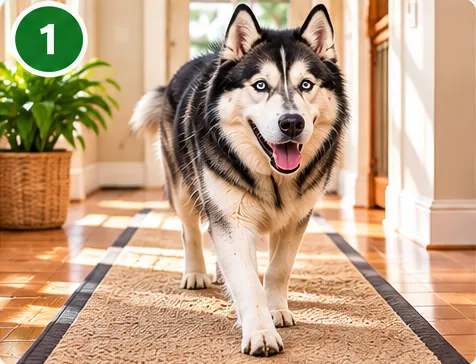
OPTION 1
Muddy Mat Chenille Door Mat
A highly absorbent mat to consider for wet-paw entry areas. Check the listing for the right dimensions and how securely it stays in place on your floor.
View Options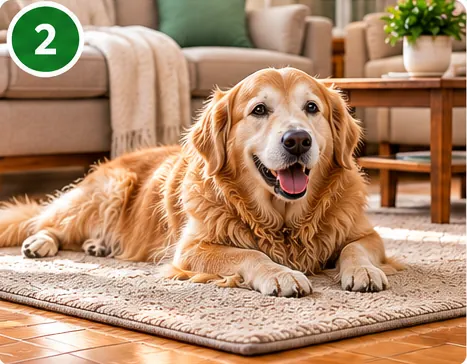
OPTION 2
Dog Gone Smart Dirty Dog Runner
A runner-style option to compare for a longer route. Confirm its dimensions, care instructions, and whether the backing stays put on your particular flooring.
View Options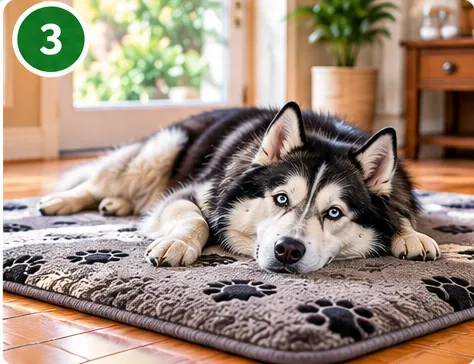
OPTION 3
Bungalow Flooring Squares Mat
A modular mat option to investigate for targeted coverage. Check the current listing for the exact configuration, dimensions, and intended use before ordering.
View OptionsBuying check: these dog-and-rug images are original illustrative artwork, not photos of the listed products. Before buying, verify the current product listing, measurements, cleaning instructions, and whether the mat remains flat and secure. Affiliate links may earn this site a commission at no extra cost to you.
Related Senior Dog Comfort guides
Use the main hardwood-floor traction plan for the overall route, non-slip rug and runner checks to evaluate the mat itself, and doorway threshold checks for floor transitions. These guides answer related but different questions.
Sources and evidence limits
- American Animal Hospital Association (AAHA), 2023 Senior Care Guidelines — senior-care context for mobility, traction, and home modifications.
- VCA Animal Hospitals, Creating a Comfortable Home for Your Mobility-Compromised Dog — practical home setup and traction considerations.
- VCA Animal Hospitals, Helping Your Dog With Osteoarthritis — mobility support and environmental changes.
Evidence limit: these sources support reducing environmental hazards and paying attention to mobility changes. They do not establish that this seven-location checklist is a validated clinical tool, nor do they identify the medical cause of slipping in an individual dog. Use the checklist to organize observations and contact a veterinary professional when changes are new or concerning.
Editorial note: This article is educational and is not veterinary advice. Adapt the home setup to your dog and household, and seek professional guidance for new or worsening mobility problems.