


Quick answer: a useful rug or runner for a senior dog should resist sliding on the specific floor beneath it, lie flat at every edge, offer a surface the paws can use without obvious catching or scrambling, tolerate the cleaning your household needs, and cover a continuous route instead of leaving difficult gaps. “Non-slip” is a starting claim—not a guarantee.
Why this fills a gap: our route-first traction guide explains where traction is needed. This article answers the next buying question: what should you inspect in the rug or runner itself? It also connects with doorway thresholds, nail and paw traction, and stable access planning without repeating those pages.
Start with the route, then choose the rug
Watch your dog travel from bed to water, the outside door, a favorite room, and the nighttime resting spot. Note places where the dog slows, shortens stride, spreads the feet, detours, or pauses before a shiny surface. That observation identifies the sections that need coverage. A beautiful runner that stops before the turn, doorway, or water station can leave the hardest step unchanged.
Veterinary and senior-care guidance supports adding secure rugs or runners where hard floors are difficult to navigate. VCA specifically advises non-slip rugs or runners without raised corners or edges that could trip a mobility-compromised dog, while AAHA senior-care guidance recommends secure rugs and mats for traction. These sources support the goal—better footing—but they do not establish one universal rug material, pile height, or backing for every dog and floor.
The seven buying checks
1. Match the backing to the actual floor
“Non-slip backing” is a listing claim, not a complete test result. Look for a clear description of the backing material and any floor-care limitations. A backing may behave differently on sealed hardwood, tile, vinyl, laminate, or a textured surface. Check the flooring manufacturer’s care instructions too, because some pads or rubber-like backings may be unsuitable for certain finishes.
When the rug arrives, test it on the clean, dry floor where it will be used. Press near the center, then push gently from several directions. Repeat after normal household dust has had time to collect. If the rug migrates, bunches, or pivots, the label did not solve the real floor-and-rug pairing.
2. Inspect every edge, not just the center
Look for a low, flexible border that returns flat after unpacking and cleaning. Pay extra attention to corners near doorways, turns, and the dog’s usual approach direction. VCA’s guidance specifically warns about raised corners or edges that could become trip points.
Do not assume double-sided tape is automatically safe for the floor or suitable for a washable rug. If an accessory is needed to keep the edge flat, confirm compatibility with both the rug and the flooring.
3. Choose a surface the paws can use
A rug can stay fixed yet still feel slick on top. Favor a stable, textured surface that does not shift under a paw. Very loose loops can catch nails, very plush pile may feel unstable to some dogs, and a worn pathway can lose useful texture even while the backing remains intact.
There is no universal “best” pile height for every senior dog. Observe how your dog places and lifts each paw. The useful question is whether the dog crosses and turns without scrambling, toe-catching, or avoiding the surface.
4. Verify the complete cleaning system
“Washable” may refer only to a removable top layer, not the pad or backing beneath it. Check which pieces can be machine-washed, the permitted cycle and temperature, whether the rug must air-dry, and whether the backing has special care limits. Measure the washer opening and drum before assuming a long runner will fit.
After washing, recheck the edges, backing, and surface texture. A rug that curls, shrinks, separates, or becomes slick after laundering no longer performs the same job.
5. Cover a continuous travel line
AAHA and veterinary guidance support secure rugs, mats, or other traction surfaces for dogs with reduced mobility. The practical value comes from placement. Cover the launch and landing areas around beds, bowls, doors, turns, and furniture access—not only the middle of the room.
Avoid small “traction islands” that force the dog to step repeatedly between grippy and slippery surfaces. If separate runners are necessary, minimize the uncovered gap and test the transition while the dog is moving at a comfortable, unhurried pace.
6. Make transitions obvious and stable
Check where the runner meets hardwood, tile, another rug, a doorway threshold, or a change in direction. The edge should remain visible, flat, and predictable. A thick pad beneath only part of the rug can create an unexpected ridge, while overlapping rugs can shift independently.
For dogs with reduced vision, keep the route layout consistent. For a dog showing new hesitation, pain, weakness, or repeated slipping, treat the behavior as a reason to speak with a veterinarian—not simply as a shopping problem.
7. Perform a gentle stability test and keep the return terms
Before inviting the dog onto the runner, place it on a clean, dry floor and test it yourself:
- Push the center with a flat hand in four directions.
- Press and release each corner.
- Walk the full route in socks and again in normal footwear without deliberately sliding.
- Check whether the rug creeps when turning or stepping off.
- Repeat after vacuuming and after the first permitted wash.
This is a household screening check, not a laboratory slip-resistance test. Keep the packaging and record the return window until the rug has been checked in the actual location.

3 options to buy
Use the seven checks above while comparing these runner-style options. Open each option to confirm the current size, color, care instructions, backing, and availability before ordering.
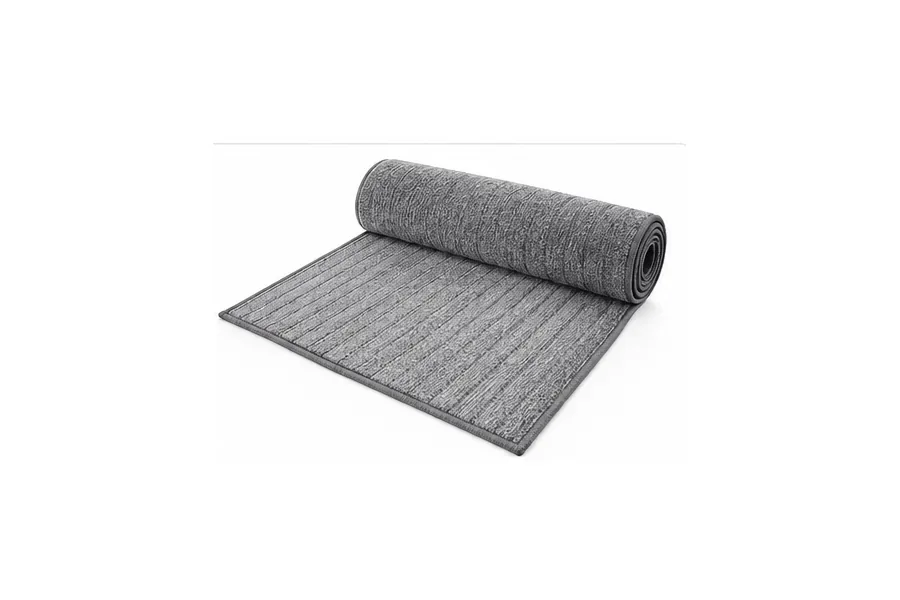 #1
Frisco Non-Slip Ribbed Indoor Runner RugGray ribbed runner option for creating a more continuous walking route across smooth indoor floors.View / Buy ↗
#1
Frisco Non-Slip Ribbed Indoor Runner RugGray ribbed runner option for creating a more continuous walking route across smooth indoor floors.View / Buy ↗
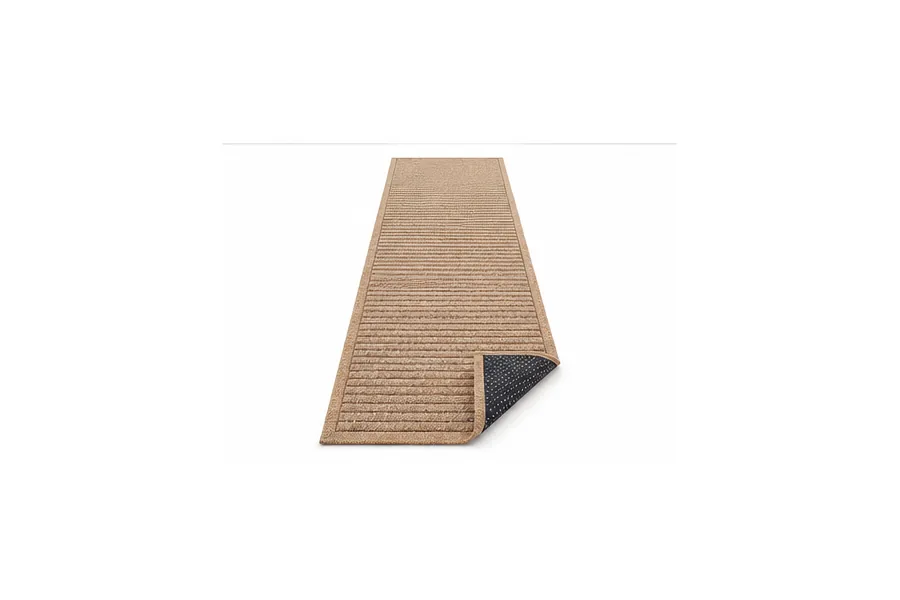 #2
Bungalow Flooring WaterHog Indoor/Outdoor RunnerLow-profile runner-style option to compare for hallway coverage, backing stability, and easy-care needs.View / Buy ↗
#2
Bungalow Flooring WaterHog Indoor/Outdoor RunnerLow-profile runner-style option to compare for hallway coverage, backing stability, and easy-care needs.View / Buy ↗
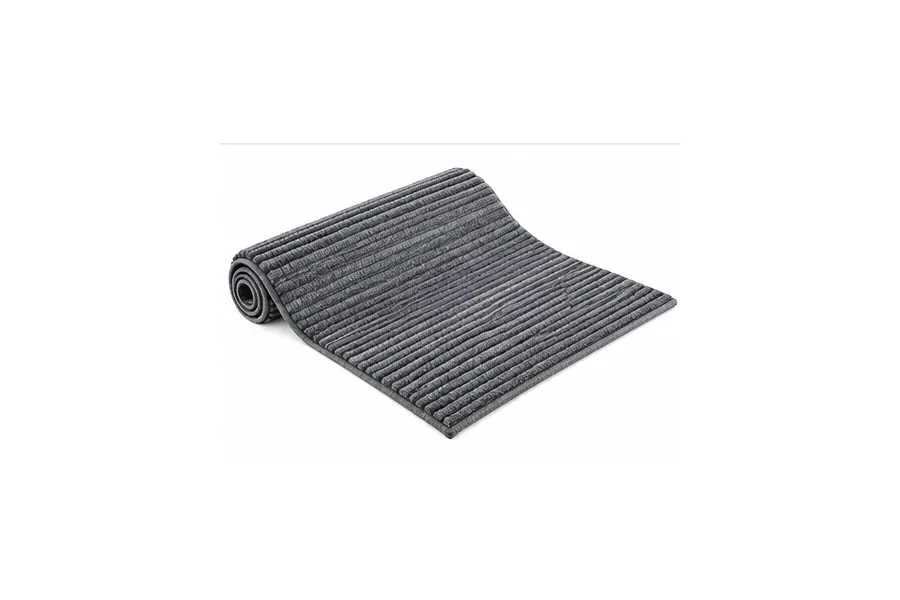 #3
Paw Inspired Absorbent Non-Slip Runner RugSoft absorbent runner-style option to compare where traction and moisture control are both useful.View / Buy ↗
#3
Paw Inspired Absorbent Non-Slip Runner RugSoft absorbent runner-style option to compare where traction and moisture control are both useful.View / Buy ↗
A one-minute route check after installation
- Approach: Does your dog enter the runner willingly?
- Paw placement: Do the feet stay under the body rather than spreading outward?
- Turn: Does the rug remain flat and still when the dog changes direction?
- Transition: Is there hesitation at either end or between sections?
- Repeat: Does the movement remain comfortable after several trips, not just the first one?
Record what you see rather than interpreting one moment as proof. Dogs can move differently when excited, tired, wet, hurried, or carrying discomfort.
How to read the evidence
| Evidence layer | Useful for | Does not prove |
|---|---|---|
| Listing verified | Dimensions, stated materials, backing description, care instructions, return terms | That the rug will stay stable on every floor or work for every dog |
| Independent context | Repeated questions about curling, movement, cleaning, or durability; real-floor observation | Universal performance across sizes, homes, floors, or product revisions |
| Veterinary context | The value of secure traction and accessible home modifications | One universal pile height, backing chemistry, or consumer product specification |
| Hands-on with Cooper | Future documented observations when a specific rug and size are actually used | Performance for a product we have not physically tested |
| Our synthesis | Turning traction guidance into a repeatable buying and home-check framework | A clinical threshold, certification test, or medical treatment |
Frequently asked questions
Is a rug pad enough to make any rug safe for a senior dog?
No. A pad may improve grip, but the rug can still curl, bunch, slide against the pad, catch nails, or create a thick transition. Check the rug, pad, floor, and edges as one system.
Are washable rugs always better?
Washability is valuable for accidents and routine cleaning, but only if the full care process is practical and the rug returns flat with its backing intact. “Washable” does not automatically mean non-slip.
Should I cover the whole house?
Not necessarily. Start with the routes your dog actually uses and the places where slipping or hesitation occurs. The goal is reliable, continuous access—not maximum rug coverage for its own sake.
When should I call the veterinarian?
Contact your veterinarian when slipping, hesitation, weakness, difficulty rising, pain-related behavior, or reluctance to cross a familiar surface is new, worsening, or repeated. Flooring changes can support mobility but should not be used to explain away a medical change.
Shopping note
No product cards are included in this article. Under Senior Dog Comfort’s Chewy-only shopping rule, we only add a shopping block when the exact affiliate destination, visible product title, actual corresponding image, alt text, note copy, desktop behavior, and mobile behavior can all be verified together. No rug/runner item in the current approved link set met that full verification standard for this topic, so an unrelated product was not substituted.
Sources and evidence limits
- VCA Animal Hospitals — Creating a Comfortable Home for Your Mobility-Compromised Dog: recommends non-slip rugs/runners and warns against raised corners or edges.
- AAHA — Communicating with Families of Senior Pets: recommends covering slippery floors with secure rugs and mats for traction.
- Cornell University College of Veterinary Medicine — Osteoarthritis: includes non-slip rugs and ramps among lifestyle modifications.
- American Kennel Club — What Kind of Flooring Is Best for Your Dog?: discusses traction and area rugs/runners as practical adjustments for older dogs.
Source review: September 29, 2026. These sources support secure traction and accessible home modifications. The backing, edge, cleaning, route, transition, and household stability checks are conservative editorial synthesis; they are not clinical thresholds or certification tests.
Keep the route connected
Next, use the route-first hardwood-floor guide, check doorway thresholds, review nail and paw traction, and make sure the dog bed itself stays planted. For the larger system, see Easy Entry & Stable Access for Senior Dogs.