

Dog Ramps
Useful for vehicles, furniture, and raised areas when a gentle, stable incline fits the space.
Compare ramps vs. stairs →Senior dog mobility guide
The right mobility aid depends on where your dog needs help, how confidently your dog moves, and whether the product can be used safely in the available space.
Browse Dog Ramps, Stairs & Steps on Chewy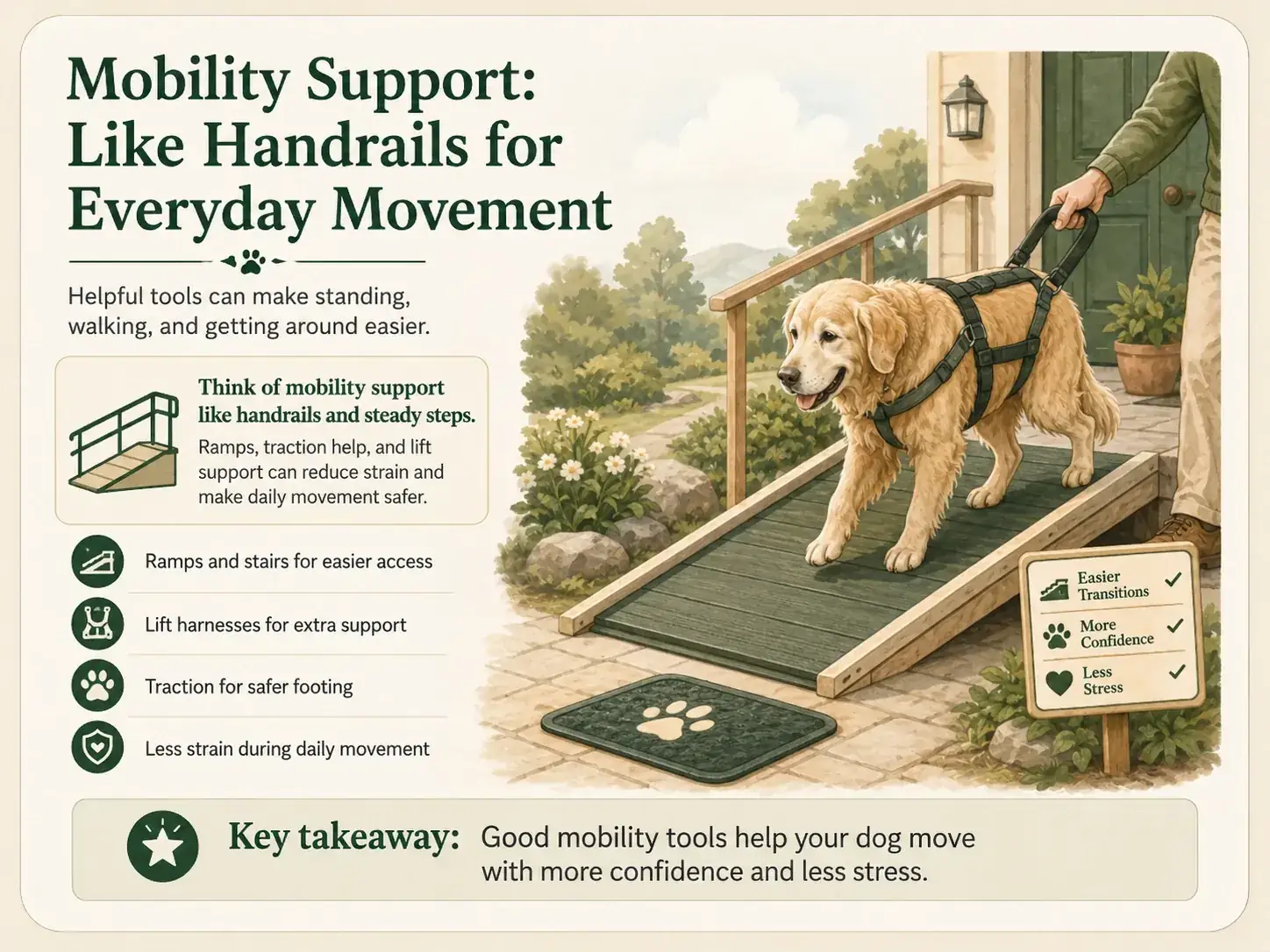
Mobility essentials
Useful for vehicles, furniture, and raised areas when a gentle, stable incline fits the space.
Compare ramps vs. stairs →Compact steps may work well for furniture when tread depth, riser height, and traction fit your dog.
Read the comparison →Support equipment can help some dogs during standing, walking, or transitions, but fit and safe handling matter.
Learn about assisted support →Runners, mats, and other grippy surfaces can make smooth flooring easier to navigate.
Learn about traction →Choosing mobility support
Confirm that the product is designed to accommodate your dog's size and weight.
Look for secure footing, stable construction, and a surface that stays steady during use.
Make sure your dog has enough room to line up with the ramp or steps without a sharp turn.
For vehicle use, consider folded size, weight, setup effort, and whether the product fits your routine.
Go deeper
Compare incline, step height, space, stability, portability, and common use cases.
Read the comparison →Learn about assisted movement, floor grip, safe paths, and when veterinary input matters.
Read the support guide →Pair easier movement with a resting area that is accessible and appropriately sized.
Read the bed guide →Safety note
If your dog suddenly loses mobility, shows pain, falls repeatedly, or has trouble standing, contact your veterinarian. A product guide cannot determine the cause of a mobility change.
Continue exploring
Related reading
Mobility aids work within a room setup; review the route as well as the equipment. Check hearing, vision, lighting and clear routes →
Carry stable footing through to the place your dog drinks. Set up a reachable water station →
Match the aid to the task
“Mobility aid” covers very different jobs. A ramp can reduce the need to step up, a traction product can change footing, and an assisted-support harness can help a person guide a dog through a transfer. Before comparing brands, describe the exact movement: getting into a car, crossing a slick floor, reaching a bed, using stairs, or moving through a doorway.
For Cooper and the broader Senior Dog Comfort approach, this keeps the focus on the real route rather than on a product category alone. The same ramp can be convenient in one doorway and awkward in another because the surrounding space changes the approach.
Safety and fit
Weight ratings, ramp lengths, traction descriptions, and product dimensions are useful specifications, but they do not describe every real-world setup. A ramp may meet a weight limit and still be too steep for the available space. A harness may fit the chest and still need careful adjustment around the dog's coat and movement.
If a dog has a new or worsening mobility problem, ask a veterinarian or rehabilitation professional what type of assistance is appropriate. Product selection should support the care plan rather than replace an assessment of why movement has changed.
Bottom line: choose the aid that makes the specific task more manageable, fits the available space, and can be used consistently by both the dog and the person assisting.
Quick navigation