
Start with the floor before adding equipment
Slick flooring can turn an otherwise manageable route into a repeated balance challenge. Before adding a harness, look at the whole path your dog uses: the first step out of bed, turns through doorways, the route to food and water, and the approach to stairs or the yard. Secure non-slip runners or mats can improve footing, but they should lie flat and resist bunching or sliding when the dog pushes off.
Pay special attention to transitions between surfaces. A dog may look steady on carpet and then hesitate where carpet meets tile or hardwood. Keep the route wide enough for an older dog to turn without twisting tightly, remove loose rugs and clutter, and keep wet or polished areas dry. Better traction does not treat the cause of weakness or pain, but it can remove an avoidable environmental obstacle.
If the back legs look weak, separate the equipment question from the medical change
A rear-support or full-body harness can share some load during selected movements, but “weak back legs” can describe many different problems. If weakness is new, worsening, one-sided, paired with knuckling or dragging, or causing repeated falls, ask your veterinarian for an evaluation before relying on equipment alone.
If your dog already has a veterinary mobility plan, compare harness designs by the region they support, how the handles let you share weight, whether normal toileting is possible, and whether the dog can keep the paws in a natural position during assisted movement.
What to consider in an assisted-support harness
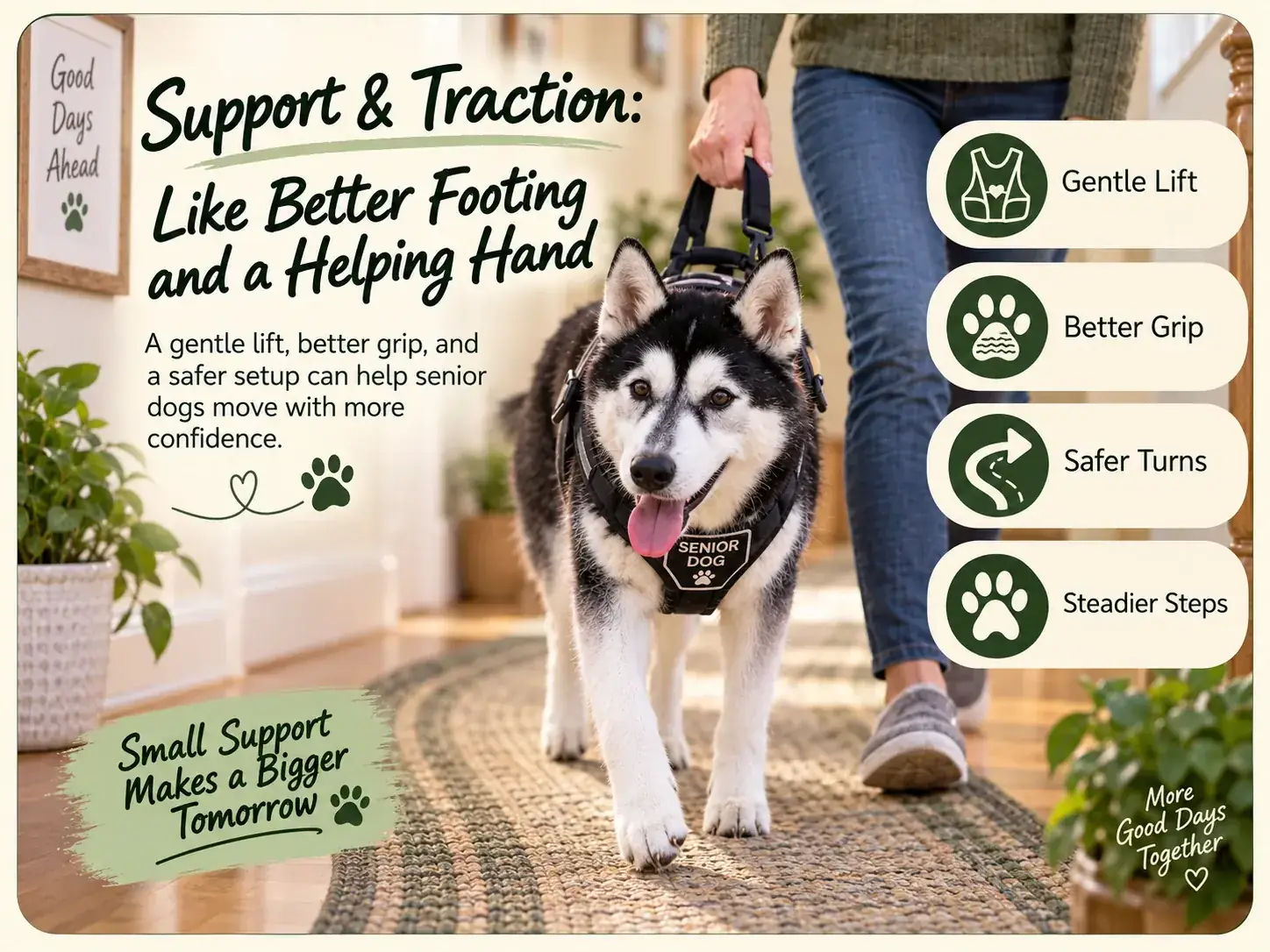
A mobility or support harness should distribute assistance over an appropriate area rather than concentrating pressure at one narrow strap. Check the manufacturer's fit points and make sure the harness does not rub the armpits, groin, abdomen, or spine, restrict normal breathing, interfere with the legs, or prevent normal toileting. Padded contact areas can improve comfort, but padding does not correct a poor fit.
Different designs assist different regions of the body: some mainly steady the front, some support the rear, and some provide more complete body support. The amount and location of lift should match the dog's actual limitation. Recheck fit after weight or coat changes and inspect the skin after use. If you are unsure where support is needed, or the dog has new weakness, pain, knuckling, or repeated falls, ask a veterinarian or veterinary rehabilitation professional to show you a safer handling approach.
Use assistance rather than pulling
The purpose of a support handle or sling is to share enough load to make a movement safer and more controlled—not to tow the dog forward or suspend the body unnecessarily. Stand where your own footing is secure, keep the support even, move at the dog's pace, and allow the paws to contact the ground whenever the dog can safely bear weight.
Watch the dog while you assist. Shortened steps, twisting away, sudden freezing, vocalizing, increased panting, or repeated attempts to sit can signal that the fit, amount of lift, or task is uncomfortable. Stop and reassess rather than increasing force. For stairs, vehicles, or dogs that need substantial lifting, hands-on instruction from a veterinary professional can be especially useful.