


Quick answer: no harness is literally escape-proof. For a Husky—or any dog that has backed out of gear before—look for a shape that matches the body, enough adjustment to remove loose openings, and a design that stays secure when the dog reverses direction. Test it indoors before trusting it outside.
Why this fills a gap: Senior Dog Comfort already covers ramps, traction, routes, and other mobility equipment, but we did not have a dedicated page for the “escape-proof Husky harness” question. This guide focuses on secure fit without assuming every Husky has the same body shape or behavior.
Eight harness security checks
1. Measure the dog standing—not from weight alone
Harness sizing varies by brand. Measure the widest part of the rib cage and the lower neck while the dog is standing, then compare those numbers with the chart for the exact model. AKC notes that chest girth is commonly the most important harness measurement and recommends leaving enough room for a comfortable fit rather than choosing by body weight alone.
2. Check whether the neck opening can travel over the head
A common escape pattern happens when the dog plants the feet and moves backward while the leash pulls forward. With the harness fitted, gently test whether the neck opening can slide toward or over the head. AKC specifically recommends checking the harness under backward movement; if it can pull over the head, the fit needs adjustment or a different design.
3. Look at the harness geometry—not the “escape-proof” label
Some dogs do well in a conventional two-loop body harness. Dogs with a history of backing out may benefit from a three-strap style that adds another body strap farther behind the rib cage. AKC’s fit guidance calls three-point harnesses useful for escape-prone dogs, while Ruffwear describes its Web Master as a three-strap design intended for “Houdini” dogs. That is a design feature—not a guarantee.
4. Keep straps off the throat, shoulders, elbows, and soft belly
Security should not come from tightening every strap as far as possible. A harness should not press into the throat or sit so close to the elbows that it rubs. VCA advises choosing a body harness that allows normal front-leg motion and does not rub behind the elbow. Blue-9’s fitting guide similarly places the girth strap around the rib cage rather than in the armpits or soft abdomen.

5. Test gentle backward pressure indoors
Before the first outdoor walk, clip the leash on in a quiet room and create only mild, controlled backward tension. Watch for the neckline opening, an elbow entering an opening, or the entire harness sliding forward. Stop if anything starts to gap. This is a fit test—not a stress test.
6. Recheck after grooming, seasonal coat change, or weight change
Huskies can look dramatically different as coat volume changes. AKC notes that long or fluffy coats can affect harness fit and recommends rechecking after grooming or weight changes. Do not use fur volume as the measurement; check the actual strap tension against the body.
7. Inspect buckles, webbing, stitching, and leash points
A secure fit cannot compensate for damaged hardware. Before a walk, scan quick-release buckles, adjustment sliders, stitching, D-rings, and the leash snap. Replace gear with cracked hardware, badly frayed webbing, loose stitching, or a slider that will not hold its setting.
8. Use backup safety for high-risk transitions
Doors, parking lots, travel stops, veterinary visits, and unfamiliar places leave less room for error. Keep identification current. For a dog with a known escape history, discuss an appropriate backup connection with a qualified trainer or veterinary professional rather than improvising a setup that can tangle or tighten dangerously.
What changes for an older Husky?
For a senior dog, secure containment still matters, but comfort and mobility matter just as much. A stiff or bulky harness that interferes with shoulder motion may be a poor tradeoff. Some harnesses include a handle or lifting support, but a walking handle is not automatically a medically appropriate mobility aid. If your dog needs help rising, climbing, or bearing weight, start with our mobility-support hub and involve your veterinarian when weakness, pain, or a new gait change is present.
Five-minute harness check before the first walk
- Measure neck and chest while your dog is standing.
- Fit the exact model according to its instructions.
- Confirm two-finger comfort without obvious gaping.
- Move each front leg forward and sideways; check for strap interference.
- Apply gentle backward leash pressure indoors and watch for openings.
- Check every buckle, D-ring, slider, and seam.
- Walk for five minutes in a quiet familiar area.
- Stop and recheck the fit after the webbing and coat have settled.
Translate common harness claims
| Listing phrase | Useful meaning | What still needs checking |
|---|---|---|
| Escape-proof | Usually signals added coverage or security features | Actual fit on your dog, backward movement, adjustment range, hardware |
| Three-strap | Adds another body strap behind the main girth strap | Placement, belly clearance, comfort, whether your dog can still back out |
| No-pull | May provide a front attachment or steering leverage | Fit, training needs, rotation, shoulder clearance; it is not the same as escape resistance |
| Six-point adjustable | More locations to fine-tune fit | Whether the geometry matches your dog after adjustment |
| Lift handle | Provides a handhold for short assistance/control | Manufacturer instructions and whether it is appropriate for your dog’s mobility needs |
Three Chewy harness options to compare
These are examples to inspect against the fit and security checklist—not guarantees that a dog cannot escape. Each shopping button below uses a Chewy affiliate destination; confirm the exact size chart, current product details, and fit before ordering.
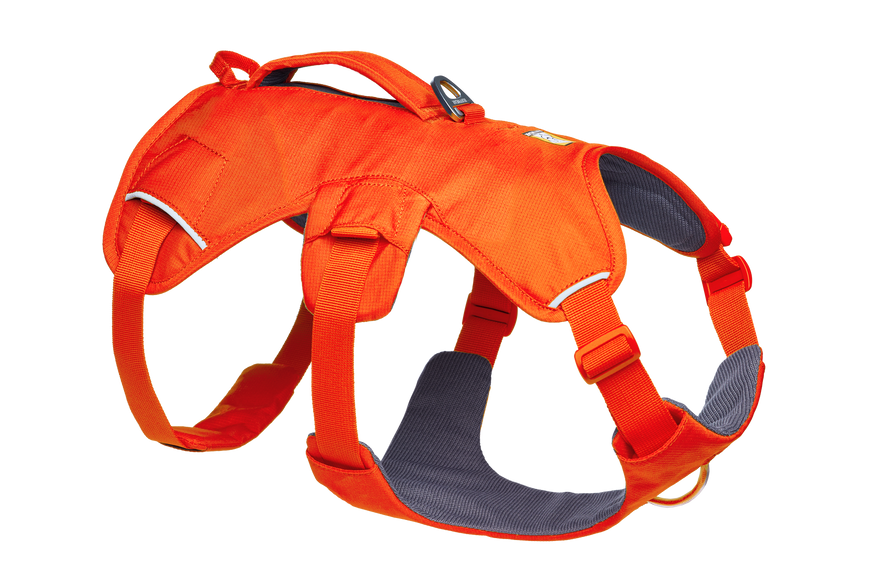 #1
#1 #2
#2 #3
#3Common questions
Is any Husky harness truly escape-proof?
No. “Escape-proof” is a marketing phrase, not a guarantee. A secure setup depends on the individual dog, fit, adjustment, design, leash handling, supervision, and the environment.
Should I simply tighten the harness more?
No. If the harness is secure only when it pinches, rubs, restricts the shoulders, or sits on the throat or soft abdomen, choose a different size or geometry rather than continuing to tighten.
Is a three-strap harness always safer?
Not automatically. A third strap can add coverage for a dog that backs out, but it still needs to sit on an appropriate part of the body and allow normal movement. Fit matters more than the number of straps by itself.
Sources and evidence limits
- American Kennel Club — How to Find the Right Dog Harness: fit, backward-movement escape check, coat/weight changes.
- American Kennel Club — The Importance of a Well-Fitting Harness: movement, two-finger fit, three-point harnesses for escape-prone dogs.
- VCA Animal Hospitals — Collar and Harness Options for Dogs: body-harness fit, shoulder/elbow clearance, escape risk when poorly fitted.
Source review: September 28, 2026. Manufacturer pages describe their own products and are included as design examples, not independent proof that a product cannot be escaped. No harness can eliminate escape risk in every dog or situation.
Keep exploring
For older dogs, pair secure walking gear with our mobility-support guide, traction plan for slippery floors, and senior-dog road-trip checklist.