

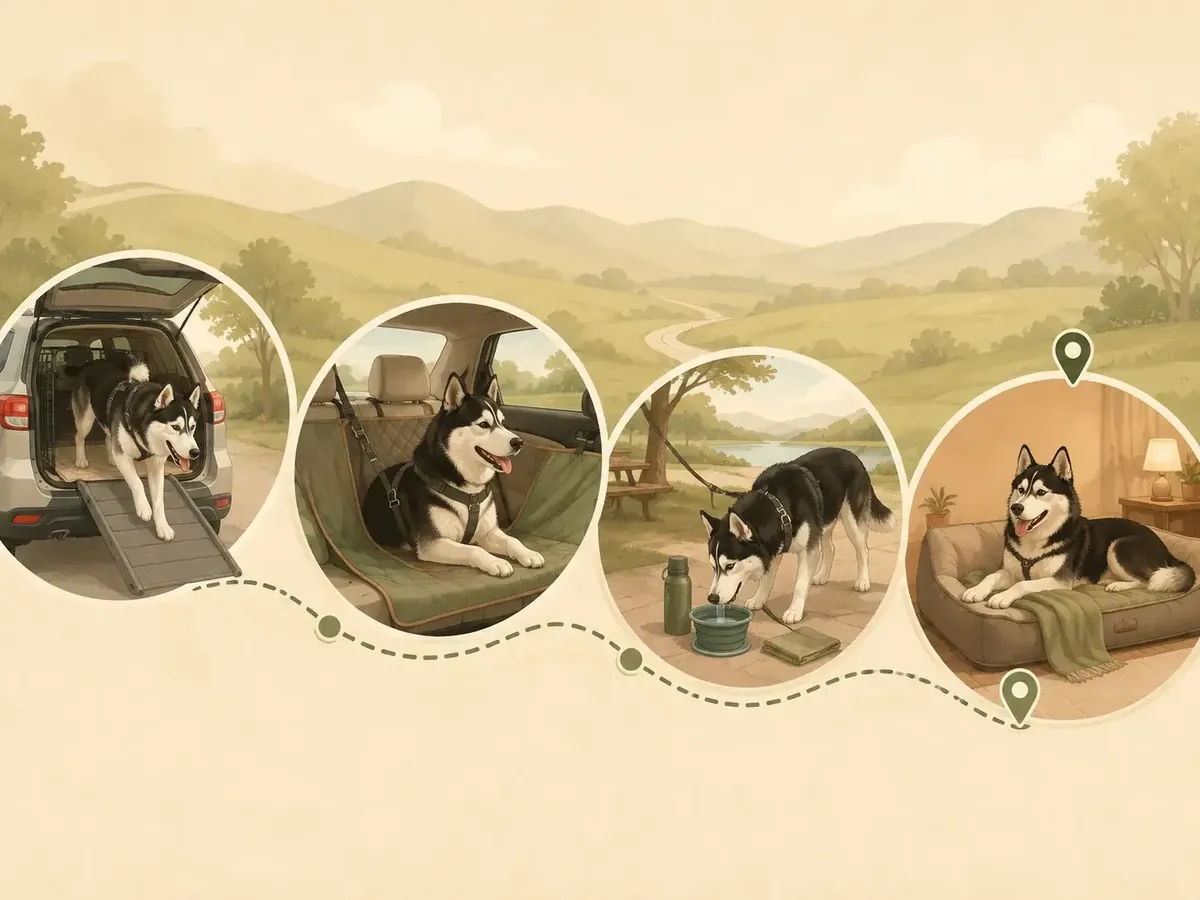
Road trips can still be part of life with an older dog, but the plan may need to change as mobility, vision, hearing, bladder habits, medication schedules, or tolerance for long periods in one position change.Can your dog get into the vehicle, ride securely, rest comfortably, and take breaks without turning the trip into an endurance test?
1. Decide whether this trip fits your dog today
AAHA senior-dog guidance notes that older dogs may need adaptations for getting into and out of vehicles and that travel should be handled safely and with minimal stress. Before a long trip, consider recent changes in mobility, breathing, appetite, elimination, confusion, anxiety, or pain.
If your dog has a new health problem, is recovering from a procedure, becomes distressed in the car, or has trouble standing and repositioning, ask your veterinarian whether the planned distance and travel setup are appropriate.
2. Fix vehicle entry before worrying about the highway
A dog who has to scramble, jump, or twist to get into the vehicle begins the trip at the hardest point. Use a stable approach with secure footing. Depending on the dog and vehicle, that might mean a ramp, a low step, or a properly fitted support harness.
For a vehicle-specific ramp selection, use our Dog Car Ramps for Senior Dogs guide to measure the real entry height and review incline, traction, attachment, and landing space.
Measure the cargo or door opening, the available ramp length, and the landing space before buying anything. A ramp that is too short for a high vehicle can create a steep approach, while a surface that slides at the top or bottom defeats the purpose.
For a deeper comparison, see Dog Ramps vs. Stairs for Senior Dogs and Easy Entry and Stable Access.
3. Secure your dog for the ride
The CDC's 2026 pet-travel guidance recommends keeping a dog riding on a seat in the back seat with a harness attached to the seat buckle. If using a crate, the CDC says the dog should be able to stand, sit, lie down, and turn around, and the crate should be well ventilated and secured so it cannot slide or shift during a stop.
Do not let a dog roam through the vehicle or ride with the head outside the window. For a senior dog, secure transport also makes it easier to keep bedding, traction, and body position predictable.
4. Build breaks into the route before you leave
The CDC recommends frequent stops on long drives so dogs can use the bathroom and stretch their legs. For an older dog, choose safe stops with level ground, a leash-ready exit, and enough time to stand, walk a little, drink if needed, and settle again without rushing.
Do not wait for obvious restlessness to decide where the next safe stop might be. Map likely breaks in advance, especially on long rural stretches or congested routes.
5. Pack the boring things that become important away from home
If your dog relies on a familiar supportive bed at home, compare portable options with the same fit and support checks in our orthopedic bed guide rather than choosing a travel bed by size label alone.
Current CDC guidance recommends bringing water, food, bowls, leash, waste bags, grooming supplies, medications, basic first-aid supplies, and travel documents such as proof of rabies vaccination. It also recommends keeping identification current and checking destination requirements before crossing state or national borders.
For a senior dog, add enough prescribed medication for the trip plus a reasonable delay margin, the veterinarian's contact information, and the address of a veterinary hospital near the destination. Keep medications in their labeled containers unless your veterinary team instructs otherwise.
6. Make parked-car safety non-negotiable
Never leave your dog alone in a parked vehicle. The CDC warns that vehicle temperatures can become dangerous quickly, even when outside conditions do not feel extreme. Senior dogs may have less reserve for dealing with heat, mobility stress, or dehydration, so “just a few minutes” is not a useful safety plan.
If one person needs to go inside, the safer plan is for another person to stay with the dog in a climate-controlled vehicle or to choose a stop where the dog can come with you.
7. Keep food and water familiar
Bring the dog's normal food and familiar water setup rather than turning travel day into a diet experiment. The CDC suggests feeding before departure rather than in a moving vehicle and bringing plenty of water for the trip.
If your senior dog has a prescribed feeding schedule, kidney or heart condition, diabetes, or another condition that affects food or water timing, follow the veterinarian's individual plan instead of a generic road-trip schedule.
8. Inspect the destination route before bedtime
The trip is not finished when you park. Check the path from the vehicle to the sleeping area, food and water, and the bathroom exit. Look for slick floors, stairs, unfamiliar drop-offs, clutter, and a bed that shifts on the floor.
Bring one or two familiar items if they help your dog settle, but prioritize safe access and traction. The same route-first thinking used at home still applies in a hotel, rental, family home, or campsite.
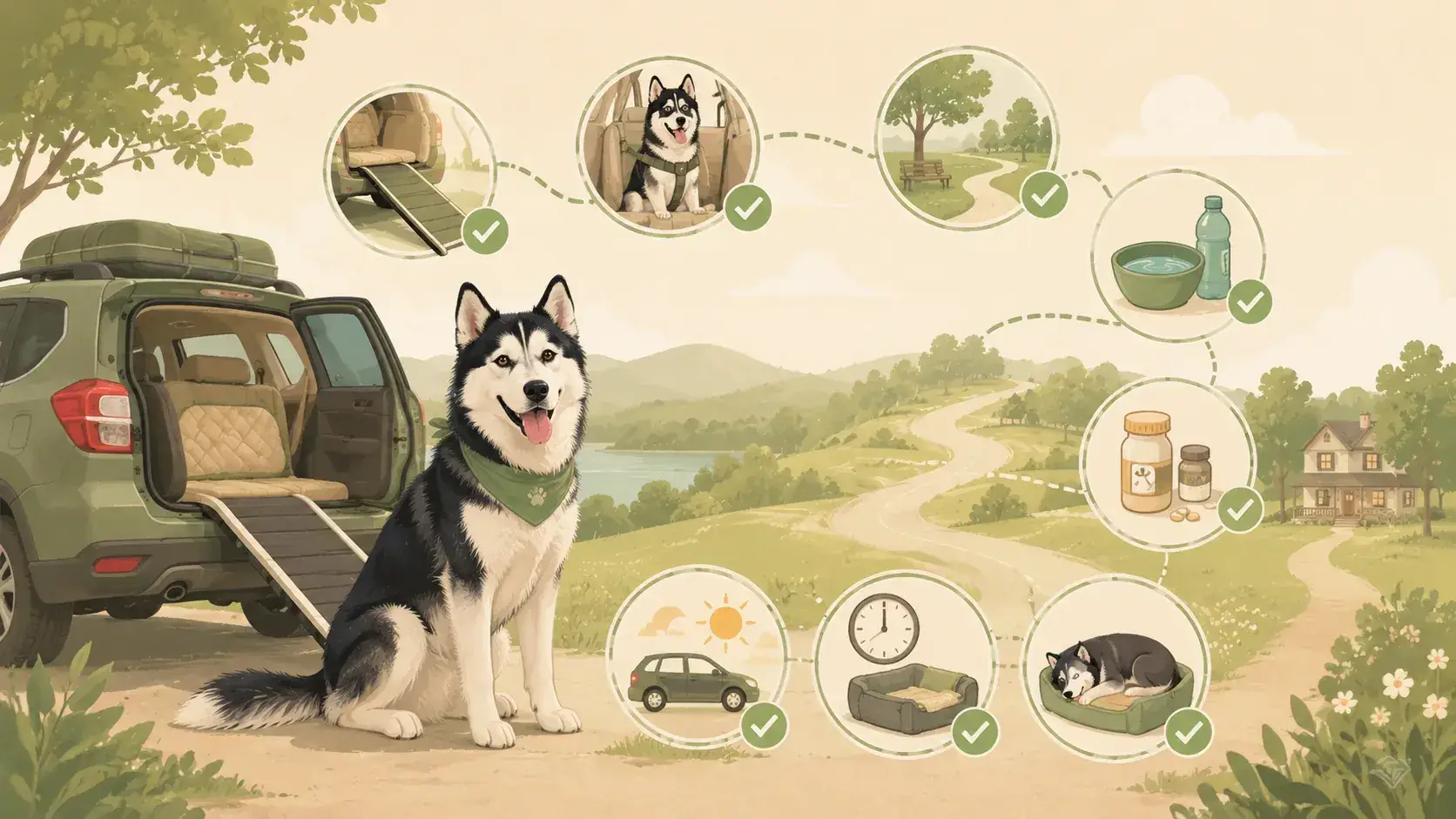
Before-you-go check
Eight boxes to check before the first mile
- Your dog is comfortable enough for the planned trip.
- Vehicle entry and exit do not require an unsafe jump.
- The harness or crate is secure and fits the dog correctly.
- Break locations are planned along the route.
- Water, medications, records, ID, leash, and first-aid supplies are packed.
- No part of the plan requires leaving the dog alone in a parked vehicle.
- Food and medication timing follow the dog's normal or veterinary routine.
- The destination has a safe route from vehicle to rest and bathroom areas.
Optional vehicle-access gear to compare
If vehicle entry is the difficult part, compare ramp length, folded size, walking-surface grip, stability, and whether the product fits your actual vehicle opening. These shopping links are optional starting points after you measure the setup.
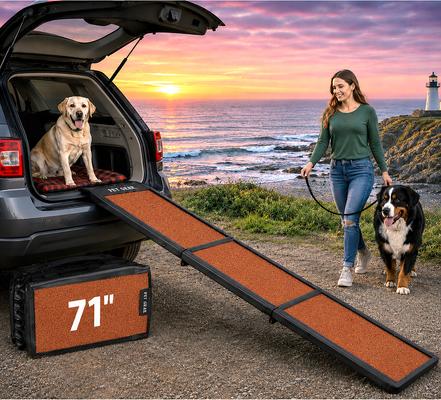 #1Browse Car Ramps & StepsActual product example shown: Pet Gear Full Length Tri-Fold Dog Car Ramp. This affiliate link opens a broader Chewy results page.Browse options ↗
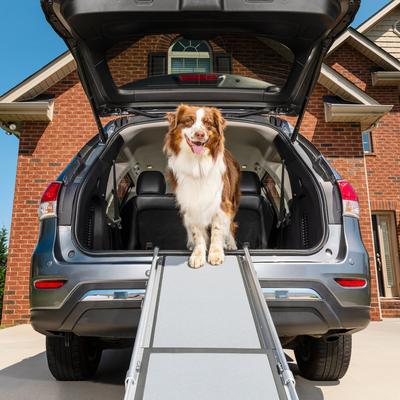 #2Browse Adjustable Car RampsActual product example shown: PetSafe Happy Ride Telescoping Dog Car Ramp. This affiliate link opens a broader Chewy results page.Browse options ↗
 #3Browse Foldable Car RampsActual product example shown: TRIXIE Two-Fold Dog Car Ramp. This affiliate link opens a broader Chewy results page.Browse options ↗
Make the trip shorter on your dog, even when the mileage is long
A senior-friendly road trip is not about adding the most gear. It is about removing the hardest moments: the jump into the vehicle, the loose ride, the overdue bathroom break, the hot parking lot, and the unfamiliar slippery floor at the destination.
Plan those transitions first, and the rest of the trip becomes much easier to evaluate.