

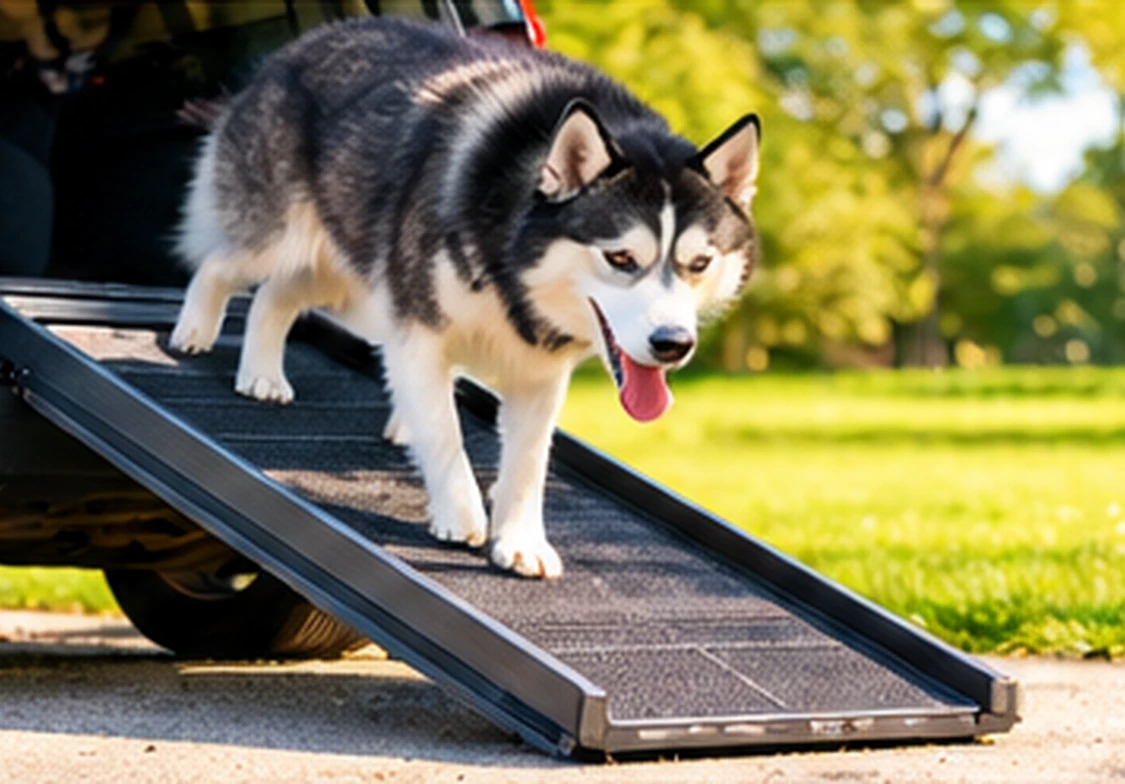
Why a car ramp needs its own fit check
A ramp for a sofa or dog bed is not automatically suitable for a vehicle. Cars, hatchbacks, SUVs, and trucks differ in entry height, bumper shape, hatch opening, available approach space, and the amount of room left to position the ramp. A short ramp that works for a low seat may become uncomfortably steep at a taller cargo floor. Vehicle ramps deserve their own fit check: a ramp that works for a sofa or dog bed may not work safely at a taller vehicle entry.
For a senior dog, the task is not simply to get from the ground to the car. The dog must approach, step onto the ramp, walk up or down with controlled footing, cross the vehicle threshold, and settle safely inside. The person handling the ramp must also be able to unfold it, place it securely, guide the dog, and stow it without straining.
The American Kennel Club’s ramp-and-stairs guidance highlights slip resistance, suitable width and height, weight capacity, stability, and gradual positive introduction as selection considerations. The American Animal Hospital Association’s senior-care guidance also treats environmental modification as one part of supporting older pets—not a replacement for veterinary assessment. See the AKC ramp and stairs guide and the 2023 AAHA Senior Care Guidelines.
1. Measure the vehicle before shopping
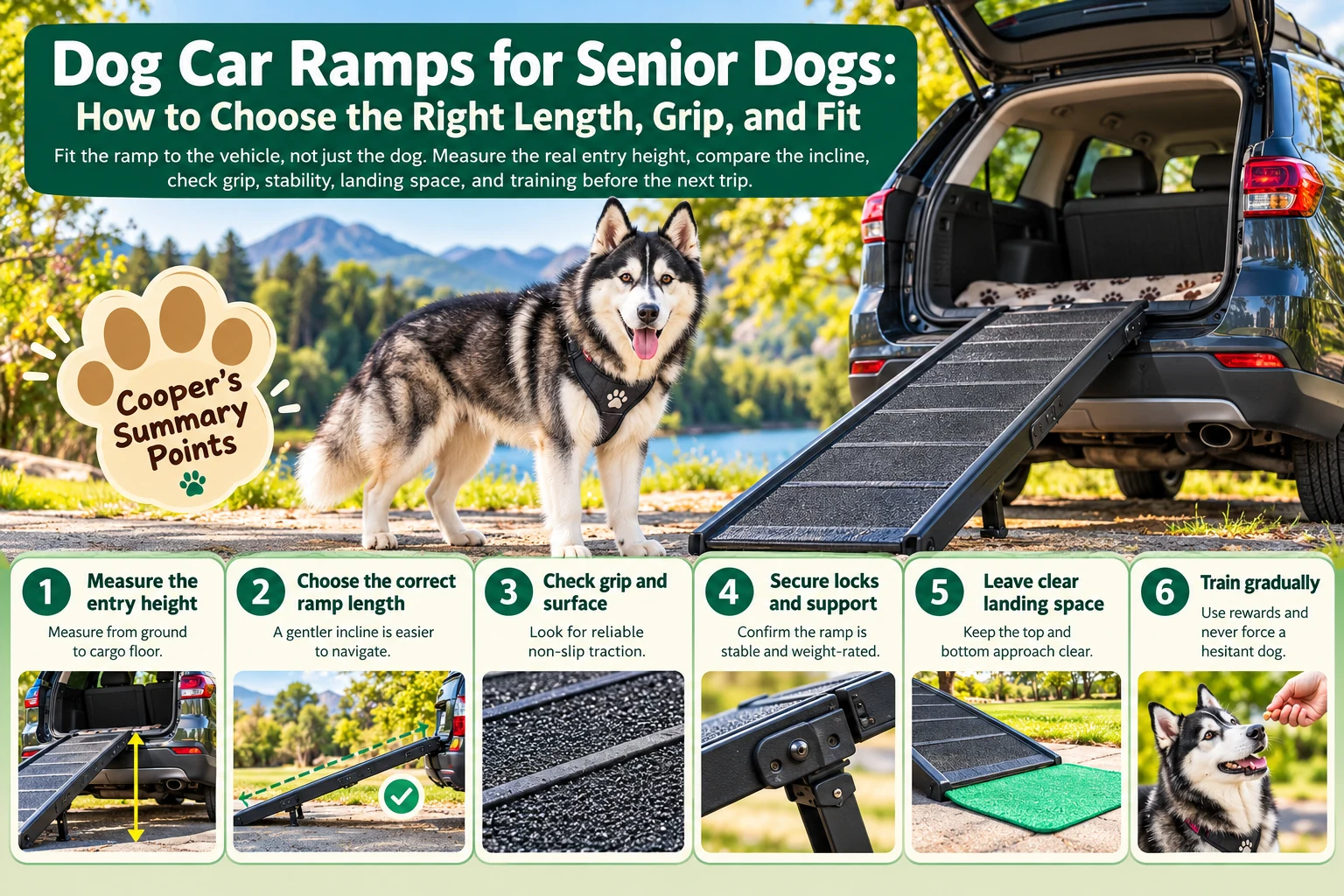
Start with the vehicle you actually use most often. Park on a level surface, secure the vehicle, and measure the vertical distance from the ground where the ramp base will sit to the surface your dog needs to reach. Measure to the cargo floor or seat entry—not to a decorative bumper edge that the ramp will not touch.
Next, measure the space available behind or beside the vehicle. A longer ramp can reduce steepness, but it needs a longer clear approach. Check whether the ramp can sit straight without blocking a sidewalk, sloping driveway, traffic path, or another vehicle. If the only available parking surface is sloped, choose a safer level location for training and ask the ramp manufacturer whether the setup is appropriate.
Also check:
- Upper contact point: Does the ramp sit securely on the vehicle surface or use a manufacturer-specified hook, lip, or attachment?
- Lower contact point: Can the base rest on a firm surface without rocking or sliding?
- Opening width: Can your dog walk through the hatch or door without twisting sharply at the top?
- Storage: Will the folded ramp fit in the cargo area without blocking emergency equipment or making it difficult to secure the dog?
- Caregiver handling: Can you lift, extend, and lock the ramp safely every time?
If a setup only works when the ramp is angled awkwardly or balanced on an unstable edge, it is the wrong setup even if the product’s listed dimensions seem suitable.
2. Compare ramp length and incline without relying on a magic number
The greater the vertical rise compared with the ramp’s sloping surface length, the steeper the climb. That is simple geometry—but it does not produce one universally safe angle for every dog. A dog’s strength, balance, joint motion, vision, confidence, and ability to control the descent all affect whether a particular ramp is manageable.
For a rough comparison, when you know the vertical rise and the length measured along the sloping ramp surface, you can estimate the angle with:
Angle ≈ arcsin(vertical rise ÷ ramp surface length).
For example, a 24-inch rise with a 72-inch ramp surface is about 19.5°. A 30-inch rise with the same 72-inch surface is about 24.6°. These are geometry examples, not veterinary cutoffs or guarantees of safety. The real lesson is that the same ramp can feel very different on two vehicles.
If the ramp is too steep, your dog may scramble, pull heavily with the front legs, hesitate at the top, or struggle to control the way down. Consider a longer ramp if there is enough space and the ramp remains stable. If a longer model is too heavy or bulky for the caregiver to manage consistently, compare another vehicle-access plan with your veterinary or rehabilitation team rather than compromising stability.
3. Look at the walking surface and usable width
A surface can look textured in a product photo and still be slick when dusty, damp, worn, or covered with leaves. Inspect the actual walking surface, clean it as directed, and check it regularly for worn grip material or damage. Avoid assuming that a thin strip of carpet or a decorative pattern guarantees traction.
The ramp should be wide enough for your dog’s normal stride, including small balance corrections. A dog that walks close to one edge, drifts sideways, or turns its head to look down may need a wider surface, better visual guidance, or a different access plan. Raised side edges can help define the path, but they do not make a narrow or unstable ramp safe by themselves.
Check the entire route too. The ramp’s base should land on a surface where paws can grip, and the ground at the bottom should not be muddy, icy, uneven, or slippery. A good ramp cannot solve a dangerous landing zone.
4. Check the weight rating, flex, and locking points
Read the exact manufacturer’s instructions for the specific model. Confirm that its stated weight capacity covers your dog and that every latch, safety strap, hinge, extension lock, or contact pad is used as directed. Do not rely on a seller’s short summary when the product manual provides more detailed instructions.
Before each use, look for cracks, loose joints, damaged tread, bent parts, or a mechanism that no longer locks securely. Once the ramp is placed, test it without your dog on it: it should not slide, twist, rock, or shift at either end. A visible bounce or flex, an uncertain top attachment, or a base that moves on the ground is a reason to stop and correct the setup—not to ask your dog to “try it anyway.”
A higher weight rating alone does not guarantee a better ramp. The structure, width, surface, attachment method, and condition all matter. Follow the model’s instructions for weight limits and inspection; do not modify or add attachments in a way the manufacturer does not permit.
5. Make the top and bottom landings easy
Clear the space at both ends before opening the ramp. At the top, remove loose bags, blankets, or objects that could catch a paw. Make sure the dog can finish the climb and turn or step into the vehicle without squeezing through a narrow gap. At the bottom, allow enough room for a controlled first and last step.
Use a calm, secure handling routine. Keep the vehicle parked, use the parking brake, and prevent the dog from jumping in or out while the ramp is being positioned or removed. If you use a leash or harness for guidance, use it to steady and direct the dog—not to pull the dog up the incline. A second adult may be useful if one person needs to manage the ramp while the other calmly guides the dog.
During travel, the ramp solves only the entry and exit part of the journey. Plan a stable place for the dog to ride, appropriate restraint, breaks, water, and a manageable route at the destination. Our Senior Dog Road Trip Checklist covers the wider travel routine.
6. Teach the ramp before you need it
Do not make the first practice session a rushed departure. Begin when your dog is calm and you have time to stop. The AKC’s training guidance recommends letting dogs investigate new equipment, keeping early sessions short, rewarding progress, and increasing difficulty gradually. The PetSafe ramp care-and-use guide is one example of manufacturer instructions that start with the ramp flat and progress to a small incline before vehicle use; follow the manual supplied with your own model.
A practical progression is:
- Flat and familiar: Put the secured ramp flat on the ground. Let your dog sniff or approach voluntarily. Reward calm investigation.
- One or two steps: Reward stepping onto the ramp, then walking a short distance. Keep the session brief and end while your dog is still comfortable.
- A small incline: Raise one end only after the dog is relaxed on the flat surface. Keep the ramp secured and increase difficulty in small increments.
- Parked vehicle practice: Place the ramp exactly as the manufacturer directs, with the vehicle parked and the engine off. Practice both directions if your dog will need to enter and exit that way.
- Real routine: Use the ramp for a short, low-pressure outing only when your dog can walk it without scrambling, freezing, slipping, or jumping off the side.
Never drag, push, or punish a dog for refusing. A refusal is useful information: the ramp may be too steep, narrow, slippery, unstable, unfamiliar, or physically difficult. Return to an easier step and reassess the setup. Some dogs need a different aid or hands-on guidance from a veterinary rehabilitation professional.
7. Know when a ramp is not enough
A ramp is an access aid, not a diagnosis or treatment. If your dog has new or worsening difficulty getting into the car, seems painful, repeatedly slips, cannot bear weight normally, or shows a sudden change in balance or strength, contact your veterinarian before assuming the issue is simply age or reluctance. Dogs recovering from surgery or living with a known orthopedic or neurologic condition may need specific restrictions or a tailored handling plan.
If your dog cannot use a ramp confidently, ask about alternatives such as a properly fitted support harness, help from two people, a lower-entry vehicle, or another transport method. The best choice is the one that fits the dog’s current ability and the caregiver’s safe handling capacity—not the one that looks most convenient in a product photo.
Quick pre-trip checklist
- ☐ Vehicle is parked on a level surface with the parking brake engaged.
- ☐ Ramp is long enough for this vehicle’s entry height and available approach space.
- ☐ Walking surface is clean, dry as required, and in good condition.
- ☐ Weight rating, hinges, locks, and safety straps have been checked.
- ☐ Top contact and bottom base are secure; the ramp does not rock or slide.
- ☐ Both the approach and landing areas are clear and provide traction.
- ☐ Dog has practiced the ramp gradually and can use it without scrambling or panic.
- ☐ The caregiver can place, supervise, and stow the ramp safely.
Frequently asked questions
What length car ramp does a senior dog need?
There is no single length for every car. Measure the actual vertical rise and available ground space, then compare ramps that reach the entry without creating an unnecessarily steep incline. Confirm the ramp’s usable surface length, not just the folded size or overall package dimensions.
Is a longer dog car ramp always better?
Not automatically. A longer ramp can make the incline gentler, but it also takes more space and may be heavier to handle. It must still fit securely, stay stable, provide good traction, and be manageable for the person setting it up.
Can I use the same ramp for a bed and a car?
Only if the ramp is designed and rated for both uses and its dimensions work for each destination. A short furniture ramp may be too steep for a taller vehicle. Check the manufacturer’s stated use and limits instead of assuming that one ramp fits every height.
Should I buy a ramp with side rails?
Side edges or rails may help some dogs stay centered, but they cannot compensate for inadequate width, poor traction, a steep incline, or unstable attachment. Choose the complete setup based on your dog’s movement and confidence.
What if my dog will not use the ramp?
Stop rather than forcing the dog. Return to a flat, familiar practice setup and reward voluntary steps. Recheck the surface, angle, width, stability, and landing. If your dog appears painful or cannot walk steadily, seek veterinary advice before further practice.
View car-ramp options on Chewy
Compare these three car-ramp styles against your vehicle’s entry height, the ramp’s usable length and width, surface grip, stability, and the space available at both ends. Product examples and availability can change, so check the current listing and manufacturer instructions before buying.
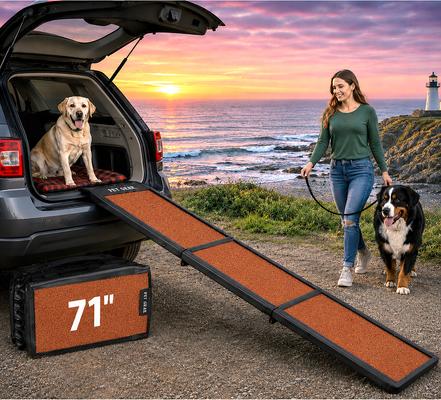 #1Pet Gear Tri-Fold Car RampProduct example shown: Pet Gear Full Length Tri-Fold Dog Car Ramp. This affiliate link opens a broader Chewy results page; confirm the exact item and fit.View Options ↗
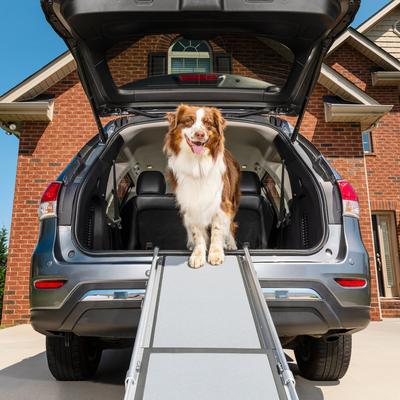 #2PetSafe Telescoping Car RampProduct example shown: PetSafe Happy Ride Telescoping Dog Car Ramp. This affiliate link opens a broader Chewy results page; check length and locking instructions.View Options ↗
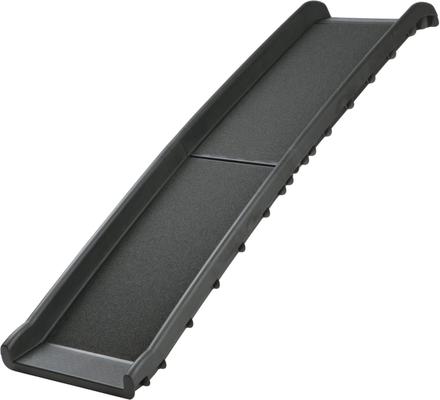 #3TRIXIE Two-Fold Car RampProduct example shown: TRIXIE Two-Fold Dog Car Ramp. This affiliate link opens a broader Chewy results page; check folded size, traction, and stability.View Options ↗
Sources and editorial approach
This guide separates expert guidance from our practical synthesisThis guide does not rank individual products; use the fit checklist above to compare models and follow each ramp’s specific manufacturer instructions.
- American Kennel Club — Does Your Dog Need Dog Stairs or a Ramp?
- American Animal Hospital Association — 2023 Senior Care Guidelines for Dogs and Cats
- PetSafe — Deluxe Telescoping Pet Ramp Care & Use Guide (manufacturer instructions)
Related Senior Dog Comfort guides: Dog Ramp Safety for Senior Dogs, Dog Ramps vs. Stairs for Senior Dogs, Support Harnesses and Traction for Senior Dogs, Best Senior Dog Mobility Aids, and Senior Dog Road Trip Checklist.