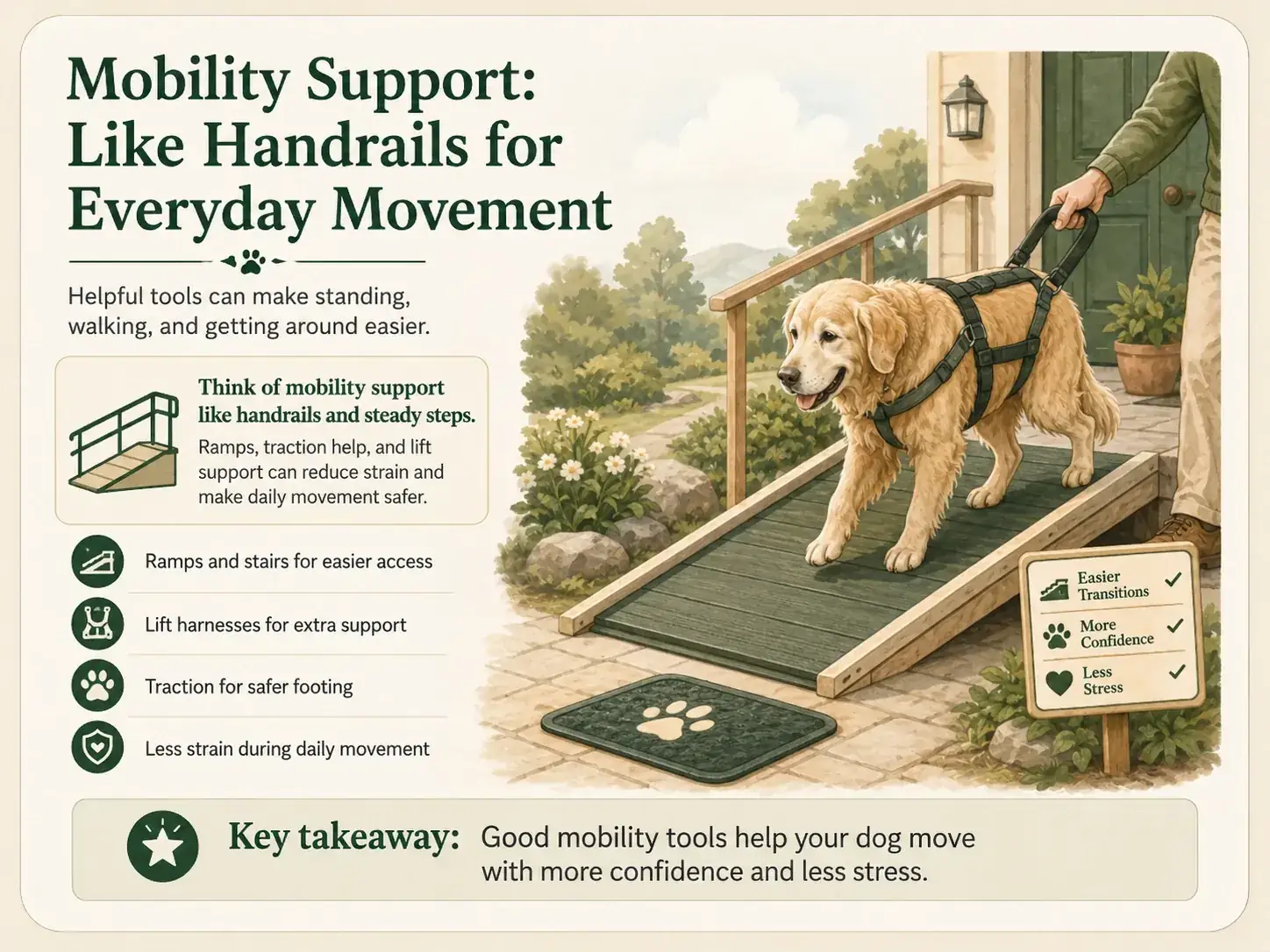
Open a topic for more practical context. These notes are educational and do not replace veterinary guidance for a new mobility problem.
Incline or Riser Height
For ramps, compare length and target height. For stairs, compare individual step height and tread depth.
Learn more
For the same target height, a longer ramp generally creates a gentler slope. With stairs, lower risers and deeper treads can make paw placement more predictable. There is no single angle or step size that fits every dog.
Traction
Look for a surface that gives paws grip without bunching, sliding, or creating a trip edge.
Learn more
Check the walking surface when dry and under normal household conditions. Loose fabric, slick plastic, worn carpet, or an unsecured mat can reduce grip even when the structure itself is sturdy.
Stability
The product should stay steady at both ends and remain stable as weight shifts across it.
Learn more
Test for rocking, sliding, flexing, and movement at the contact points before your dog uses it. Recheck stability after moving or folding the product because placement can change how it behaves.
Approach Space
Your dog needs room to line up with the ramp or steps instead of entering from a sharp angle.
Learn more
Measure the landing and the clear floor space in front of the unit. A ramp can fit the height correctly but still be awkward if furniture, walls, or doors force the dog to approach sideways.
Portability
For car use, consider folded size, weight, handles, and how quickly you can set it up.
Learn more
Portability is a tradeoff: very light equipment can be convenient to carry, while heavier construction may feel steadier. Compare stored size, carrying method, setup steps, and the weight you can comfortably handle.
Training
Introduce a new surface gradually and avoid forcing a fearful dog onto unfamiliar equipment.
Learn more
Start with the equipment secure and at the easiest practical setup. Allow exploration at the dog's pace and reinforce calm, successful steps. If the dog repeatedly refuses or appears painful, stop and reassess rather than forcing another attempt.