
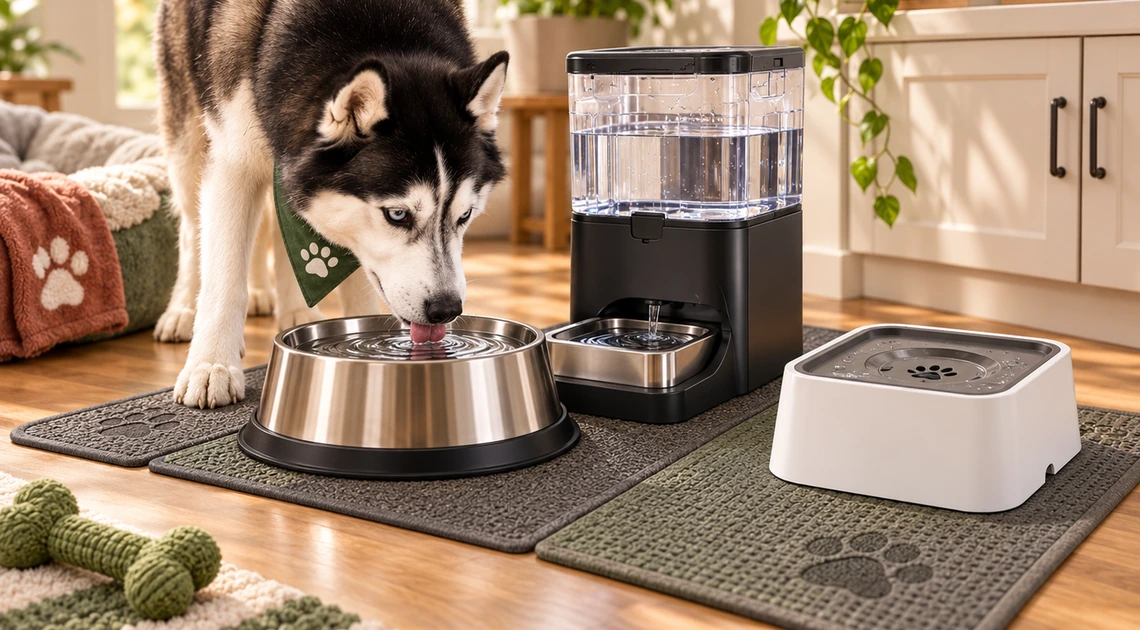
For an older dog, “fresh water available” is only the starting point. The station also has to be easy to reach, stable underfoot, and simple enough to use without an unnecessary trip across slick flooring.
Direct answer
What is the best water-station setup for a senior dog?
Place fresh water on a short, familiar route; give all four paws secure footing while the dog drinks; use a bowl that does not slide; and watch for meaningful changes in intake. Veterinary guidance notes that arthritis can make reaching a bowl harder, while new increases or decreases in drinking can be a reason to contact your veterinarian rather than assuming the change is simply aging.
1. Put water on the route your dog already uses
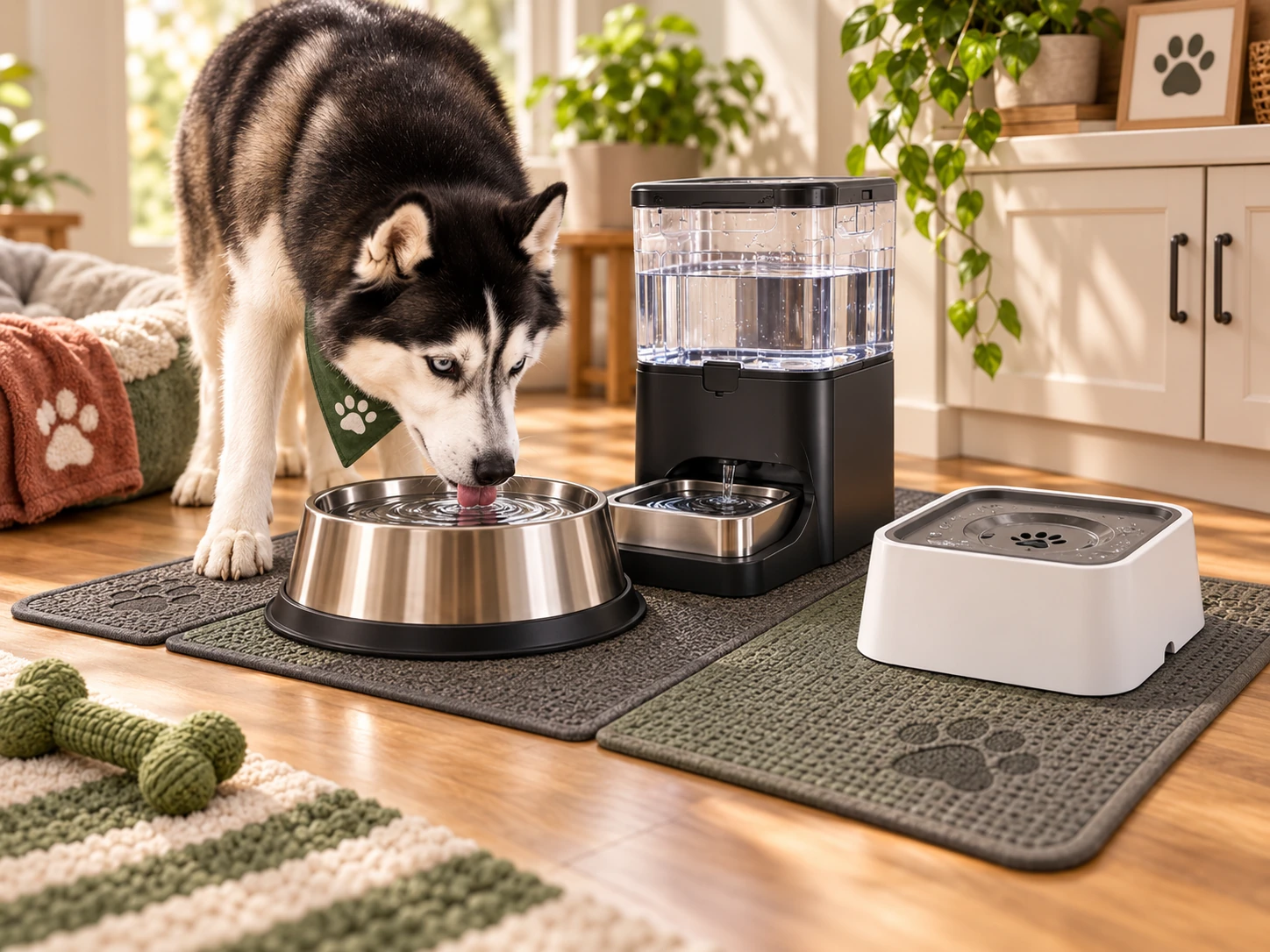
Start with observation instead of equipment. Notice the path between your dog’s bed, favorite resting room, door, food area, and family spaces. A bowl that is technically available can still be inconvenient if the dog has to cross a slick kitchen, squeeze around furniture, or make a long trip from the place where they spend most of the day.
Current VCA senior-dog guidance specifically recommends plenty of fresh water and notes that having water bowls on every floor can make access easier for older dogs. A second station can be especially useful when stairs or distance are becoming a barrier.
2. Make the standing area larger than the bowl
A drip mat that only fits under the bowl may protect the floor without helping the dog. For mobility, the useful surface is the area where the front and rear paws land during approach, drinking, turning, and push-off.
Use a secure, easy-to-clean non-slip surface that stays flat. Watch one normal drinking session from the side. Repeated rear-foot repositioning, splaying, hesitation before stepping in, or an immediate backward scramble after drinking are observations worth noting. They are clues about the setup—not a diagnosis.
3. Stop the bowl from becoming another moving surface
A senior dog should not have to chase the bowl while trying to drink. A stable base, non-slip bottom, or secure mat can keep the bowl from sliding when the nose or chest touches it. Keep the surrounding route free of cords, curled mat edges, and clutter.
4. Treat bowl height as an individual fit question
There is no universal rule that every senior dog needs an elevated water bowl. Look at the dog’s actual posture and stability. A higher bowl may improve access for one dog but may be unnecessary or unsuitable for another. If your dog has swallowing problems, a medical condition, or a history that makes feeding position important, ask your veterinarian before making a major height change.
5. Use the station to notice meaningful changes
Keeping the bowl in a visible, consistent place makes intake easier to notice. A rough general guideline often cited by veterinary sources is about one ounce of water per pound of body weight per day, but actual needs vary with diet, activity, weather, medications, and health. Dogs eating wet food may drink less from the bowl because the food itself supplies water.
If you suspect a change, measure what you put into the bowl and what remains over a 24-hour period. That number can give your veterinarian more useful information than “I think he is drinking more.”
6. Know when the issue is bigger than the station
Do not restrict water just because a dog seems to be drinking more unless a veterinarian specifically directs you to do so. Increased thirst and urination can accompany kidney disease, diabetes, liver disease, hormone disorders, medication effects, and other conditions. A clear decrease in drinking can also matter, especially with lethargy, vomiting, weakness, tacky gums, or other signs of dehydration.
Call your veterinarian about a new or sustained change in drinking or urination. Home setup can remove access barriers, but it should not be used to explain away a health change.
7. Run this 60-second water-station check
- Fresh water is available throughout the day.
- The route to the bowl is short, familiar, and clear.
- All four paws can remain on secure footing while drinking.
- The bowl does not slide when touched.
- The dog can approach, drink, turn, and leave without a slick transition.
- The bowl is cleaned regularly and intake changes are easy to notice.
- New thirst or urination changes are recorded and discussed with the veterinarian.
Optional water-station products to compare
Start with route, footing, and bowl stability first. If equipment would make the setup easier to maintain, these three shopping links are practical comparison points for an automatic water source, a no-spill design, and a durable stainless option. Choose by your dog’s actual reach, drinking style, cleaning needs, and floor setup.
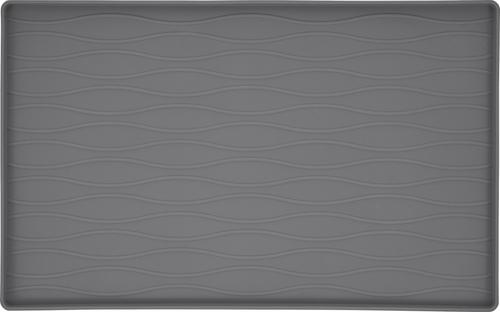 #1Browse Non-Slip Feeding MatsActual product example shown: Frisco Silicone Dog & Cat Food Mat. This affiliate link opens a broader Chewy results page.Browse options ↗
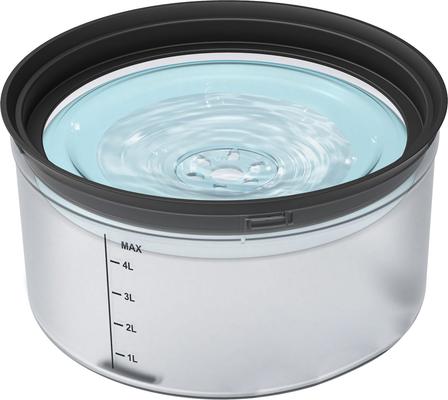 #2Browse No-Spill Water BowlsActual product example shown: UPSKY No Spill Dog Water Bowl. This affiliate link opens a broader Chewy results page.Browse options ↗
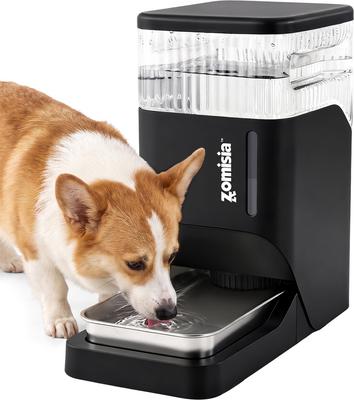 #3Browse Automatic Water DispensersActual product example shown: ZOMISIA Automatic Dog Water Dispenser. This affiliate link opens a broader Chewy results page.Browse options ↗
Keep building the senior-dog routine
Explore nutrition, gut health & hydration →
Build a safer mobility route →
Check nail care and paw traction →
Read the full gut-health guide →
Evidence checked for this article
Veterinary-reviewed sources used for the factual guidance above:
- PetMD: Dog Not Drinking Water? — water-intake variability and arthritis-related access difficulty.
- PetMD: Why Is My Dog Drinking a Lot of Water? — rough intake guideline and warning not to restrict water without veterinary direction.
- VCA: Senior Dog Care — fresh-water access, tracking consumption, and multiple bowls on different floors.
Senior Dog Comfort provides educational information, not veterinary diagnosis or treatment.