

Digestive balance
Think beyond the product name. Consider stool quality, appetite, comfort, and whether the current diet already seems stable.
Senior dog gut-health guide
Gut-support products make more sense when you first understand the everyday routine around them. This guide helps you compare digestive-balance claims, label details, meal consistency, and the questions to bring to your veterinarian.
Explore the Gut-Health Category
Helpful picture
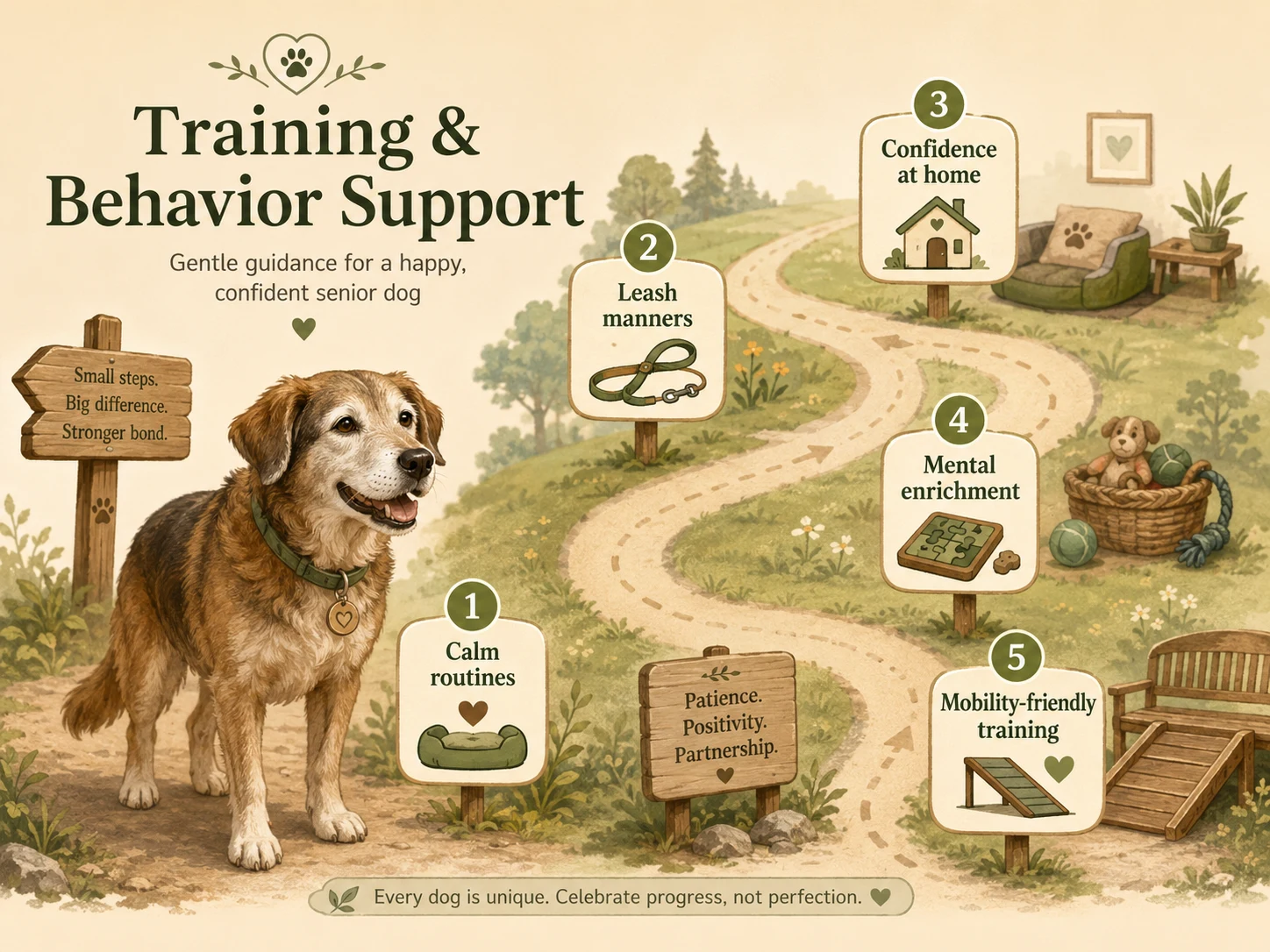
Use the garden picture as a reminder that probiotics usually sit inside a wider routine: food fit, consistency, hydration, observation, and veterinary context still matter.
Start here
Think beyond the product name. Consider stool quality, appetite, comfort, and whether the current diet already seems stable.
Look for an ingredient panel, serving directions, storage details, and anything you need to measure or mix consistently.
Large diet changes or erratic feeding schedules can make it harder to know what is helping and what is not.
Digestive symptoms can have medical causes. A guide can help you compare options, but it cannot rule out illness.
Change log
When several things change at once, it becomes harder to know what helped or what caused a new problem. Keep a short record that you can share with your veterinarian if symptoms persist.
Record the main diet, new treats, table foods, chews, and the date of any transition.
Note meaningful changes in stool pattern, appetite, vomiting, or willingness to eat without trying to diagnose the cause yourself.
Keep the exact product names, serving amounts, and timing together so overlap and timing changes are easier to review.
Record changes in drinking, energy, comfort, and normal routine that happen alongside digestive signs.
Set up a reachable, stable water station →Probiotic label literacy
| Label detail | Why record it |
|---|---|
| Named microorganism(s) | Lets you distinguish one product formula from another instead of comparing only the word “probiotic.” |
| Serving directions | Shows how much the dog is expected to receive and whether the routine is practical. |
| Storage instructions | Helps you follow the manufacturer’s handling directions rather than assuming every product is stored the same way. |
| Expiration / lot information | Provides traceability and a practical freshness check when the manufacturer supplies it. |
| Other active ingredients | Helps identify prebiotics, fibers, enzymes, vitamins, or other additions that make the complete formulas different. |
What to compare
Choose products with a label you can read and enough information to compare the daily serving sensibly.
Check whether the serving size, taste, and storage fit your real daily routine.
Pick a few useful observations such as stool quality, appetite, and comfort instead of guessing by memory.
Your veterinarian can help you decide whether digestive issues, prescription diets, or medication timing change the plan.
Related reading
See where digestive products fit inside the broader supplement conversation.
Read the Supplement Guide →Use diet questions to check whether the current food routine needs attention first.
Read the Diet Guide →Compare soft chews, powders, liquids, tablets, and the practical differences each format creates.
Compare Formats →Health note
Persistent digestive upset, significant stool changes, dehydration, or fast appetite decline should be discussed with your veterinarian promptly. This guide is general educational information only.
Owner-supplied shopping options
Use the questions above to compare ingredients, serving directions, storage needs, and how each option fits your dog’s complete diet and daily routine.
Nutrition label reading
Use the nutritional adequacy statement, calories, and intended use before judging a diet by marketing or one ingredient.
Read the Food Label Guide →Continue exploring
Quick navigation