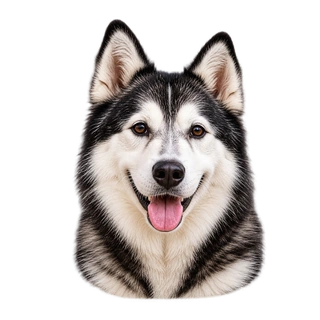

A senior dog who hesitates at a floor-level bowl may look more comfortable when the food or water is moved upward. That observation can be useful, but it does not create a universal rule.What problem is the new height actually solving for this dog?
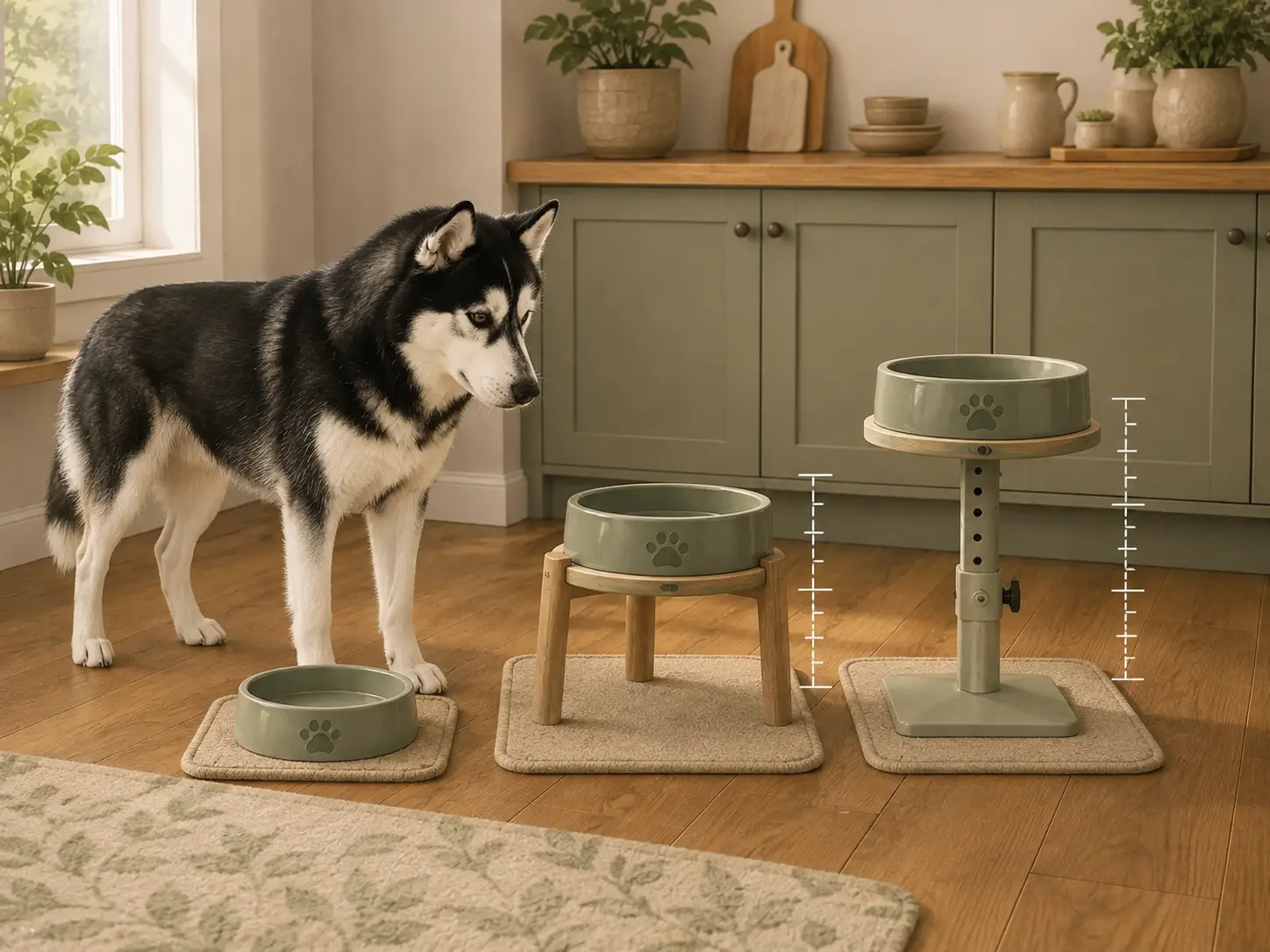
1. Treat elevation as an individual adjustment
Current senior-dog guidance from VCA Animal Hospitals includes raised food and water bowls among home changes that may reduce stress on an older dog’s joints. VCA’s osteoarthritis guidance also discusses raised feeding stations as one possible comfort modification.
That does not mean age alone determines the correct height. Body size, limb length, neck and back comfort, balance, diagnosis, appetite, and the dog’s usual eating posture can all change the decision.
2. Observe the complete meal, not one moment
Watch the approach, first bite, middle of the meal, drinking, and departure. Does the dog hesitate before lowering the head, spread the front feet widely, shift weight repeatedly, stop early, cough, gulp, or lose footing near the stand?
A bowl that seems easier to reach may still slide, tip, trap the dog in a narrow corner, or create an awkward head and neck position. Look at the whole feeding station rather than height alone.
3. Check stability and access
The base should stay planted when the dog nudges the bowl or changes position. Place the station on secure footing with enough room to approach, stand, turn, and leave without crossing a slick patch.
Keep fresh water easy to reach. VCA’s senior-feeding guidance emphasizes regular access to clean water and monitoring intake because a change in drinking can be medically important.
4. Do not overlook GDV risk
Raised feeding deserves special caution in dogs at increased risk for gastric dilatation-volvulus (GDV), commonly called bloat. Cornell University College of Veterinary Medicine lists raised food bowls among factors associated with increased GDV risk. Large, deep-chested dogs and dogs with a close relative that had GDV are among the higher-risk groups.
Association does not prove that one bowl caused an individual case, but it is enough reason not to promote elevation as an automatic senior-dog upgrade. Ask your veterinarian about feeding height and preventive options when your dog has known risk factors.
Five-minute feeding-station check
Adjust for the dog in front of you
- What difficulty are you trying to reduce?
- Can your dog approach and leave without slipping?
- Does the bowl or stand move when nudged?
- Can your dog eat and drink without an awkward reach?
- Has appetite, swallowing, coughing, or drinking changed?
- Is your dog large, deep-chested, or otherwise at higher GDV risk?
- Has your veterinarian recommended a specific setup?
5. Change one variable at a time
If your veterinarian agrees that a height trial is reasonable, begin with a stable setup and compare the same meal routine. Avoid changing bowl height, food, meal timing, and location all at once; too many changes make the dog’s response harder to interpret.
Recheck the station as mobility changes. A setup that worked months ago may become too tall, too low, or too unstable later.
6. Compare the whole station before buying
When you are ready to shop, compare adjustability, bowl size, base width, nonslip contact, cleaning access, and whether the stand leaves enough room for a natural approach. The three owner-supplied destinations below provide convenient options to review after the individual needs and risks are considered.
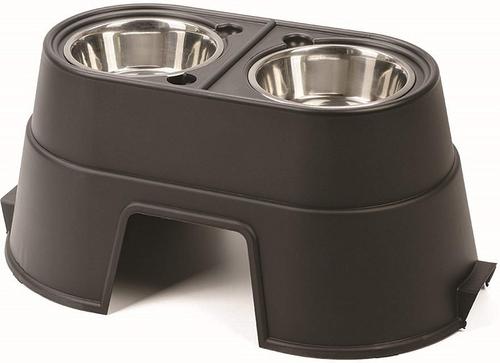 #1Browse Elevated Dog BowlsActual product example shown: OurPets Comfort Elevated Dog & Cat Bowls. This affiliate link opens a broader Chewy results page.Browse options ↗
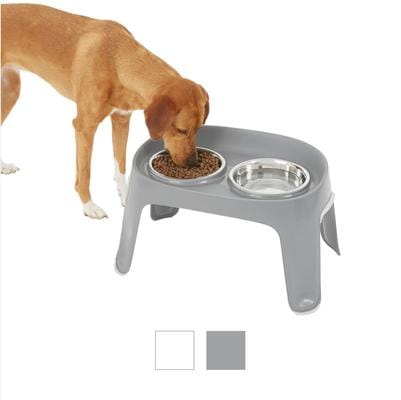 #2Frisco Elevated Dog Diner, Gray, LargeActual linked product shown. Open the affiliate link for current capacity, price, and availability.View product ↗
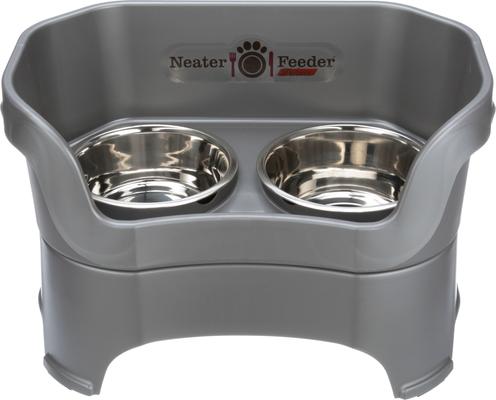 #3Neater Pets Neater Feeder Deluxe Elevated Dog BowlsActual product-family image shown. Open the affiliate link for its current size, color, and availability.View product ↗
7. Know when the bowl is not the main issue
A new reluctance to eat or drink, weight loss, repeated vomiting, coughing during meals, trouble swallowing, marked thirst, abdominal swelling, or obvious pain needs veterinary attention rather than another bowl experiment.
A swollen abdomen with unsuccessful retching, heavy drooling, restlessness, breathing difficulty, weakness, or collapse can signal GDV and requires emergency veterinary care. Do not wait to see whether changing the bowl helps.
Easier reach is a question, not a guarantee
Raised bowls can be an individualized accessibility tool, but “senior” is not a sufficient reason by itself. Begin with the observed difficulty, consider the complete feeding station and health risks, and choose a height only when it fits the dog in front of you.