

When owners shop for a senior-dog bed, most of the attention naturally goes to foam, thickness, bolsters, and size. Those details matter. But once the bed comes home, another question can make just as much difference in daily use:where should the bed actually go?
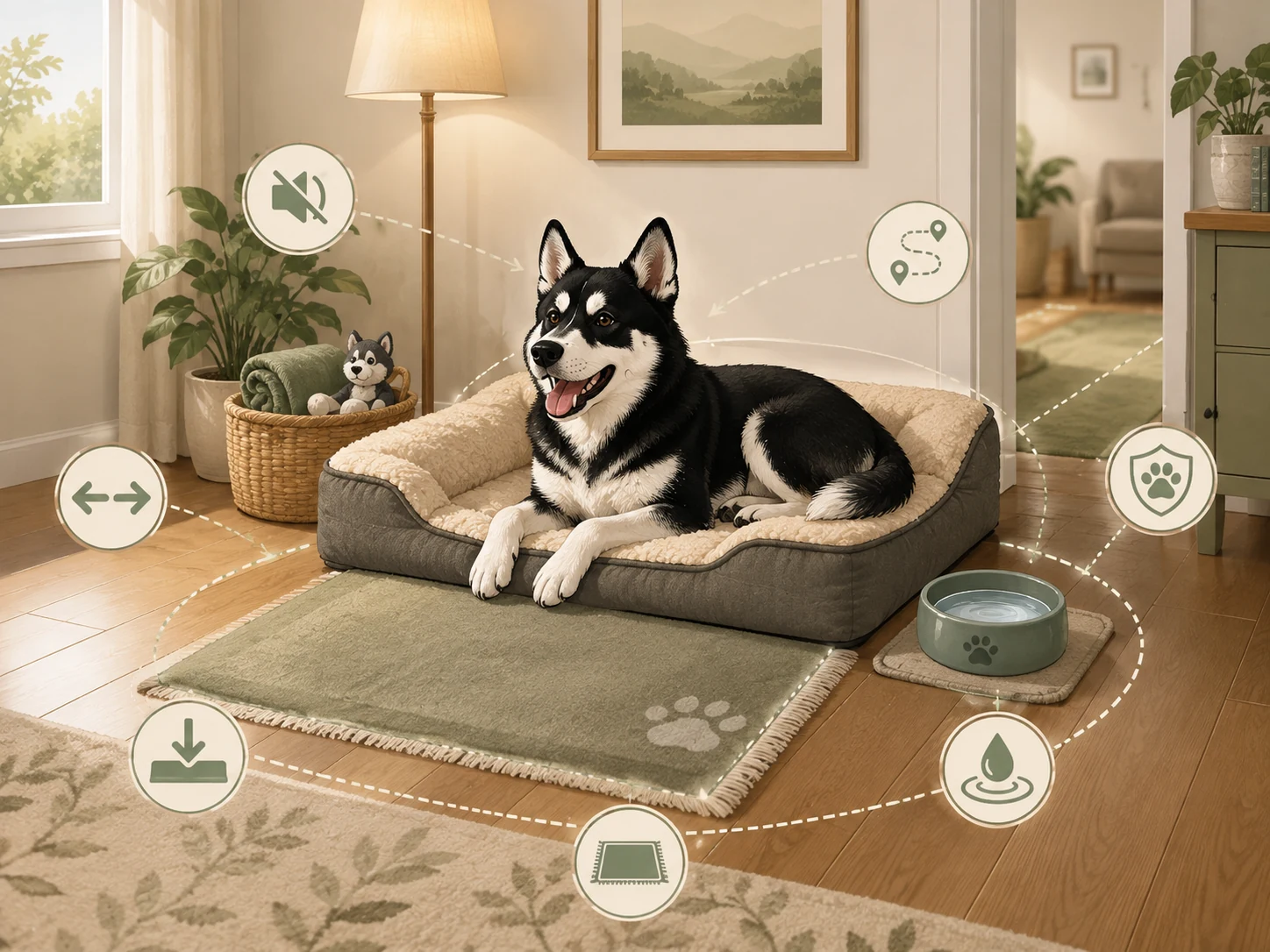
1. Start with where your dog already chooses to rest
Before moving furniture or buying another bed, notice the places your dog already selects during the day. Some older dogs prefer to stay near the family. Others repeatedly choose a quieter corner, a cooler floor, a sunny patch in the morning, or a spot with a clear view of the room.
Those preferences are useful clues. The goal is not to force one “perfect” location but to place supportive rest where your dog is naturally comfortable spending time.
2. Check the full approach to the bed
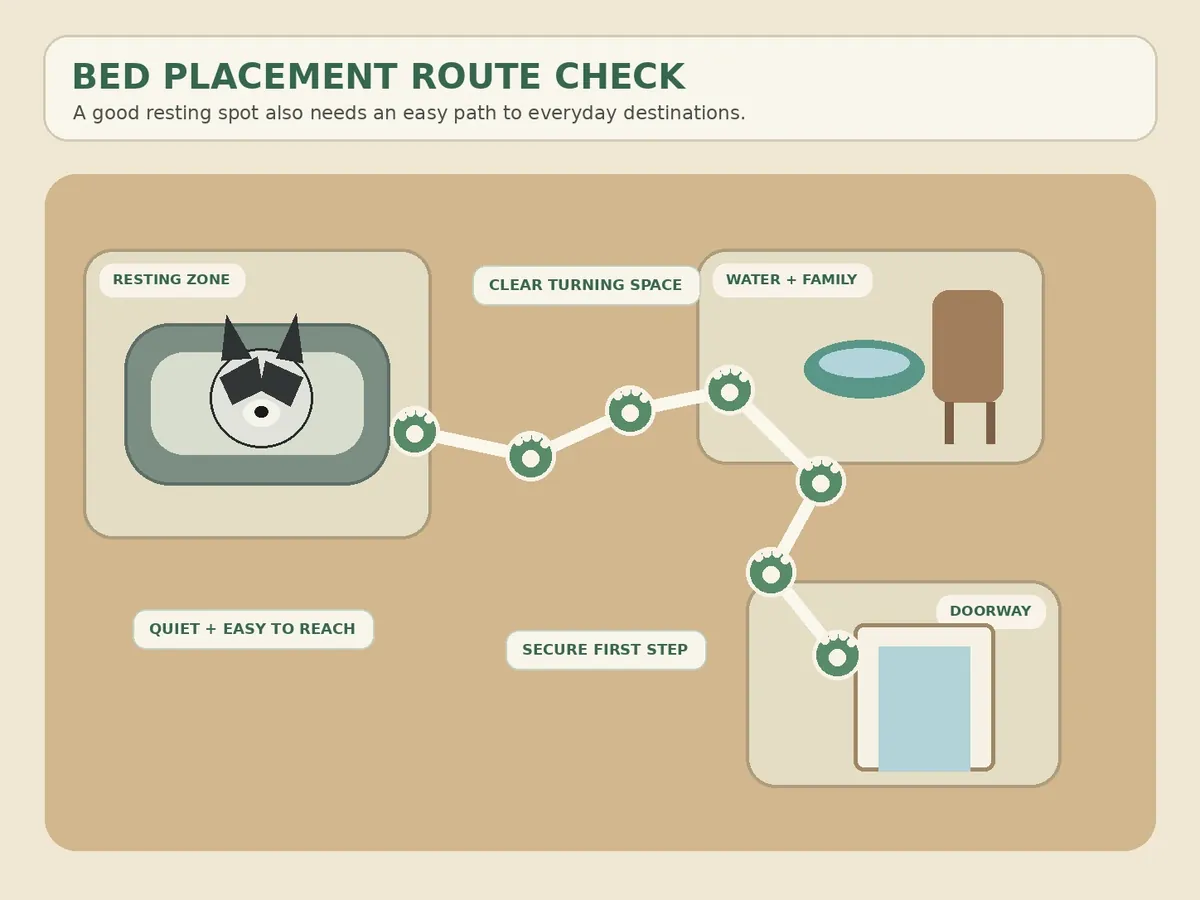
Look several feet beyond the bed itself. A narrow furniture gap, a sharp turn, a slick floor, or a doorway threshold can make the route harder before your dog ever reaches the sleeping surface.
If the path is difficult, improving only the bed may not solve the real problem. Stable runners or mats, a wider approach, or a small furniture adjustment can make the resting area easier to use without changing the bed at all.
3. Give the bed a secure landing zone
The first step off a bed can be one of the least stable moments, especially on hardwood, laminate, or tile. Give your dog enough non-slip space to place all four paws, stand up fully, and turn before reaching a slick surface.
Also check whether the bed itself moves when your dog steps in, circles, or pushes off to stand. A supportive bed should not slide away during the exact moment your dog needs leverage.
4. Leave room to stand, turn, and change position
A bed squeezed tightly between furniture can look tidy but reduce usable access. Senior dogs may take wider turns, use several small steps to position themselves, or need more space to stand before stepping onto the bed.
Leave a clear approach on at least one side and avoid placing the easiest entry point directly against a wall, table leg, storage bin, or other obstacle.
5. Watch temperature, drafts, and direct sun
Comfort can change throughout the day. A bed beside a heating vent may become too warm, while a spot near an exterior door may feel drafty. Direct afternoon sun can also heat a resting surface more than expected.
Notice whether your dog repeatedly leaves the bed for a cooler floor or seeks another room at certain times. That pattern may be telling you more about location than about the bed itself.
6. Balance quiet with connection
Many dogs want rest without feeling isolated. A useful location can offer a calmer edge of the room while still allowing the dog to see or hear normal family activity.
Avoid placing the primary resting spot directly in a busy walkway where people repeatedly step around the dog. At the same time, a bed hidden in a distant room may go unused if your dog prefers to stay near everyone.
7. Consider more than one resting station
Older dogs often spend more time resting, and one bed does not have to serve every part of the day. A supportive main bed in the living area plus a second familiar resting spot near the bedroom, office, or another frequently used room can reduce unnecessary travel through the house.
The second spot does not need to duplicate the first exactly. What matters is that each location offers a predictable, accessible place to settle.
Two-minute placement check
Stand where your dog stands before lying down
- Can your dog reach the bed without crossing a difficult slippery section?
- Is there enough grip for the first step in and the first step out?
- Can your dog turn without bumping furniture or a wall?
- Does the bed stay in place when weight shifts near the edge?
- Is the location comfortable at different times of day?
- Can your dog rest without being in the middle of foot traffic?
- Would a second resting station reduce unnecessary walking?
Resting support beyond a standard dog bed
The most useful resting setup often combines several simple details: supportive cushioning, easy entry, stable footing, enough turning room, a comfortable room temperature, and a location your dog actually wants to use.
That is why Senior Dog Comfort treats the bed as one part of a larger system. If access or footing is the bigger issue, continue with our Easy Entry & Stable Access guide and our article on slipping on hardwood floors. If the bed itself is the question, see the Anatomy of a True Orthopedic Dog Bed.
When a placement problem may be more than a setup issue
Environmental changes can make everyday movement easier, but a new reluctance to lie down, repeated falls, sudden weakness, persistent limping, obvious pain, dragging a paw, or a rapid change in mobility deserves veterinary attention. A different bed location can remove an obstacle; it cannot diagnose or treat an underlying health problem.
Adding warmth? Placement is only part of the decision. See the heated dog bed safety checklist for cords, supervision, easy exit, and heat tolerance.