

Anatomy of a True Orthopedic Dog Bed

“Orthopedic” on a label is only the beginning. This guide shows you what to look for beneath the cover, how the layers work together, and how to judge a bed for your own dog instead of relying on marketing language alone.

Cooper standing on a soft comforter at home
Cooper’s Comfort Check: support, easy access, stable footing, room to settle, and a cover that can handle real dog life.

What to look for beneath the cover

Use this visual as a buying framework, not as a claim that every orthopedic bed uses the exact same construction.

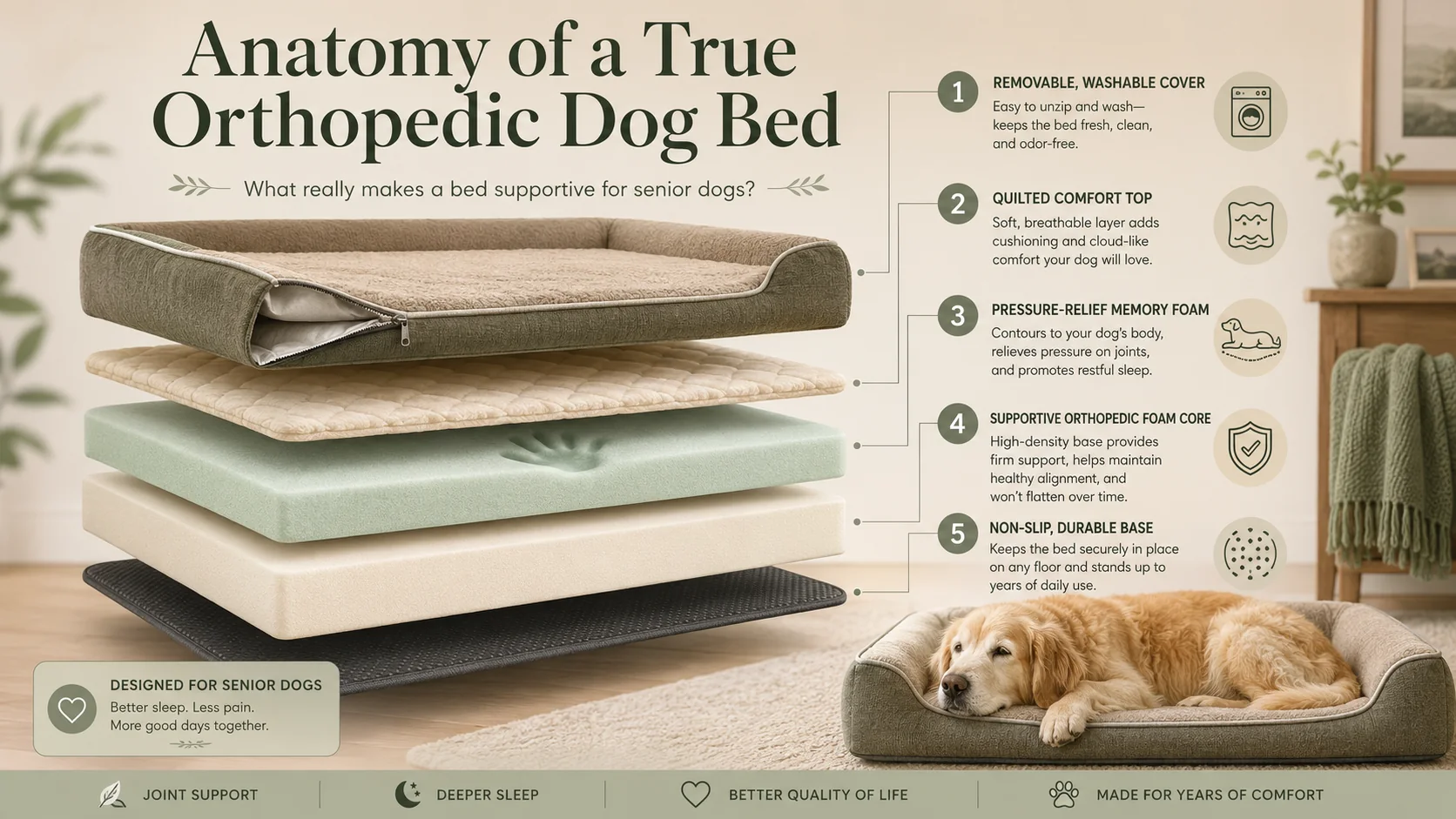
Exploded five-layer illustration showing a washable cover, quilted comfort top, pressure-relief foam, supportive orthopedic foam core, and non-slip durable base
Senior Dog Comfort’s five-layer framework for evaluating an orthopedic dog bed.
1

Removable, washable cover

A practical cover makes routine cleaning easier. Check the care instructions, zipper placement, and whether replacement covers are available.

2

Comfort surface

The top should feel comfortable without becoming so loose or plush that paws disappear into it or standing becomes awkward.

3

Pressure-relief layer

Memory foam or another conforming material may add cushioning. Treat material names as one part of the picture, not a guarantee of performance.

4

Supportive core

The deeper core should resist excessive compression under your dog’s weight. This is the layer that helps keep the body from simply sinking to the floor.

5

Stable, non-slip base

A bed that slides during entry or exit can make movement less predictable. Pair the bed with a stable location and a grippy surface when needed.

Five simple checks you can do at home

These checks are observational buying tools, not medical tests.

01

Press test

Press firmly where your dog’s hips or shoulders would rest. Does the bed push back with support, or collapse immediately?

02

Bottom-out test

After your dog lies down, check whether the body appears suspended by the bed or nearly resting on the hard floor beneath it.

03

Entry test

Watch the first and last few seconds: stepping in, turning, lying down, and standing back up should not require an awkward climb over the edge.

04

Slide test

Apply gentle sideways pressure. If the bed skates across the floor, improve traction or choose a more stable base.

05

Washability test

Confirm that the cover comes off without a wrestling match and that the care instructions fit your real cleaning routine.

The bed still has to fit the dog and the room

A well-built foam core can be undermined by the wrong size, a difficult entry, or a slippery setup. Measure your dog in a natural sleeping position and allow room to stretch, turn, and change positions. For dogs that struggle with tall sides, compare open-front or lower-entry designs.

Placement matters too. Veterinary resources commonly recommend environmental changes such as orthopedic bedding, ramps, and non-slip surfaces for older or mobility-compromised pets. That supports a broader idea we use throughout this site: evaluate the whole path to the bed, not just the bed itself.

✓ Room to stretch✓ Easy entry✓ Stable footing✓ Practical cleaning
FeatureWhat to comparePotential concern
Foam coreSupport under your dog’s weightExcessive compression or early sagging
EntryLow or open access when neededTall bolster blocking an easy step-in
Sleeping areaEnough room to stretch and turnDog consistently hanging off the edge
BaseStable contact with the floorSliding during entry or standing
CoverRemovable, washable, durable enough for routineHard-to-remove cover or impractical care instructions

Use the framework when comfort decisions are getting confusing

Especially useful when…

  • You are comparing several beds that all use the word “orthopedic.”
  • Your dog is larger or heavier and you are worried about bottoming out.
  • Entry height, traction, or washability matters as much as cushioning.
  • You want a repeatable checklist rather than a single “best bed” claim.

Do not rely on a bed alone when…

  • Your dog has new or worsening limping, stiffness, falls, or obvious pain.
  • Standing or walking has changed suddenly.
  • You suspect an injury or medical condition.
  • You need guidance on pain treatment, medication, rehabilitation, or diagnosis.

Why we treat the bed as part of a bigger comfort setup

Senior Dog Comfort is a buying-guide resource, not a veterinary service. For mobility or pain concerns, work with your veterinarian. The resources below support the use of environmental accommodations such as orthopedic bedding, non-slip surfaces, and ramps for appropriate senior or mobility-compromised pets.

Orthopedic dog bed basics

What makes a dog bed orthopedic?

There is no single universal consumer standard that makes a pet bed orthopedic. Focus on the whole design: stable supportive cushioning, enough room, easy access, traction, and practical cleaning.

Is thicker foam always better for a senior dog?

No. Thickness alone cannot tell you how supportive a bed will feel. Consider how the entire foam system compresses under your dog and whether your dog can lie down and stand comfortably.

Should an orthopedic bed have a low entry?

A lower or open entry can be helpful when stepping over a tall side is difficult. The right entry height depends on the individual dog and the bed’s overall stability.

When should I ask a veterinarian about mobility?

New or worsening stiffness, limping, difficulty standing, falls, reluctance to move, or signs of pain deserve veterinary guidance. A bed can support comfort, but it does not diagnose or treat the cause.