

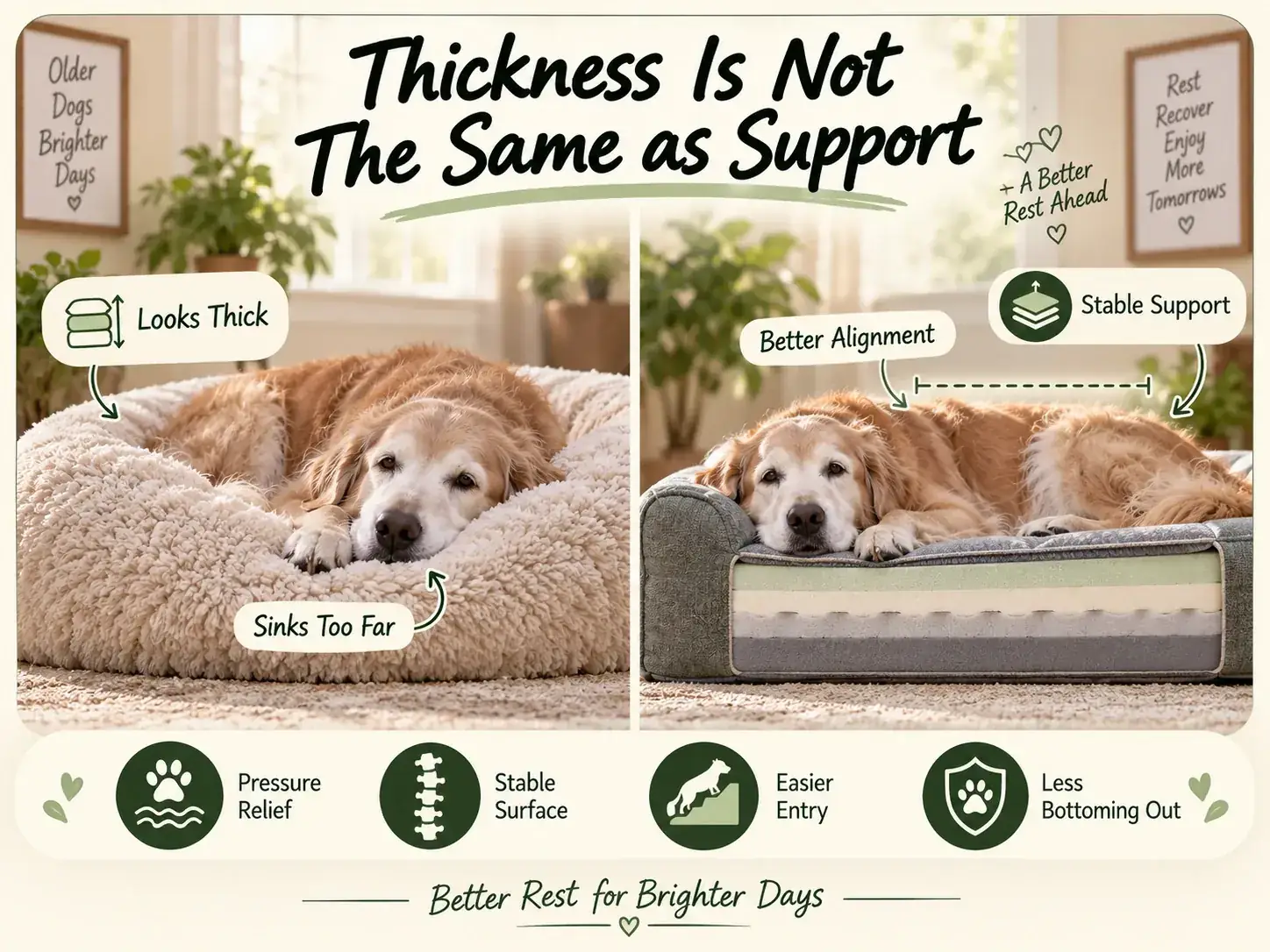
Thickness Is NotThe Same as Support

A tall-looking bed can still compress too far. Compare what is inside the bed, how it behaves under your dog's weight, and whether the surface remains stable enough for comfortable movement.

Start with the construction, not the outside height

Bolsters, fluffy covers, and lofted fiber can make a bed appear thick without telling you how much supportive foam is underneath the sleeping surface. Look for the actual layer description and total usable support beneath the dog.

Material names are useful clues, but they are not a complete quality rating. Two beds described as memory foam can feel very different depending on layer thickness, firmness, underlying support, and the dog's size.

How to compare support more practically

Press test

Press firmly where the hips and shoulders would rest. Notice whether the bed pushes back with support or collapses immediately.

Learn more

A hand press is only a quick screening check because a dog's weight is distributed differently. Use it to compare how quickly different layers compress, then confirm by observing the bed under your dog.

Bottom-out check

With the dog lying down, look at how much structure remains between the body and the floor. Excessive compression can defeat the purpose of extra thickness.

Learn more

Focus on the heavier contact areas such as the hips, shoulders, and chest. The goal is not zero compression; it is enough remaining support that the body is not effectively resting on the hard surface below.

Edge stability

Watch what happens when the dog stands near the edge. A surface that folds or rolls dramatically can make exit less predictable.

Learn more

Edges often carry more concentrated pressure during standing and stepping off. Compare whether the edge stays reasonably level or collapses sharply when weight shifts toward it.

Recovery over time

Check for persistent sagging or deep impressions. The important question is whether the bed continues to support the dog during repeated daily use.

Learn more

Foams recover at different rates, so look for a pattern rather than an instant bounce-back. Persistent low spots, uneven compression, or a permanent trough are more useful warning signs than one temporary impression.

Match the bed to the dog's body and sleeping style

A heavier dog may compress the same bed more than a lighter dog. A dog that sleeps stretched out also distributes weight differently from a dog that curls tightly. That is why support should be judged with the individual dog in mind.

Room to change position matters too. A bed with excellent foam but a cramped sleeping surface can still be a poor fit.

Do not chase a single magic number

Thickness, foam type, density descriptions, and firmness can all help with comparison, but no single number guarantees comfort. Use the retailer's current construction details together with real observation of how the bed behaves.