
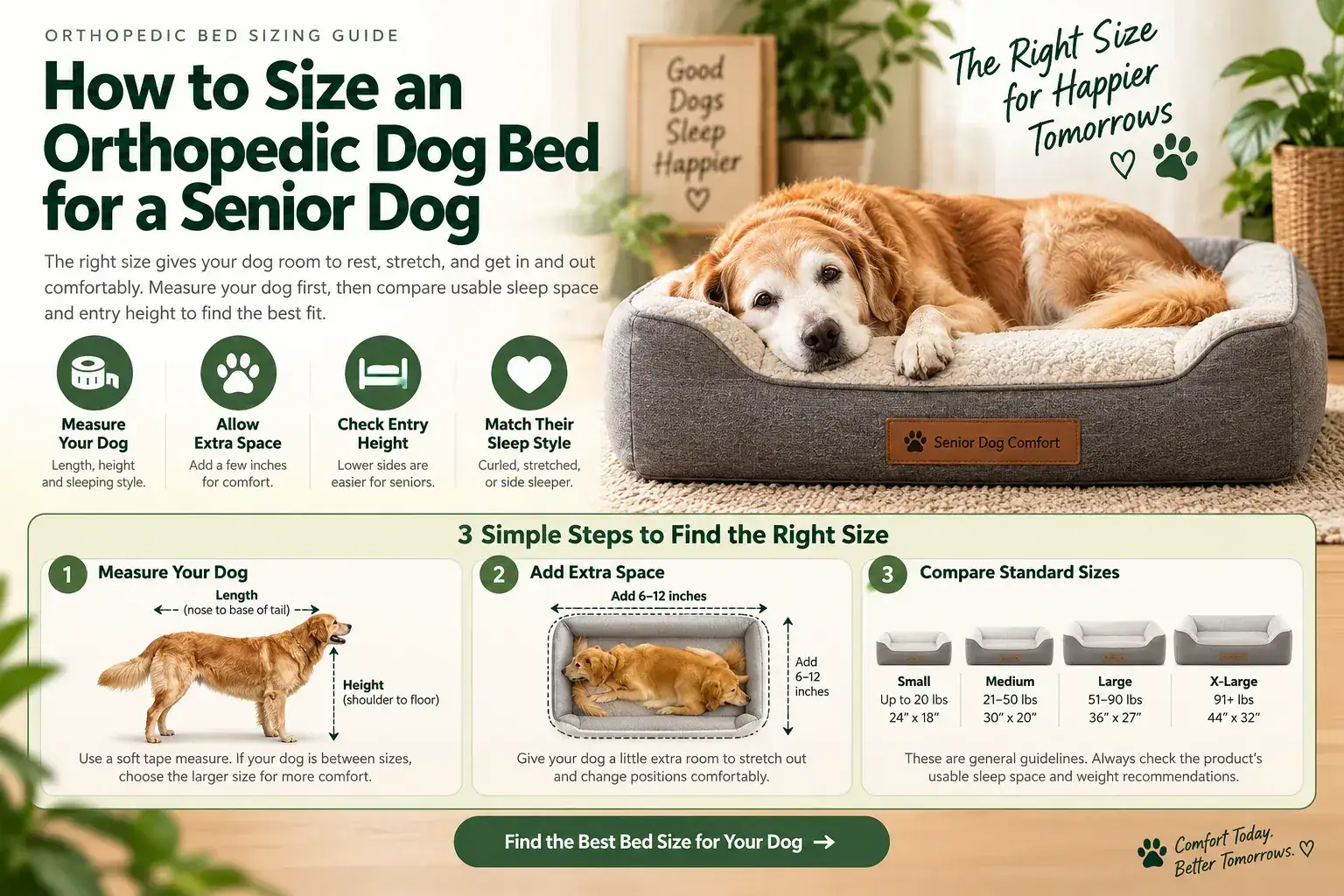
Measure your dog in a normal resting position
Use the position your dog actually chooses when relaxed rather than measuring only while standing. Measure from the nose area to the rear of the body, and if stretching out is common, measure the full relaxed stretch instead of a tight curl. Then leave a modest margin around the body so the dog can turn, extend the legs, and reposition without pressing into a bolster or hanging over the edge. For dogs that alternate between curled and stretched positions, size for the larger sleeping footprint.
Check the usable sleeping area
The outside dimensions of a bed do not always equal the space the dog can use. Thick bolsters, raised walls, and sloped sides can remove several inches from the flat interior surface, so compare interior length and width whenever the manufacturer lists them. Also consider the shape: a rectangular bed may use floor space more efficiently for a dog that stretches, while a deeply bolstered bed may suit a dog that prefers to curl but still needs enough center space to change positions comfortably.
Bed shape changes the space those measurements describe. Our bolster-vs.-flat mattress checklist shows how to compare the interior sleep surface with entry, support, and the way your dog actually rests.
Compare the easiest point of entry
For a senior dog, measure the lowest edge the dog must step over—not the tallest part of the bed. A lower or open-front entry can reduce the amount of hip, knee, and shoulder flexion needed to get onto the bed, but it should still feel stable when weight is placed on the edge. Compare that step-over height with what your dog already manages comfortably, and check the flooring in front of the bed; even a low entry can be difficult if the approach is slick or cramped.