

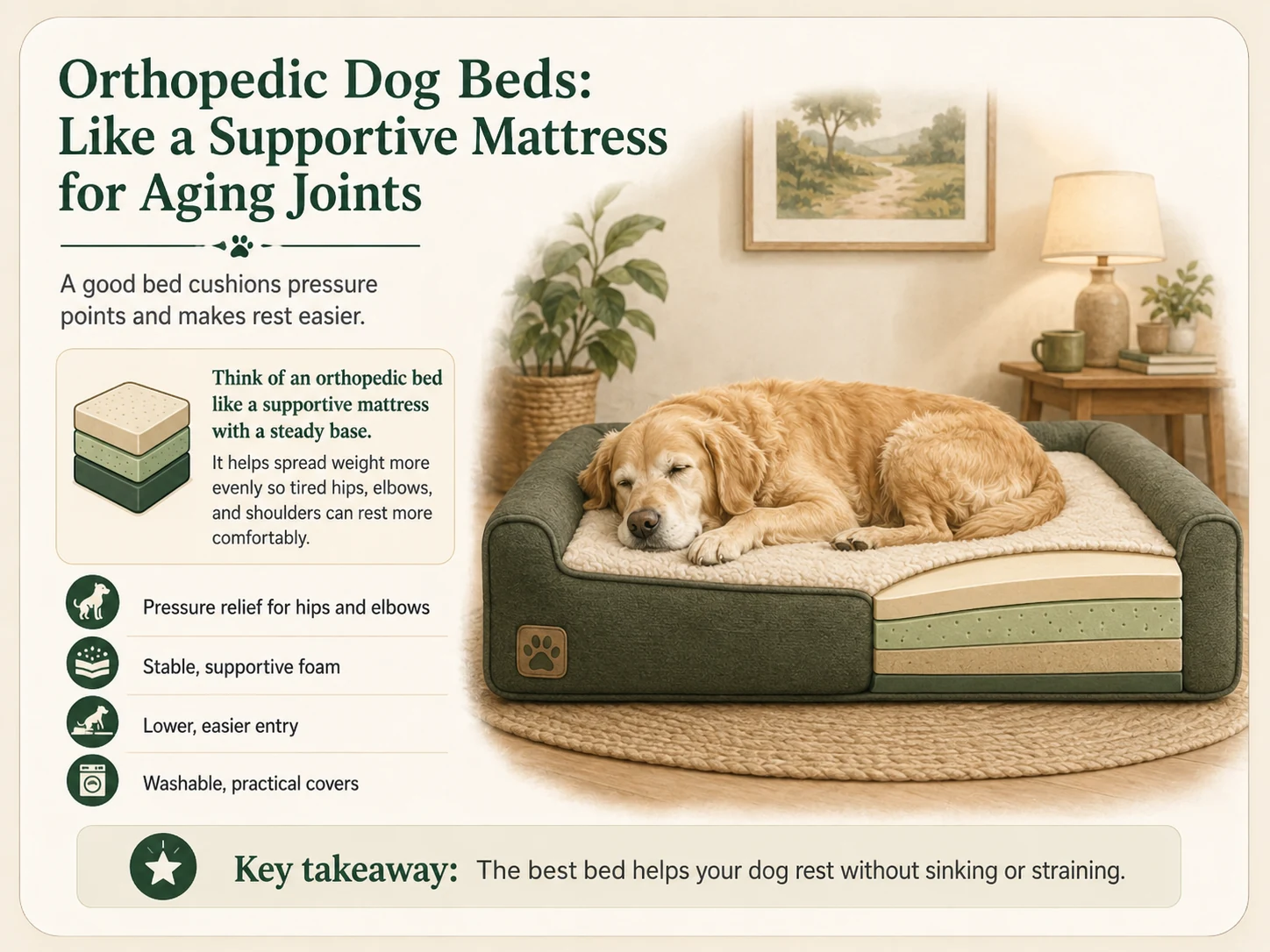
There is no reliable rule that every dog bed should be replaced after the same number of months or years. A lightly used guest-room bed and a senior dog’s main resting station live very different lives. Instead of relying on the calendar, check what the bed does when your dog lies down, turns, stands, and steps away.Does the bed still work as a complete support system?

1. Compare the bed with its original support
If possible, remember how the bed felt when it was new. Did it return to shape quickly? Could you press the sleeping surface without immediately feeling the floor? Did the edges stay upright, and did the base remain planted when your dog stepped in?
Foam softens gradually, so the change can be easy to miss. Press several areas with the flat of your hand: the center, the place where the hips usually rest, the entry edge, and a less-used corner. A large difference between those areas can reveal uneven wear.
2. Check for bottoming out under real weight
A bed may feel thick when empty but compress too far when your dog lies down. Watch the sleeping surface from the side after your dog settles. If the body sinks until the base is nearly flat against the floor, the support core may no longer be distributing weight effectively.
Do not judge softness alone. Some top layers are intentionally plush. What matters is whether a stable layer remains underneath instead of allowing the heaviest parts of the body to press straight through.
3. Look for permanent dips, slopes, or lumps
Remove the cover if the design allows it and inspect the insert in good light. Permanent hollows, cracked foam, separated layers, uneven stuffing, and raised lumps can change where pressure is carried. A bed that slopes toward one side can also make turning or standing less predictable.
Rotate a reversible insert if the manufacturer permits it, then check whether the shape improves after several hours. If the same deep impression remains, rotation may only move the worn section rather than restore support.
4. Watch the entry edge during standing and lying down
Bolsters and high sides can feel cozy, but they should not block the easiest path into the bed. Watch whether your dog clears the entry edge without catching a paw, hesitating, or taking several attempts. Also notice whether the edge collapses or rolls when your dog uses it for balance.
A dog’s needs can change even when the bed has not. A once-comfortable entry height may become difficult after a mobility change. In that case, replacing the bed may be appropriate because the design no longer matches the dog—not simply because the product is old.
5. Inspect the cover, seams, and moisture barrier
Check for torn seams, broken zippers, loose threads, exposed foam, and areas that remain damp after cleaning. A replaceable cover can extend the useful life of a sound insert, but a damaged inner liner or foam that holds moisture and odor may be harder to restore safely.
Follow the manufacturer’s washing and drying instructions. Using extra heat or the wrong cleaning method can shrink a cover, damage a waterproof layer, or leave the insert unable to dry completely. Before replacing the whole bed, use our waterproof-bed vs. liner checklist to separate the cover, barrier, seams and foam.
6. Test the base and the first step out
Push the empty bed from several directions, then watch it while your dog enters and exits. If it slides, twists, or bunches, first check whether the floor and nonslip backing are clean and dry. A stable landing mat may help when the bed is otherwise sound.
If the base material has worn smooth, detached, or cracked, the bed may no longer provide a predictable platform. The bed and the nearby floor should work together, especially during the first step after rest.
7. Treat your dog’s routine as feedback—not a diagnosis
Repeatedly choosing the floor, circling longer, changing positions often, or avoiding a familiar bed can be clues that the setup deserves another look. First check temperature, location, cleanliness, access, and household changes. A dog may avoid a warm bed in summer or move closer to the family without anything being wrong with the foam.
Behavior changes can also have health-related causes. Difficulty rising, reluctance to lie down, avoiding slippery floors, limping, nighttime restlessness, or sudden mobility changes deserve veterinary attention rather than being blamed automatically on the bed. Veterinary resources from AAHA and VCA Animal Hospitals describe mobility and behavior changes that can be associated with pain or joint problems.
Five-minute bed audit
Replace, refresh, or keep?
- Does a stable support layer remain when your dog is lying down?
- Are there permanent hollows, slopes, cracks, or lumps?
- Can your dog enter, turn, and exit without fighting the edge?
- Are the cover, seams, zipper, and inner liner still serviceable?
- Does the bed stay planted during entry and exit?
- Can every layer be cleaned and dried properly?
- Does the design still match your dog’s current size and mobility?
When a refresh may be enough
A complete replacement is not always necessary. If the insert remains even and supportive, a manufacturer-approved replacement cover, a clean nonslip landing mat, a different location, or a second resting station may solve the actual problem. Our guide to senior dog bed placement can help separate a location issue from a bed issue.
If the core is compressed, damaged, wet, uneven, or too difficult for your dog to enter, replacing the complete bed is more reasonable than hiding the problem beneath another blanket.
What to check before choosing the next bed
Measure the usable sleeping surface, not only the outside dimensions. Look for enough room to lie in your dog’s normal position, a supportive core that does not immediately collapse, an entry your dog can manage, a cover you can realistically wash, and a base that works on your flooring.
For a deeper comparison, use the Anatomy of a True Orthopedic Dog Bed and browse the Orthopedic Dog Beds category.
 #1Browse Orthopedic Dog BedsThis affiliate link opens the Chewy orthopedic-bed category rather than one SKU. The card shows a real representative orthopedic bed.Browse options ↗
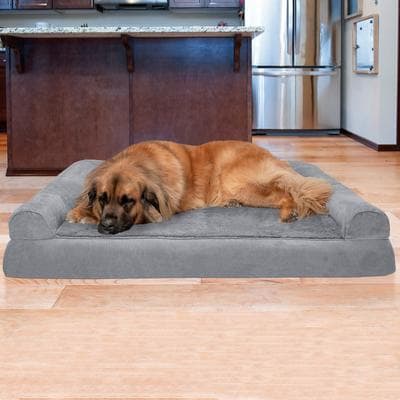 #2FurHaven Plush & Suede Orthopedic Sofa BedActual linked product shown. This link opens the Gray Jumbo Plus version on Chewy.View product ↗
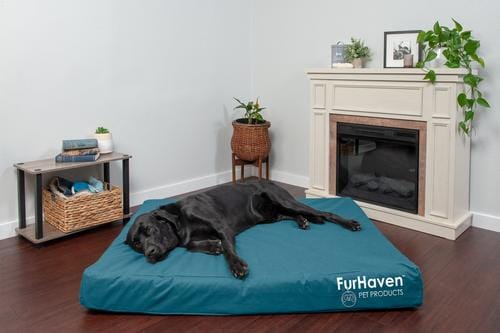 #3FurHaven Deluxe Oxford Orthopedic BedActual linked product shown. This link opens the Jumbo Plus Deep Lagoon version on Chewy.View product ↗
Compare merchant availability
Use the same product criteria on each marketplace. Prices, stock, sizes, and exact variants can change; open the current destination before buying.
| Marketplace | What to check | Open |
|---|---|---|
| Chewy | Current approved affiliate destination, exact size/variant, availability, and product details. | Shop on Chewy → |
| Amazon Associates | Search the same product/topic and confirm the exact listing, seller, size, and return terms before purchase. | Search Amazon → |
Use the bed check as one piece of the comfort picture
A supportive bed can make rest and everyday transitions easier, but it cannot diagnose or treat pain. If your dog suddenly struggles to stand, appears weak, cries out, limps, falls, drags or knuckles a paw, changes breathing position, or cannot get comfortable, contact a veterinarian promptly.
For normal wear, a short monthly check is usually more useful than an arbitrary replacement countdown. Keep the bed while it remains clean, stable, accessible, and supportive. Replace it when one or more of those jobs can no longer be restored.