

Support Is a System,Not a Single Layer

A dog bed can have impressive foam and still be awkward in daily use. The useful question is how the whole setup works together under your dog: surface, core, entry, fit, footing, and care.

Why the complete system matters

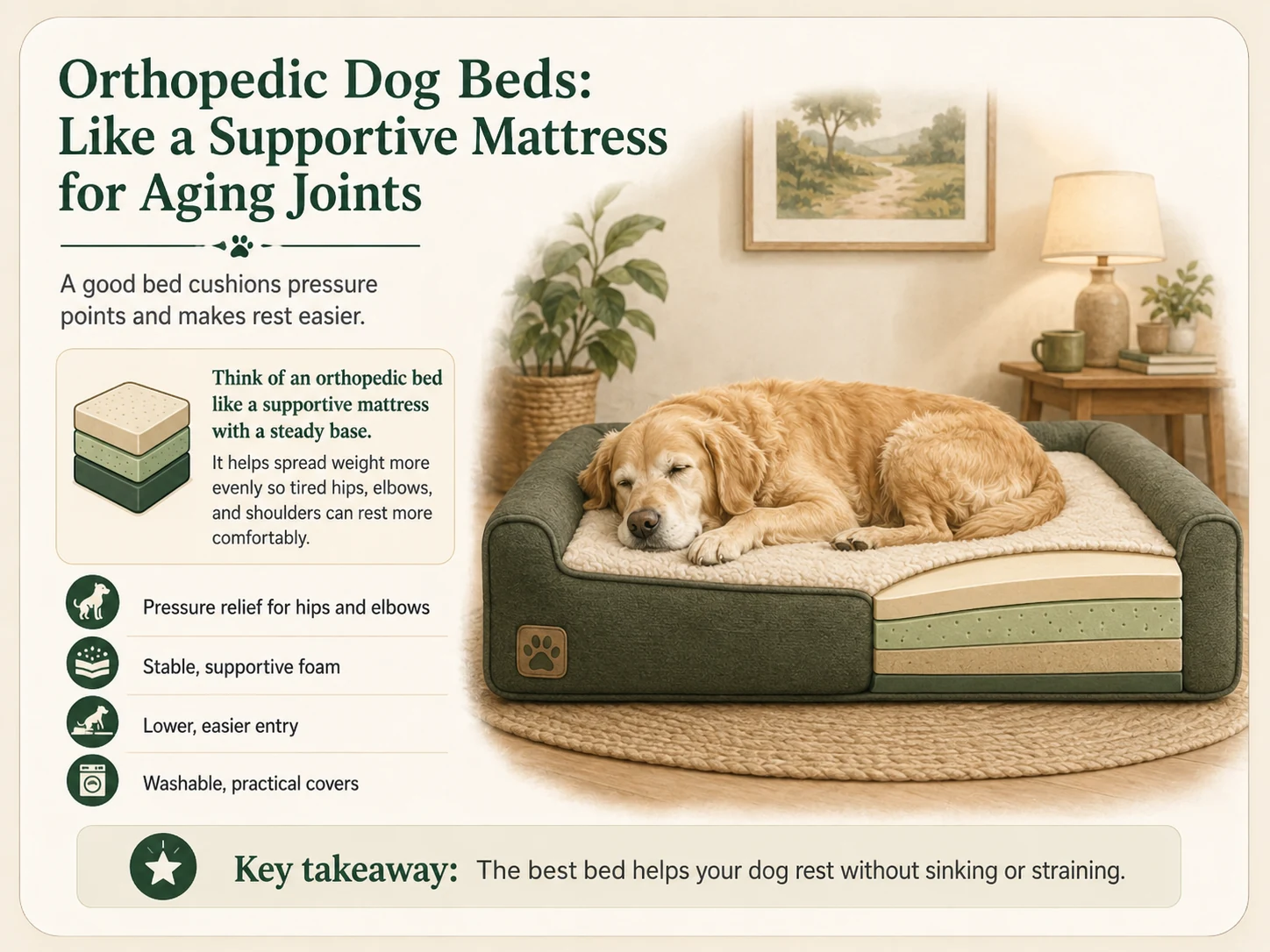
Senior-dog comfort is affected by more than softness. A plush top can feel inviting, but if the deeper core collapses, the bed slides during entry, or the usable sleeping area is too small, the overall setup may still be difficult to use.

Think of the bed as a chain. Each part has a different job, and a weak link can reduce the benefit of the others.

What each part contributes

Use the expandable notes for practical context without leaving the page.

1. Surface comfort

The top layer should feel comfortable without swallowing paws or making turning and standing unnecessarily difficult.

Why it matters

Very plush surfaces can feel inviting but may make paw placement less predictable. The useful balance is cushioning on top with enough stability underneath for turning and standing.

2. Supportive core

The deeper structure should resist excessive compression so the dog is not effectively resting on the hard floor beneath the bed.

Why it matters

Support comes from what remains underneath the dog after the bed compresses. Compare the construction and observe whether the hips and shoulders still have material separating them from the floor.

3. Entry design

A low or open entry can make a supportive bed more usable for a dog that dislikes stepping over a tall bolster.

Why it matters

A lower threshold reduces the height the dog has to clear. Also look at floor grip in front of the entry so the approach and first step onto the bed stay stable.

4. Usable sleeping room

Measure the area your dog can actually lie on, not just the outside dimensions. Stretchers and position-changers need room.

Why it matters

Outside dimensions can include bolsters and thick walls. Compare the interior sleeping surface with your dog's relaxed resting length and normal position changes.

5. Stable footing

The bed and the path to it should stay predictable during entry, turning, and standing. A sliding bed can undermine an otherwise good design.

Why it matters

Check both the underside of the bed and the surrounding floor. A non-slip base can help, but the entire route to the resting area should also be free of loose rugs or surfaces that shift unexpectedly.

6. Practical care

A removable cover, realistic washing instructions, and durable materials help the bed remain useful in everyday life.

Why it matters

Read whether the cover is removable, whether it can be machine washed and dried, and how the foam itself should be handled. A bed that is difficult to clean may be harder to keep in regular use.

Use the whole-bed test

Watch one complete rest cycle: approaching the bed, stepping in, turning, lying down, changing position, standing, and walking away. That sequence often tells you more than any single material label.

Also press where the hips and shoulders normally rest. The bed should compress, but the supportive structure should still be present underneath.

What this framework does not tell you

A bed is a comfort product, not a diagnosis or treatment. New pain, limping, weakness, falls, or sudden changes in mobility deserve veterinary attention.