💡 Cooper analogy: A winter jacket is more than the insulation inside
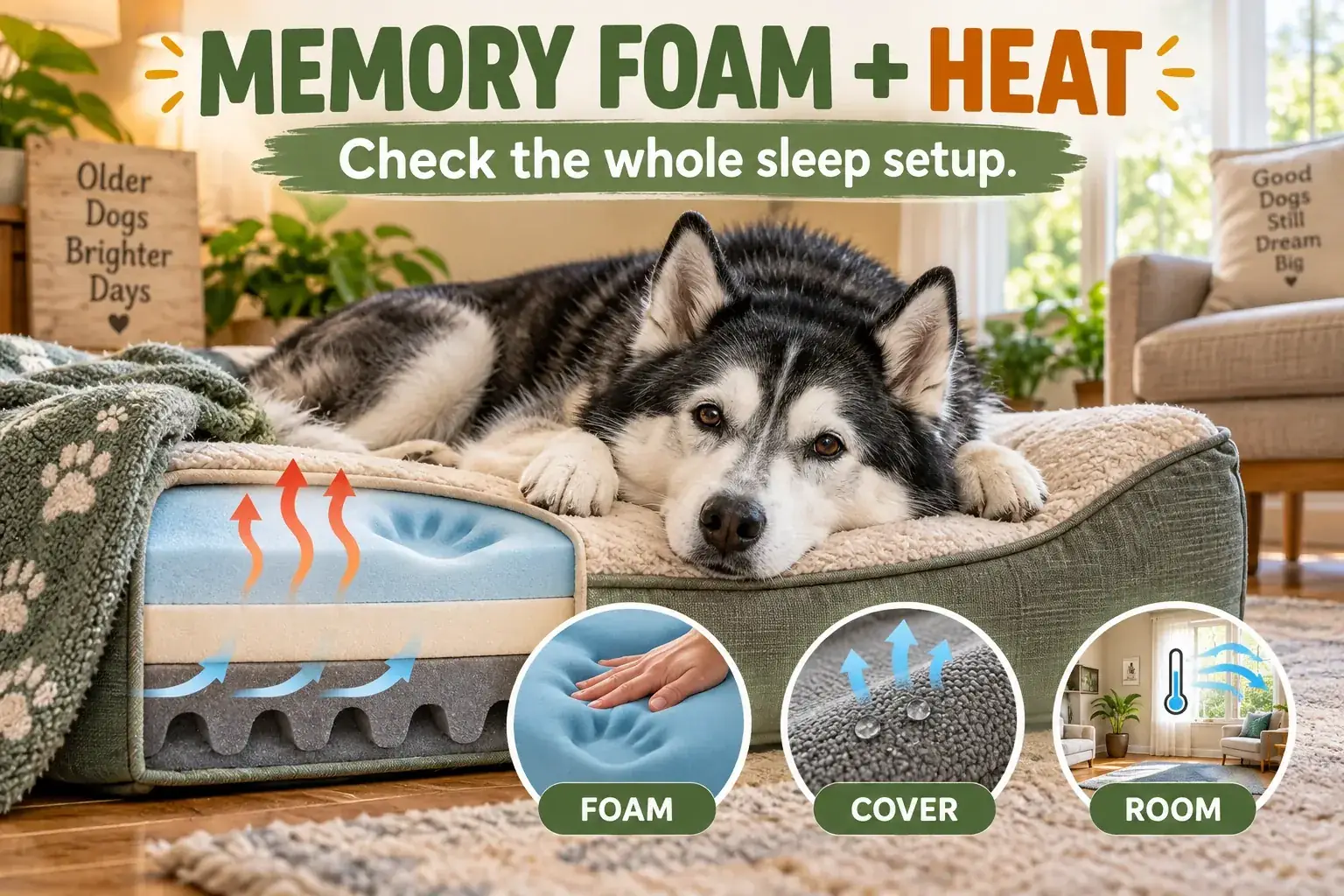
Two jackets can use similar insulation but feel very different because of the lining, outer fabric, ventilation and weather. A memory-foam dog bed works the same way. The foam matters, but so do the cover, layer stack, room airflow, placement and how your dog actually uses the bed.
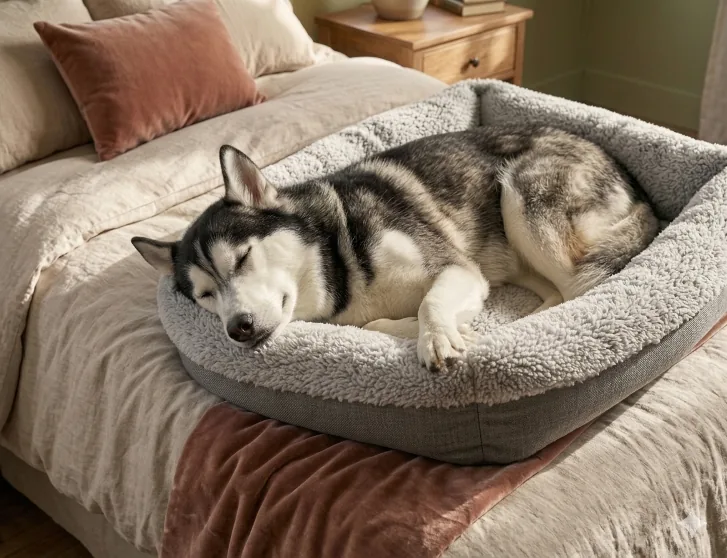
traditional memory foam can retain warmth because it contours closely and responds to body heat, but not every memory-foam dog bed will feel the same. Compare the entire sleep setup: foam design, cover, layer construction, room airflow, bed location and your dog’s own behavior.
This article does not claim that one cooling technology is medically better for senior dogs. It separates material behavior from manufacturer marketing and gives you questions to use on the exact bed you are considering.
1. Read the foam design—not just the words “memory foam”
Memory foam is viscoelastic polyurethane foam. Human mattress research and testing references consistently describe traditional memory foam as close-conforming and more prone to heat retention than more open, responsive materials. They also note that formulations vary and that open-cell structures, gel, graphite, copper and other additions are commonly marketed to manage warmth.
That is useful material context, but it is not a dog-bed clinical trial. For a pet bed, look for the manufacturer’s actual foam description: solid memory foam, open-cell memory foam, gel-infused foam, shredded foam, or a layered combination. If the listing says “cooling memory foam,” look for an explanation of what is different about the construction.
2. Check the cover and top layer
A plush faux-fur cover and a breathable knit can change the feel of the same foam core. Ask what the dog actually lies on, whether the cover is quilted or padded, and whether an added waterproof protector sits directly under the sleeping surface.
Do not assume “cooling fabric” means the entire bed remains cool for hours. Treat it as a manufacturer claim unless independent testing shows otherwise. If the cover is removable, follow its care label because coatings and fabric finishes can change with washing or high heat.
3. Look at the complete layer stack
A bed may combine a memory-foam comfort layer with a firmer support base. Orvis currently describes one of its dog beds as using open-cell memory foam in a solid piece. Barker Beds currently offers an optional cooling layer on several orthopedic beds. These are examples of different approaches—not proof that one construction will be coolest for your dog.
Ask which layer carries the cooling claim, how thick it is, whether it can be removed, and what sits above and below it. A cooling top panel over a dense, plush stack can behave differently from an elevated bed with air moving underneath.
4. Include the room in the comparison
The bed does not control the temperature of the room. Sun through a window, poor airflow, high humidity, a warm upstairs bedroom or a bed wedged against heat-producing equipment can overwhelm a modest cooling feature.
Our bed-placement guide already covers route, quiet, family connection and temperature. For a dog that seeks cooler spots, compare several safe locations before replacing a supportive bed that otherwise works well.
5. Compare placement and airflow under the bed
Some dogs prefer direct contact with a cool hard floor; others need more cushioning. You can sometimes improve comfort by moving a bed out of direct sun, opening space around it, using normal room ventilation or choosing a construction that allows more air movement.
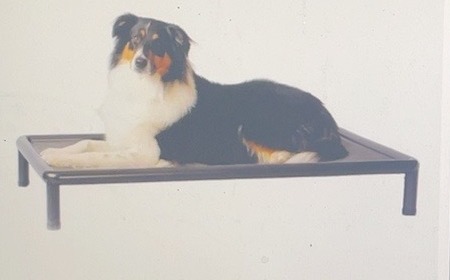
K9 Ballistics, for example, describes air circulation beneath its elevated beds as a summer-cooling feature. That is a different strategy from cooling additives in foam. Neither approach should be treated as universally superior: support needs, traction, room temperature and the dog’s willingness to use the bed still matter.
6. Watch what your dog chooses
Notice whether your dog sleeps through the night, moves from the bed to tile after a short time, repeatedly shifts positions, avoids one room during warm weather, or returns happily to the same bed after a location change. Those observations are useful because individual coat, body size, health, climate and sleep preferences differ.
Do not use bed-shopping observations to diagnose overheating. VCA notes that excessive panting, drooling, weakness, disorientation, collapse or seizures can occur with heat illness and warrant urgent veterinary care. If your dog seems unwell, move away from the product-comparison question and address the health issue.
| Approach | Current example | What to verify |
|---|---|---|
| Open-cell memory foam | Orvis describes its Isotonic+ memory foam as open-cell and designed for a dog’s weight distribution. | Exact foam layer, cover above it, thickness, support base and care instructions. |
| Added cooling layer | Barker Beds currently markets an optional BarkerChill+ layer as temperature-regulating technology. | Whether it is included or optional, where the layer sits, current care rules and whether any independent temperature data are provided. |
| Airflow beneath the bed | K9 Ballistics describes elevated beds as allowing air to circulate underneath. | Support feel, floor traction, entry height, fabric tension and whether your dog actually prefers an elevated surface. |
A six-line cooling checklist
- Name the exact foam type and any claimed cooling feature.
- Check the sleeping-surface fabric and any liner directly beneath it.
- Map the full layer stack instead of judging one foam label.
- Account for room temperature, humidity and normal airflow.
- Move the bed away from direct sun or hot spots before assuming the foam is the only cause.
- Watch your dog’s normal sleep choices and involve your veterinarian if heat intolerance or illness is a concern.
A simple three-night observation log
Use three ordinary nights to look for a pattern before assuming the foam is the cause. Keep the routine as consistent as practical, and note the room, bedding layers, when your dog leaves the bed, and where they choose to rest next.
- Room temperature, overnight heating or cooling changes, and direct sun or heat sources.
- Cover, waterproof liner, blanket, pad, and any other layer touching or surrounding the sleeping surface.
- Approximate time your dog first leaves the bed and whether the behavior repeats.
- Where your dog goes next, such as a cool floor, another bed, or a different room.
- Whether your dog returns after the room cools, airflow changes, or one bedding layer is adjusted.
Change one environmental factor at a time when it is safe to do so. This log is an observation aid, not a diagnostic test: persistent panting at rest, repeated inability to settle, new pain or weakness, breathing difficulty, disorientation, collapse, or other worsening symptoms call for veterinary advice rather than more bedding experiments.
For nighttime wandering or difficulty reaching and leaving the bed, compare this temperature checklist with the senior dog restless-at-night guide and the night-bed transition checks.
Common cooling questions
Does all memory foam sleep hot?
No. Traditional memory foam is more prone to retaining warmth, but formulation, cell structure, density, layer thickness, cover and surrounding environment all influence the result.
Is gel memory foam automatically cooler?
No universal guarantee. Gel is commonly used in products intended to manage heat, but the effect depends on the full construction and how the manufacturer designed and tested it.
Should a senior dog use an elevated bed instead?
That depends on support, entry, traction, room conditions and the individual dog. Elevated designs can increase airflow underneath, but they solve a different problem from a supportive foam mattress.
Sources and evidence limits
- Sleep Foundation — Temperature Control Methodology: general memory-foam heat-retention and open-cell / infusion context; human mattress evidence, not a dog-bed trial.
- Sleep Foundation — What Is Memory Foam?: viscoelastic response to body heat and differences among traditional, open-cell and gel foams.
- Orvis Memory Foam Couch Dog Bed: current open-cell foam manufacturer wording.
- Barker Beds Original Orthopedic Dog Bed: current optional BarkerChill+ cooling-layer claim.
- K9 Ballistics elevated beds: current manufacturer description of airflow beneath elevated beds.
- VCA — Heat Stroke in Dogs: signs of heat illness and veterinary urgency.
Source review: September 16, 2026. Human mattress sources are used only for general foam behavior. Manufacturer statements are attributed claims and may change. Senior Dog Comfort did not temperature-test the named products. See how we evaluate evidence.
View memory-foam and supportive bed options
Use the six cooling checks above on the exact model, cover and size you open. Cooling language can refer to different layers or technologies.
These are affiliate links. Senior Dog Comfort may earn a commission from qualifying purchases at no additional cost to you.