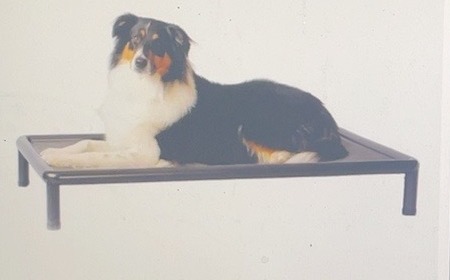
💡 Cooper analogy: The easiest doorway is not always the thinnest wall
Think of a dog bed like a room with a doorway. A thick, supportive mattress can still be easy to enter if one side has a lower opening. A thinner full-bolster bed can ask for a bigger step if every edge is raised. For a senior dog, compare the actual entry path, footing and support together—not one dimension by itself.
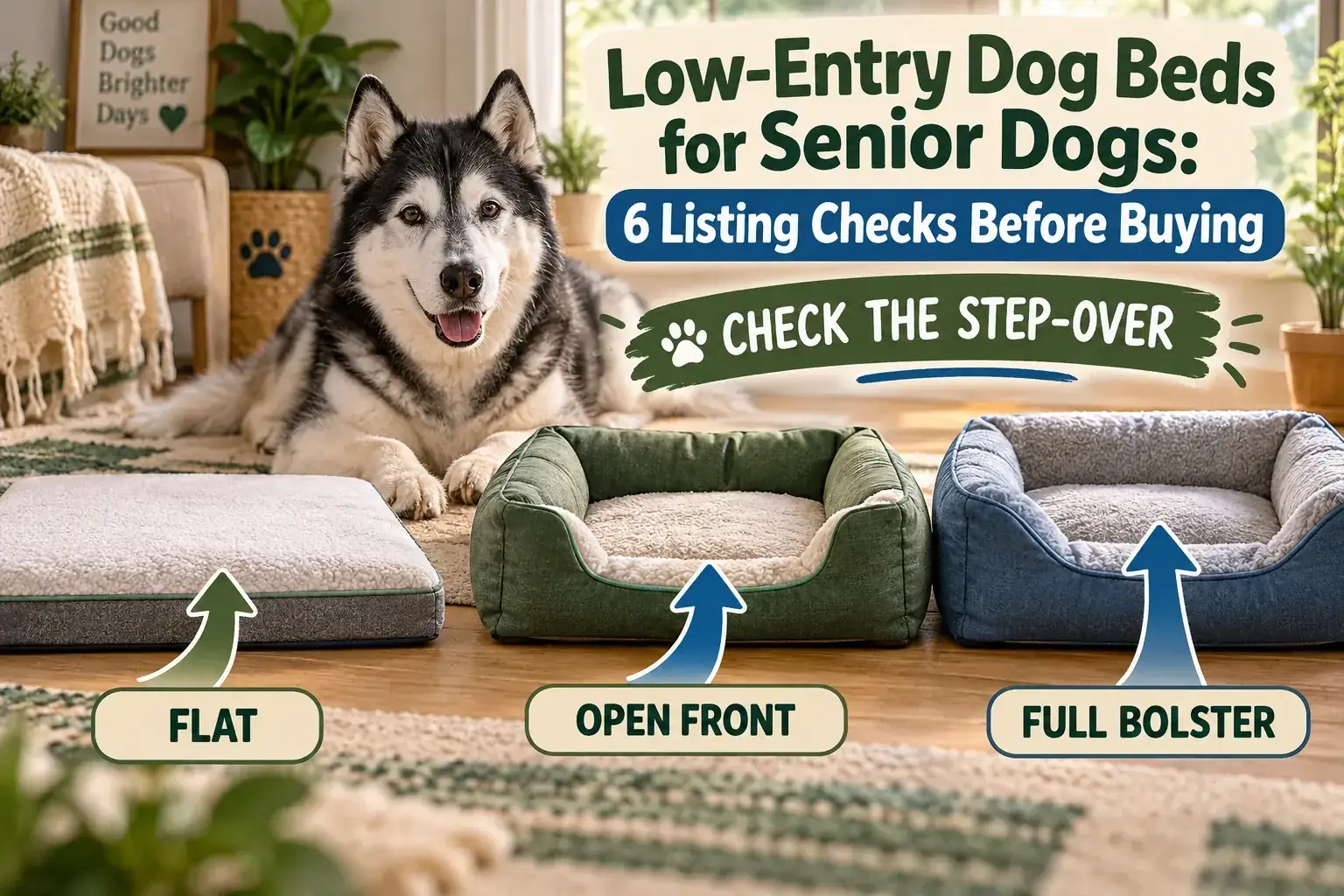
there is no single medically correct dog-bed entry height for every senior dog. Start with the lowest edge your dog must step over, then check traction, support under body weight, usable sleeping room, turning space and how your dog actually gets on and off the bed.
This article is intentionally narrower than our easy-entry and stable-access guide. That guide covers the whole route. Here we focus on the product listing itself: how to compare flat mattresses, open-front bolsters and full bolsters before buying.
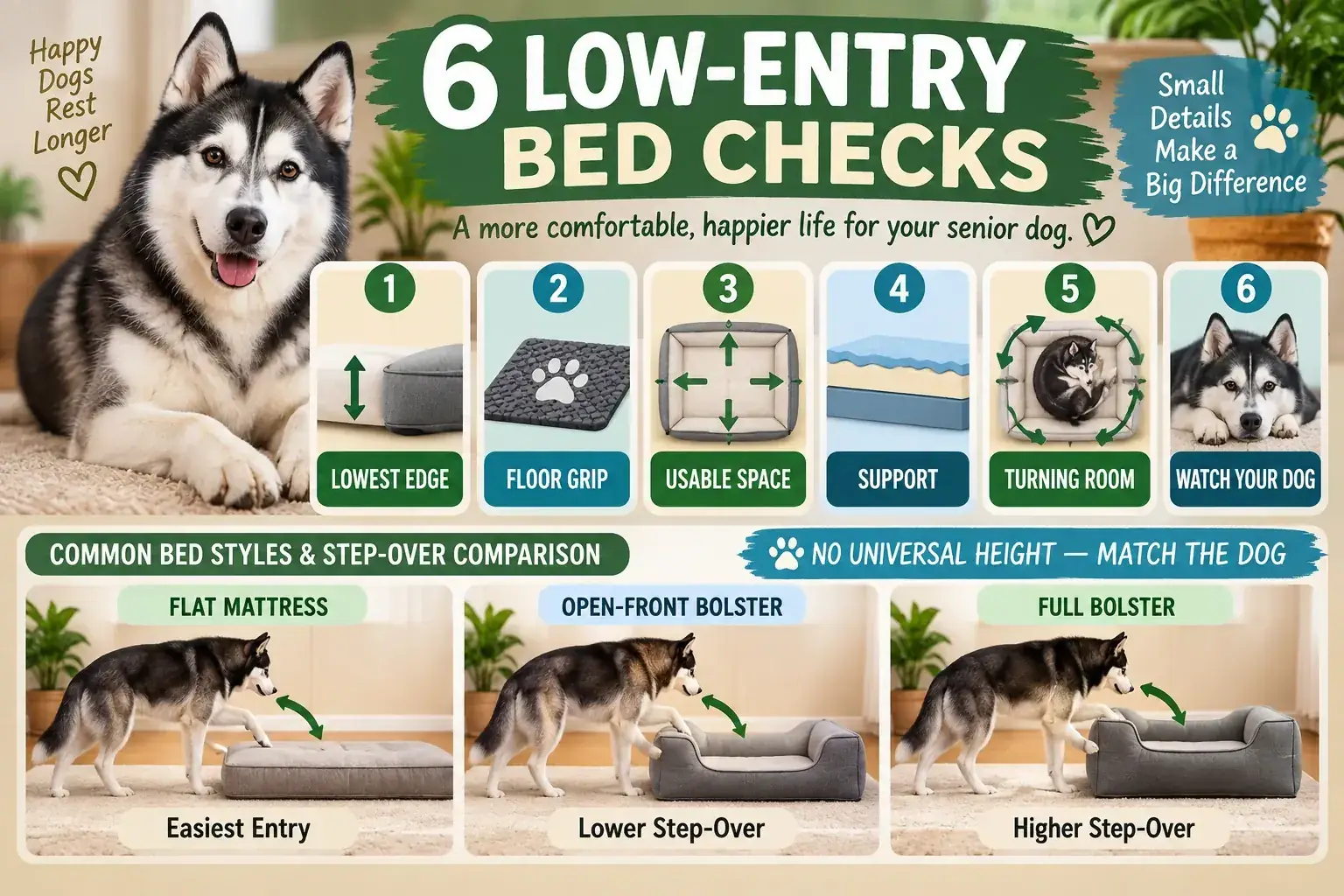
1. Measure the lowest entry edge—not only total mattress thickness
Listings often emphasize overall bed height or foam thickness. Those numbers matter for support, but they do not always tell you what a dog must step over. A three-sided couch bed may have a thick support core with one open side. A full-bolster design may create a taller step even when the center cushion is not especially thick.
Ask for the height of the lowest usable entry point. If the seller provides only overall dimensions, zoom into the product photos and request the missing measurement rather than guessing from scale.
Current manufacturer examples show the design difference. Orvis describes its three-sided couch bed as having an open side and low profile intended to make entry easier for older dogs, while its lounger has open sides for getting on and off. Those are manufacturer design claims—not a universal mobility standard or a guarantee for an individual dog.
2. Check the landing zone and floor grip
A low edge does not help much if the bed slides when a dog places a front paw on it. Check for a non-skid base, then look at the floor around the bed. AAHA senior-care guidance includes environmental modifications such as rugs, yoga mats and other footing aids when mobility is limited. VCA likewise recommends improving traction for dogs with osteoarthritis because slick floors can make rising, turning and walking more difficult. For a focused bed-only check, use the non-slip dog-bed bottom checklist.
If the bed will sit on hardwood or tile, combine the bed decision with our route-first traction checklist. The goal is a stable approach, stable bed and stable exit.
3. Do not trade away too much usable sleeping room
Bolsters can provide a place to lean or rest the head, but they also occupy part of the advertised footprint. Compare the inside sleeping surface with the outside dimensions, especially for a dog that stretches out or changes position often.
Use our usable sleep-area measurement guide to separate exterior size from the room the dog can actually lie on. An open-front bed may offer a lower entry path while still losing space along the other three sides.
4. Keep enough support under the dog’s weight
“Low profile” should not mean “thin enough to bottom out.” VCA’s osteoarthritis guidance suggests a comfortable orthopedic or memory-foam sleeping area as part of home support for affected dogs. The practical buying question is whether the bed remains supportive when your dog lies down, not whether the bed looks slim in a product photo.
Compare foam layers, firmness or support descriptions, dog-weight guidance and warranty language. If a manufacturer will not tell you what is inside the bed, treat the missing construction information as a limitation.
5. Watch the turn, not just the first step
Some senior dogs can step onto a bed but struggle to pivot inside a tight bolster. Others like a supported edge for leaning. Before buying, picture the complete sequence: approach, front paws up, hind paws up, turn, lower down, rise, turn again and exit.
A full bolster is not automatically bad, and an open front is not automatically best. The design should match the dog’s movement pattern, body size and preferred sleep position. AKC’s senior-home accessibility guidance similarly emphasizes adapting the environment to the individual dog’s mobility rather than relying on one accessory for every dog.
6. Use your dog’s behavior as the final fit check
If you already own a bed, observe several normal entries and exits. Does your dog pause before stepping over the edge? Catch a paw? approach from one specific side? circle repeatedly because the usable area is tight? choose the floor instead? These observations are more useful than inventing a universal inch threshold.
New or worsening difficulty getting up, reluctance to move, repeated stumbling or signs of pain deserve veterinary attention. A lower bed can reduce one environmental barrier; it cannot diagnose the reason mobility changed.
| Bed shape | Potential access advantage | What to verify |
|---|---|---|
| Flat mattress | No raised bolster to cross. | Support under weight, edge stability, floor grip and whether the dog can rise without sliding. |
| Open-front bolster | One lower entry route plus raised sides for leaning. | Actual front-edge height, inside sleeping area, side-wall height and which direction the dog prefers to exit. |
| Full bolster / couch edge | Continuous boundary and head/lean support for dogs that like it. | Lowest step-over, room to turn, bolster firmness, and whether the dog clears the edge safely every time. |
A six-line listing checklist
- Find the lowest edge your dog must actually cross.
- Confirm the bed and surrounding floor will stay put.
- Compare inside sleeping room with outside dimensions.
- Check support under your dog’s weight—not thickness alone.
- Picture the full turn-and-exit sequence inside the bolsters.
- Watch your dog’s real movement and adjust if the design creates hesitation.
Common buying questions
Is a flat dog bed always easiest for a senior dog?
No. It removes a bolster step, but the foam still needs enough support and the edge must remain stable. Some dogs also prefer a supportive side to lean against.
Is a full bolster bad for arthritis?
Not automatically. The important questions are the actual step-over, turning room, floor traction and the individual dog’s movement. If arthritis or pain is suspected, discuss the dog’s mobility with a veterinarian.
Can a thick bed still be senior-friendly?
Yes. Total mattress thickness and entry height are different measurements. A thick bed can have an open or lowered entry edge.
Sources and evidence limits
- AAHA senior-care pain and mobility guidance: environmental modifications, traction and appropriate beds.
- VCA — Helping Your Dog With Osteoarthritis: comfortable sleeping areas and traction around the home.
- VCA — Should My Dog Sleep in My Bed?: older dogs with musculoskeletal issues may benefit from padded sleeping areas with easier access.
- AKC — Making the Home More Accessible for a Senior Dog: practical mobility and sleep-environment adaptations.
- Orvis Memory Foam Couch Dog Bed: current open-front / low-profile manufacturer wording.
- Orvis Memory Foam Lounger: current open-side design wording.
Source review: September 16, 2026. Manufacturer statements describe product design and are not independent clinical results. Individual mobility needs vary. See how we evaluate evidence.
View dog-bed options
Use the six checks above on the exact size and variant you open. A product photo can hide the true step-over and usable sleeping area.
These are affiliate links. Senior Dog Comfort may earn a commission from qualifying purchases at no additional cost to you.