

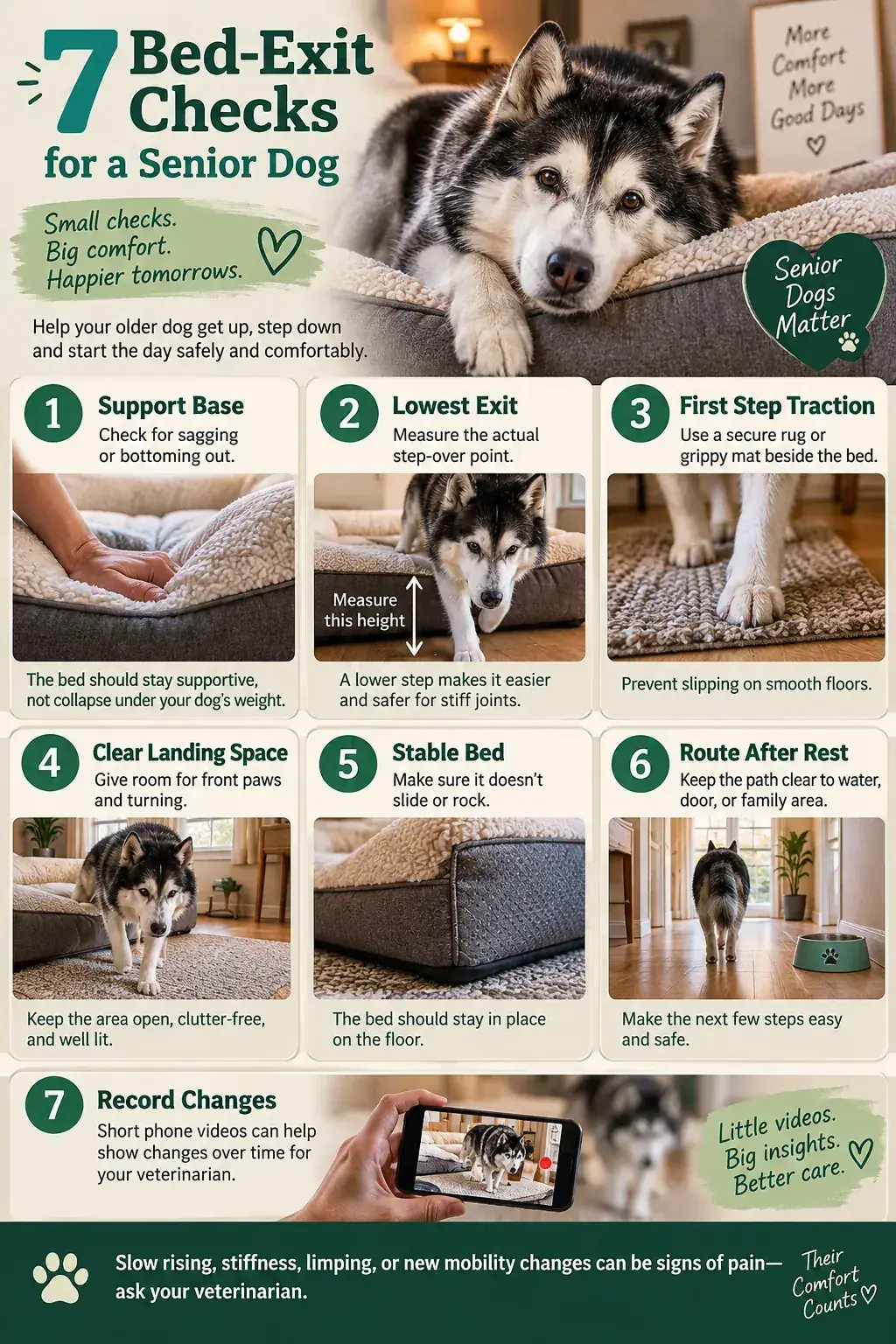
Four practical checks for a senior dog getting onto, settling in, standing from, and stepping off a bed during nighttime wake-ups.
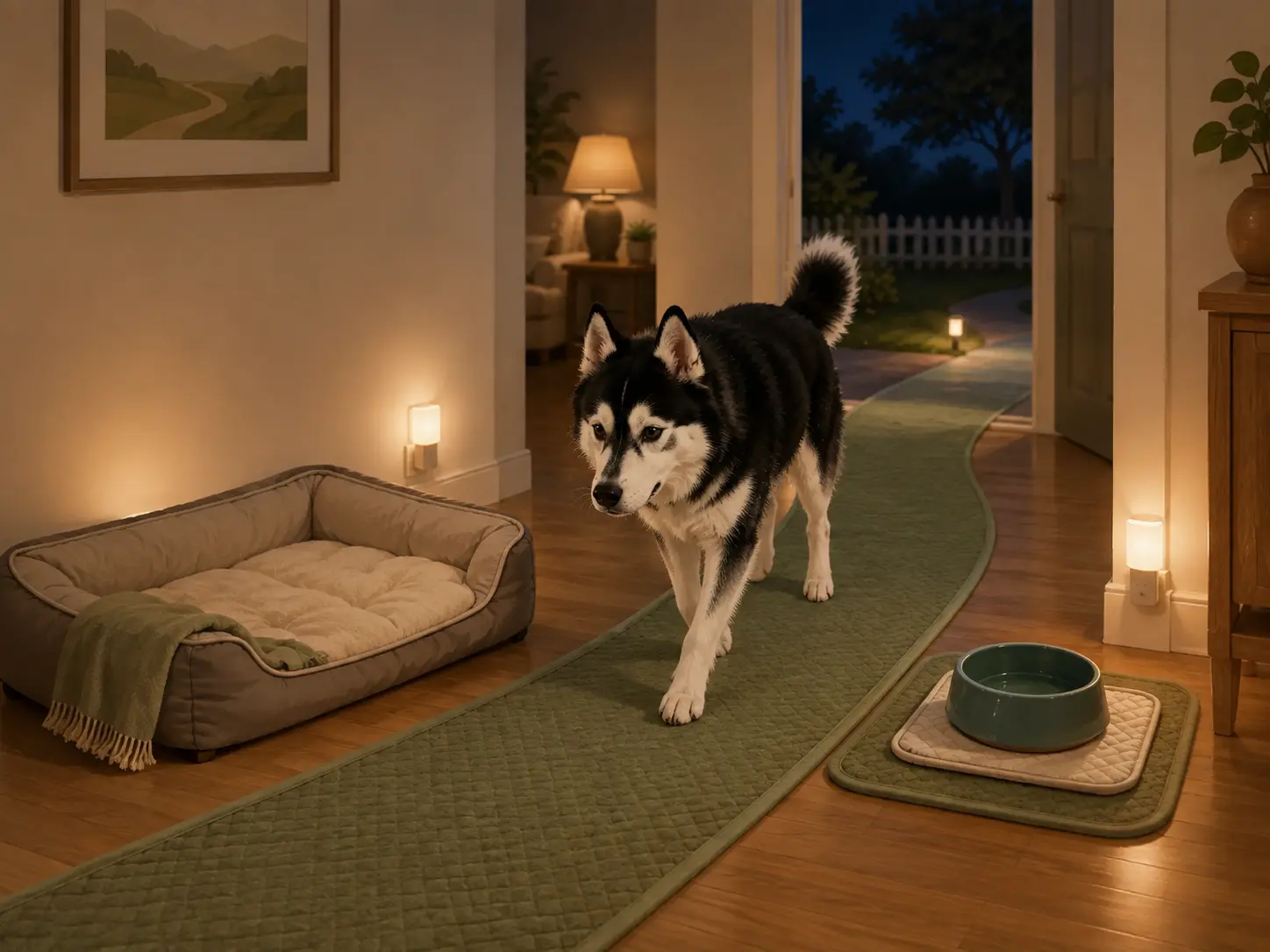
The goal is a predictable transfer, not a perfect number
There is no universal bed height or edge measurement that makes a nighttime transfer safe for every senior dog. Watch the actual movement: approach, step-on, settle, stand, step-off, and the first few feet afterward.
None
1. Check the entry and exit height
Look at the lowest practical entry point, not the tallest bolster. A low open edge may be easier to use than a thick side wall. For a raised bed, include the step down and the landing surface in the assessment.
None
2. Check what the mattress does under load
A dog may stand at the edge differently at night than during the day. Watch for excessive compression, shifting layers, or a hard base becoming noticeable during the stand-up transition. Use the site's bottom-out guide and foam-recovery checks when support is the question.
None
3. Check the first three steps after the bed
The bed exit is only half the transfer. The dog needs a stable landing zone that continues toward the water station, doorway, or family area. If the first turn is slick, the dog may hesitate even when the bed itself is comfortable.
None
4. Check the route at night, not only in daylight
Low lighting, moved furniture, cords, and closed doors can change a familiar route. Use gentle, consistent landmarks and keep the path clear. The broader night-route guide covers this in more detail.
None
The 30-second transfer check
Transfer checklist
- Approach without calling the dog.
- Watch the step-on.
- Watch one ordinary stand.
- Watch the step-off and first turn.
- Repeat on another night and look for a pattern.
Do not force a difficult movement
If the transfer looks painful, unstable, or newly difficult, stop the experiment. A veterinarian or veterinary rehabilitation professional can help distinguish environmental friction from a change in mobility or comfort.
None
Continue the cluster
For nighttime pacing and wandering, start with the canonical night-route framework. For heat questions, see memory foam and night-time temperature.
None
Affiliate note: Some links on Senior Dog Comfort are affiliate links. They do not change what you pay and are not a substitute for veterinary advice.