💡 Cooper analogy: getting out of a chair is more than the cushion
A chair can feel comfortable while you sit and still be difficult to stand up from if it is too low, unstable, or placed on a slippery floor. A senior dog’s bed works the same way. The mattress is only one part of the stand-up sequence.
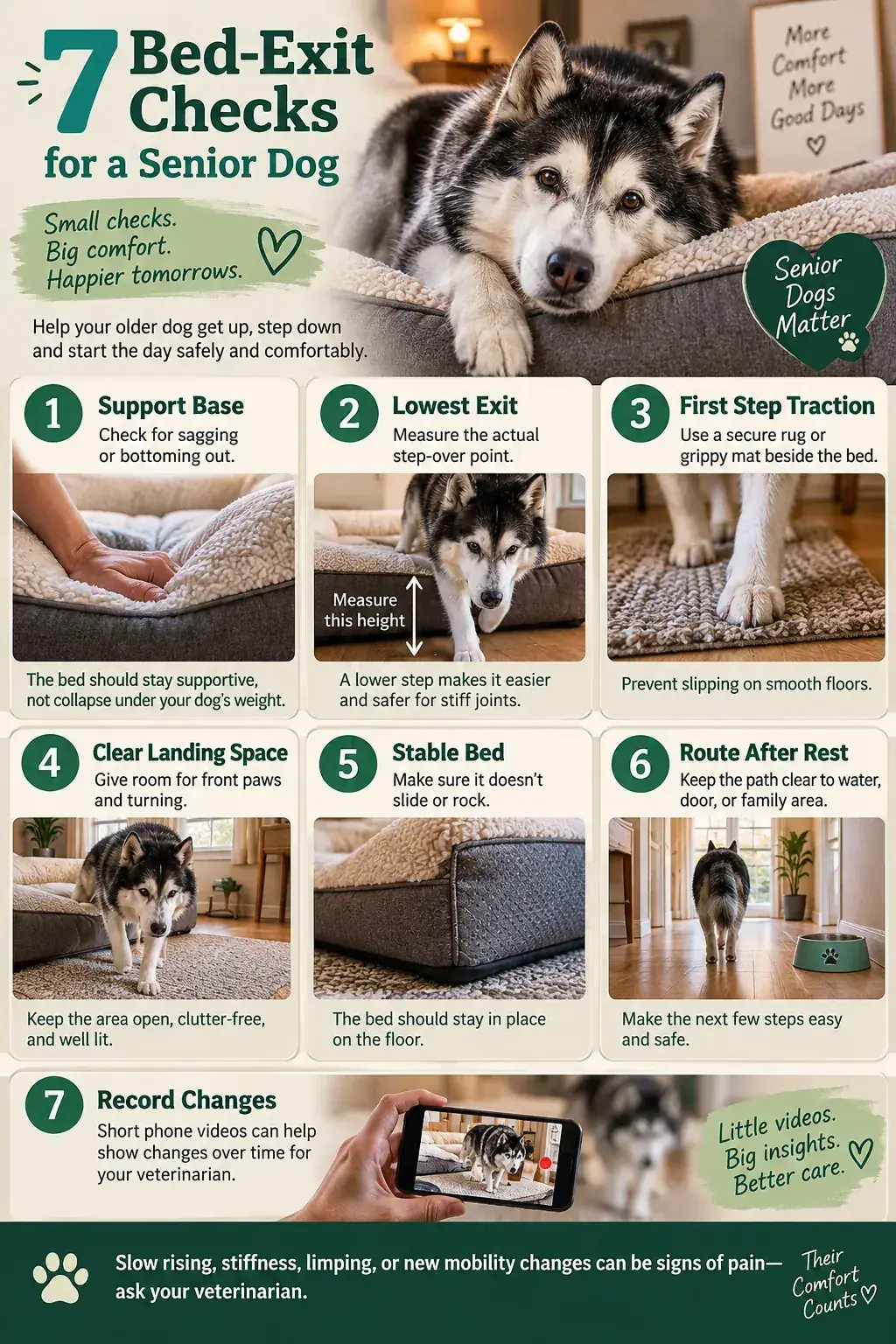
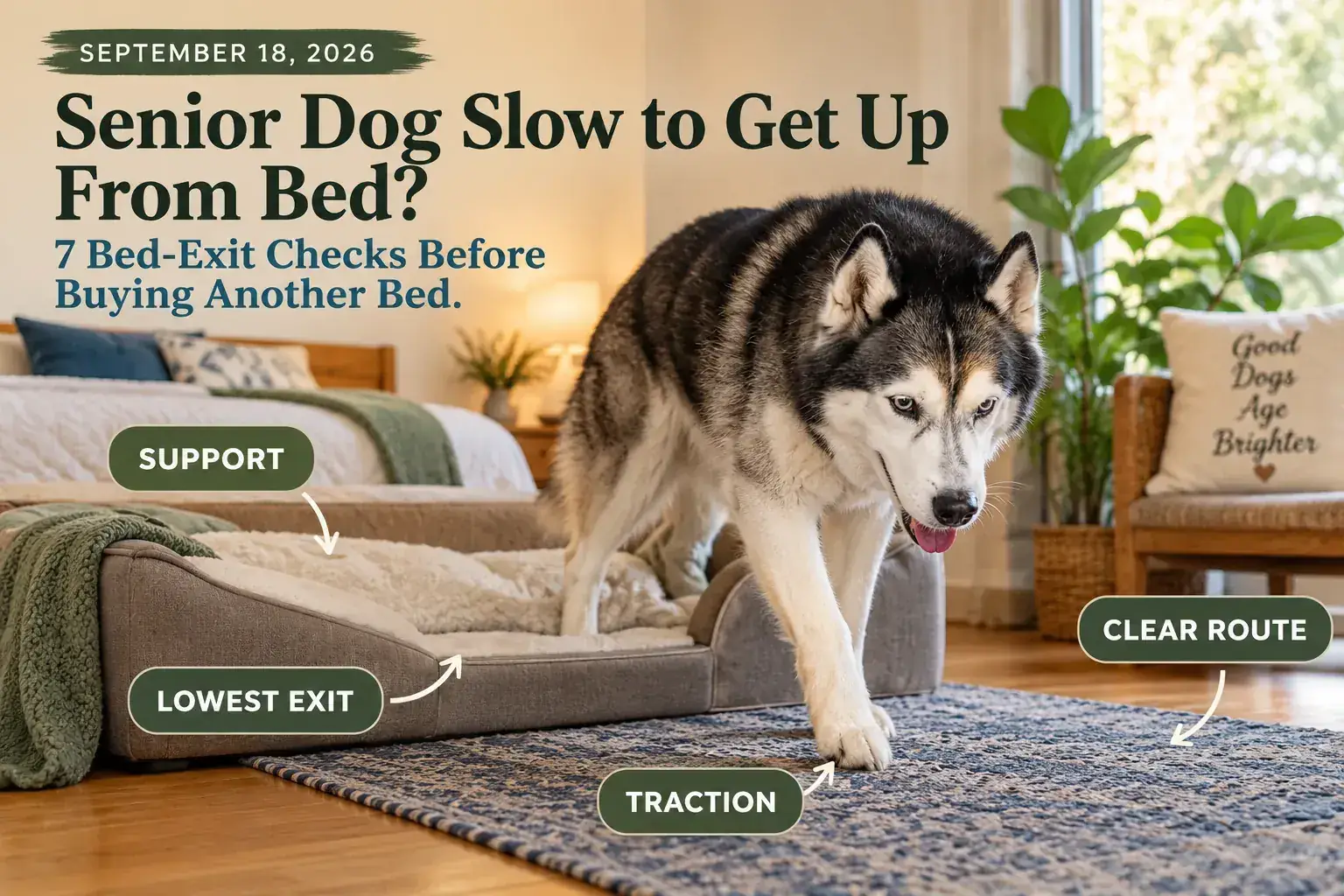
if an older dog suddenly starts taking longer to stand after a nap, do not assume the answer is simply “buy a softer bed.” Slow rising is one of the changes veterinarians ask owners to notice because it can occur with pain or mobility problems. At the same time, the home setup can make standing easier or harder. Use the seven checks below to separate the environment you can observe from the medical cause only a veterinarian can diagnose.
VCA lists difficulty getting up, slow standing, avoiding slippery floors, and trouble easing into sitting or lying positions among behavior changes that can accompany pain in aging dogs. Cornell’s osteoarthritis guidance also recommends non-slip rugs and ramps as part of mobility management. AAHA’s senior-care guidance adds padded bedding, good traction, home modification, and short phone videos or photos to help track changes over time.
1. First ask: is this new, worsening, or only happening in one setup?
Watch several ordinary stand-ups instead of judging one sleepy moment. Does your dog rise slowly from every resting place, or mainly from one bed? Is the change new? Is there limping, stiffness, weakness, reluctance to walk, repeated repositioning, vocalizing, or a fall?
If the change is new or getting worse, treat that as a veterinary question—not a shopping problem. A bed can support comfort, but it cannot tell you why a dog is slow to rise.
2. Check the support surface for sagging or bottoming out
Press where the hips and shoulders usually rest. Notice whether the sleeping surface stays supportive or collapses until you can easily feel the hard base or floor. A deeply sagging bed can make the body start from a lower, less stable position.
Use the same repeatable check in Cooper’s Comfort Check. This is an observation of how the bed behaves—not a clinical score and not proof that a firmer bed is medically better for every dog.
3. Measure the actual exit—not the tallest part of the bed
Measure the edge your dog really steps over when leaving. On an open-front bolster, that may be much lower than the side walls. On a flat mattress, it is the mattress height itself. The useful number is the height in the dog’s real exit path.
There is no universal medically correct step-over height. Compare the bed with what your dog comfortably manages now, and use the focused low-entry bed checklist when entry or exit is the main concern.
4. Look at the first paw placement after the bed
The first step can matter as much as the mattress. If a front or rear paw lands on smooth hardwood or tile, the dog may hesitate, widen the stance, scramble, or avoid pushing up confidently.
AAHA and Cornell both include secure rugs or other traction surfaces in senior-dog home modifications. The goal is not to cover the whole house immediately; start with the exact transfer zone beside the bed and make sure the rug or mat itself cannot slide.
5. Give the dog enough landing and turning room
A bed squeezed between furniture, a wall, basket, table leg, or narrow walkway can force an awkward exit angle. Watch where the front paws land and whether the dog must twist immediately after standing.
Move clutter first. Then check whether the dog can step off, stabilize, and choose a direction without an immediate turn. This connects directly with our bed-placement guide: the route around a bed is part of the bed setup.
6. Make sure the bed itself does not slide, rock, or bunch
Push near the exit edge with your hand. Does the entire bed move? Does a loose cover wrinkle under pressure? Does a removable cushion shift inside the frame? A low edge loses much of its advantage if the platform moves when the dog transfers weight.
For slick rooms, pair the bed with the same route-first thinking in our hardwood-floor traction guide.
7. Watch the next 10 feet—not just the stand-up
After rising, where does your dog go? Water bowl, door, hallway, family room? AAHA senior-care guidance emphasizes environmental modification, good footing, and accessible resting areas. If the bed exit is safe but the next few steps cross a slick or cluttered route, the whole sequence can still be difficult.
Record a short phone video from the side or slightly behind the dog if you notice a change. AAHA specifically recommends videos and pictures to help monitor senior pets, and VCA notes that home videos can give a veterinarian useful information about behavior and activity.
Evidence checked September 18, 2026. Veterinary context: VCA, Cornell and AAHA identify slow rising/difficulty getting up, traction, bedding and home modification as relevant senior-mobility considerations. Senior Dog Comfort synthesis: the seven checks organize those ideas around one observable moment: leaving the bed. Hands-on with Cooper: not claimed for any product on this page.
When the bed is not the answer
Contact your veterinarian about new or worsening stiffness, limping, weakness, falls, repeated difficulty standing, reluctance to walk, or other signs that suggest pain or mobility change. Arthritis is common in older dogs, but neurologic disease, injury and other conditions can also affect how a dog rises. Do not use a home bed check to diagnose the cause.
The 60-second bed-exit check
- Support: does the surface stay supportive instead of collapsing?
- Exit: what edge does the dog actually step over?
- First step: do the paws land on secure traction?
- Landing space: is there room to stabilize before turning?
- Bed stability: does the bed stay put under shifting weight?
- Route: are the next few steps clear and grippy?
- Pattern: is the slow rise new, worsening, or happening everywhere?
Common questions
Does a senior dog need a firmer bed if standing up is slow?
Not automatically. A bed that collapses deeply may be harder to push up from, but slow rising can also reflect pain or another mobility problem. Compare support behavior and ask your veterinarian about a new or worsening change.
Should I put a rug beside the dog bed?
On a slick floor, a secure non-slip rug or mat can improve the first-step traction zone. Make sure the rug itself does not slide, bunch, or create a new trip edge.
Should I film my senior dog getting up?
A short, ordinary home video can be useful for tracking change and showing your veterinarian what happens outside the clinic. Avoid repeatedly making your dog stand just to record it.
Sources and evidence limits
- VCA Animal Hospitals — How to Recognize Pain in Aging Dogs: veterinary context for slow rising, difficulty changing position and avoiding slippery floors.
- Cornell University College of Veterinary Medicine — Osteoarthritis: veterinary context for mobility changes and home use of non-slip rugs and ramps.
- AAHA — Communicating With Families of Senior Pets: senior-friendly bedding, traction, hygiene and home-care guidance.
- AAHA — Pain Management: environmental modification and mobility-support context.
- PetMD — Best Orthopedic Dog Beds of 2026, Recommended by Vets: current veterinarian-reviewed shopping context for supportive foam, bolsters and easier-access designs.
Source review: September 18, 2026. This article organizes home setup checks and veterinary guidance; it does not diagnose arthritis, pain or any other condition. Product links below are shopping options, not evidence sources or independent Senior Dog Comfort tests. See how we evaluate evidence.
View supportive bed options
If you are comparing a replacement after checking the exit setup, verify support, lowest entry, floor grip, usable sleeping area and care details on the exact size you open.
These are affiliate links. Senior Dog Comfort may earn a commission from qualifying purchases at no additional cost to you.