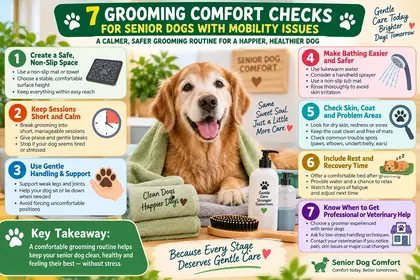
For a senior dog with reduced mobility, grooming is not only a coat-care task. Standing on a slick floor, stepping into a tub, turning for brushing, or holding one position can be the hardest part. The goal is not to rush through a long session; it is to make each step secure, predictable, and easy to stop.
If the same footing or transfer problems show up outside grooming, use the senior-dog mobility guide to compare ramps, support equipment, and traction as part of the wider home setup.
AAHA’s senior-care guidance recommends regular gentle grooming and nail care, good traction, padded resting areas, and low-stress handling for older pets. It also notes that a mobile groomer can be worth considering when travel adds stress. VCA notes that bathing, drying, brushing, nail clipping, and haircuts all involve movement and standing time, and senior pets may experience fatigue, soreness, or stiffness afterward.
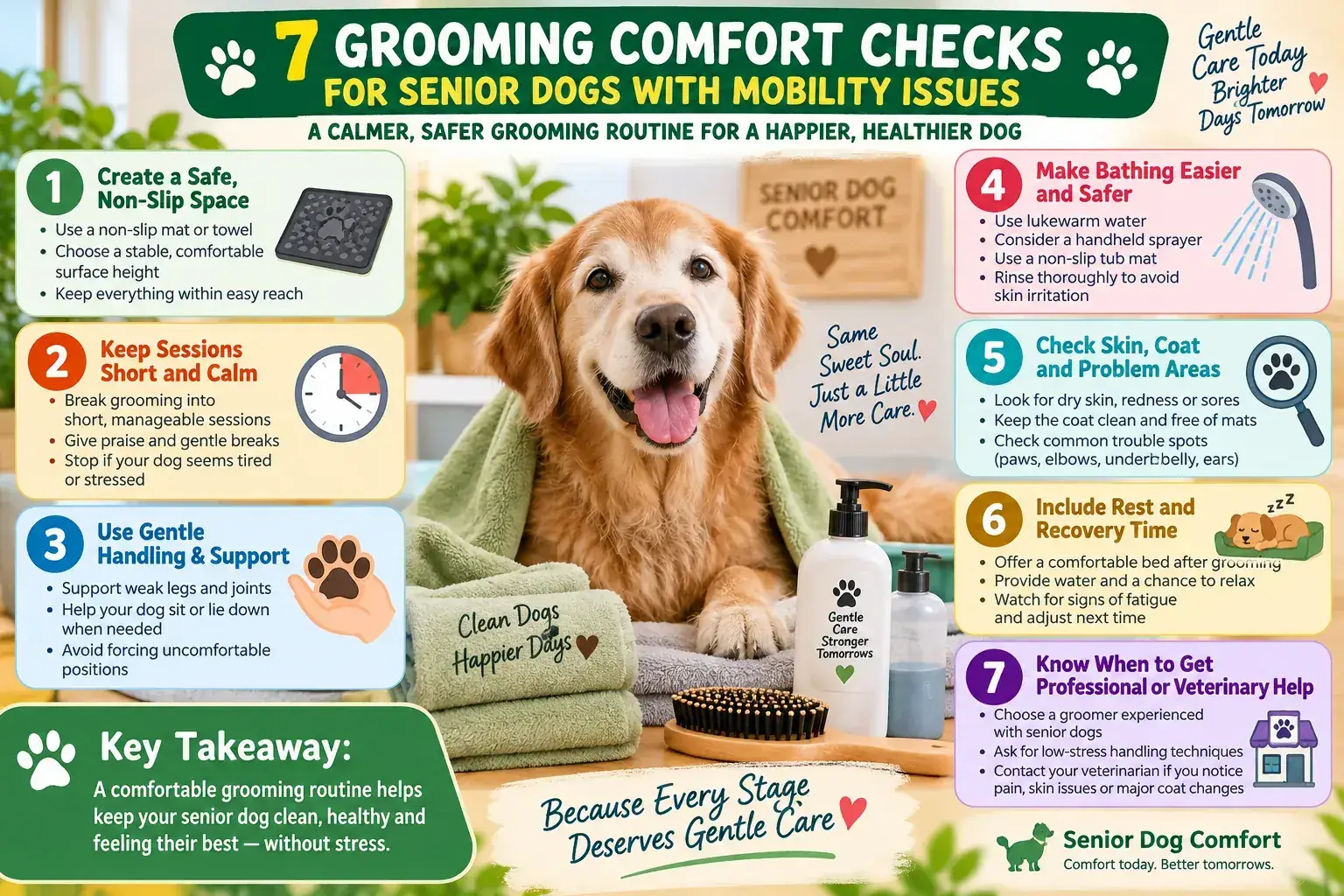
1. Start with footing before grooming tools
Put a secure nonslip mat or towel under the dog anywhere standing is required. Keep the route to and from the grooming spot secure too. AAHA specifically recommends traction for senior pets, including mats on surfaces where grip is poor.
2. Keep the session shorter than the dog’s patience
Break a full grooming job into smaller tasks when needed: brushing now, nails later, bathing another day. VCA’s grooming guidance recognizes that senior pets can fatigue during the movement and standing involved in grooming. A short successful session is usually more useful than finishing every task while the dog is struggling to stay comfortable.
3. Use gentle handling and avoid forcing positions
Support the dog in a natural stance and avoid pulling a stiff limb farther than it comfortably moves. AAHA recommends low-stress handling and gentle manipulation for senior pets because discomfort and mobility limitations may be more common in this life stage. A sudden new reaction to touch or movement deserves attention rather than stronger restraint.
4. Make bathing an access problem first
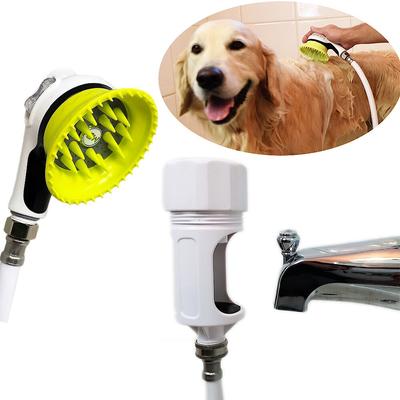
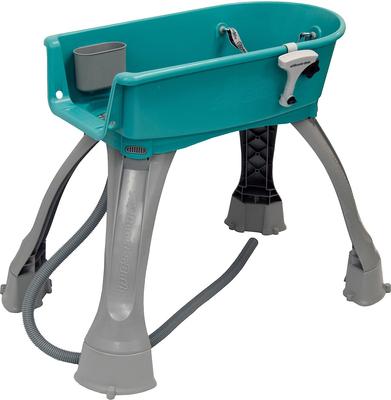
Before bathing, look at the entry step, tub surface, turning room, water temperature, and exit. A nonslip surface and a low, easy entry can reduce difficult transitions. Keep supplies within reach so you do not need to leave the dog balancing alone.
5. Use grooming time to notice skin and coat changes
AAHA advises monitoring senior-pet skin for redness, rashes, and swelling and keeping fur, skin, and bedding clean and dry. Brushing also gives you a regular chance to notice mats, sore-looking areas, new lumps, or places the dog suddenly dislikes having touched. Grooming is not a diagnosis, but it can help you notice a change earlier.
6. Plan the recovery spot before you begin
Have water and a comfortable padded bed nearby so the dog can settle after the session. If the dog repeatedly needs a long recovery after routine grooming, shorten future sessions and discuss meaningful changes in stamina or mobility with the veterinary team.
7. Know when home grooming is no longer the easiest option
A groomer experienced with senior dogs, a mobile groomer, or veterinary guidance may be the better choice when safe positioning is difficult. Contact your veterinarian for new or worsening pain, marked weakness, skin sores, significant swelling, sudden sensitivity to touch, or a major change in mobility. Do not treat those changes as simply “old age.”
The 60-second setup check
Before you start
- Secure the floor and route.
- Choose one manageable grooming task.
- Keep the dog in comfortable positions.
- Make bath entry and exit easy.
- Look at skin and coat while you work.
- Have a padded recovery spot ready.
- Stop when the dog is tired, distressed, or newly uncomfortable.
Sources & evidence context
- AAHA — Home Tips for Families of Senior Pets ↗
- AAHA — Creating a Senior-Friendly Environment ↗
- VCA — Grooming and Elderly Pets ↗
Educational information only. A new or worsening mobility, pain, skin, or behavior change should be discussed with your veterinarian.