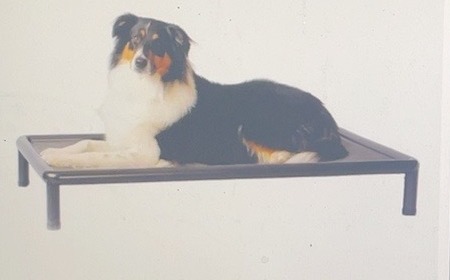
a dog-bed weight limit is useful only after you know what the number describes. It may be a maker’s intended dog-weight range, a structural capacity for a raised frame, or a retailer’s size recommendation. It does not automatically prove that a foam bed will resist bottoming out, keep a stable edge, provide enough usable sleeping area, or suit your senior dog’s entry needs.
Our synthesis: treat the weight number like the size printed on a shoe box: it can narrow the choices, but it cannot tell you whether the finished product will fit or feel stable in real use.
First identify what the weight number means
Listings use weight language in several different ways. Do not treat these as interchangeable.
| Listing language | What it may help with | What it does not establish |
|---|---|---|
| “For dogs up to…” | The maker’s intended dog-weight range for that model. | A universal comfort or support standard. |
| “Weight capacity” | Often relevant to a raised frame, cot, connectors, or structural load. | How a foam mattress compresses beneath hips and shoulders. |
| “Recommended for…” | A size-selection starting point. | Usable interior area, entry height, or individual fit. |
| Breed or size label | A rough shopping category. | Your dog’s measurements, posture, or actual support needs. |
If the page does not define the term, ask whether it refers to structural safety, intended fit, foam performance, or only size selection.
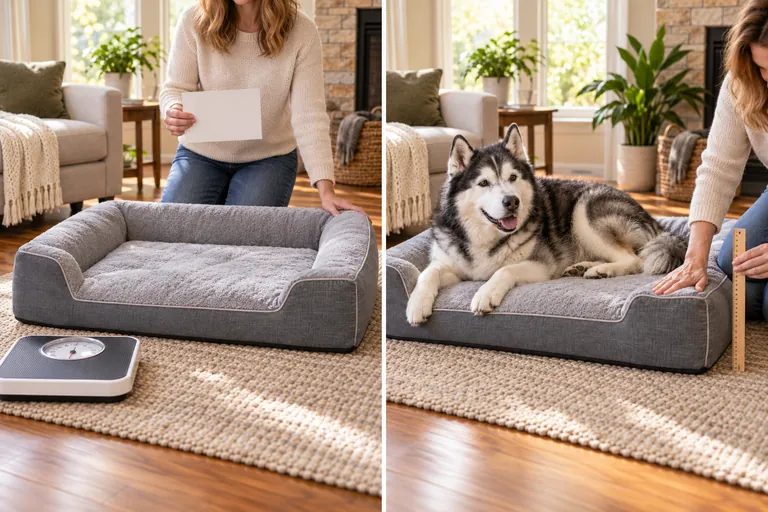
Six checks before trusting a dog-bed weight limit
1. Match the number to the exact model and size
A weight statement for one line does not automatically apply to every bed the brand sells. Record the complete model name, chosen size, shape, and foam option. Bolster, flat, crate, and raised-frame versions can use different construction.
Listing verified, September 22, 2026: Big Barker’s Junior Orthopedic Dog Bed currently says it is engineered for dogs up to 50 pounds and lists the Small at 33 × 21 × 4 inches. That is a model-specific manufacturer statement—not a universal cutoff for small or senior dogs.
2. Separate structural capacity from foam support
An elevated cot has a frame, connectors, and a fabric sleep surface. Its capacity is partly a structural question. A foam mattress behaves differently: the practical concern is how its layers compress, recover, and support the dog over time. Do not compare a cot’s maximum load with a foam bed’s suggested dog-weight range as though they measure the same thing.
3. Read the construction under the sleeping surface
Look for the actual support system: solid or shredded foam, number of layers, stated thickness by layer, support core, and whether firmness or foam variants change by size. A weight number without construction details gives you little help predicting compression.
Manufacturer claim, checked September 22, 2026: K9 Ballistics describes its orthopedic mattress as solid CertiPUR-US foam. Its current warranty says qualifying foam mattresses are covered by a 10-year “Won’t Flatten” warranty and defines a claim threshold of more than 2 inches of flattening, subject to stated conditions. That is useful warranty language, but it is still a manufacturer promise—not an independent fit test for your dog.
4. Ask what was tested—and what was not
Look for an explanation of the test method: static load, repeated use, frame strength, foam-height loss, or something else. If no method is published, do not invent one from the number.
Question 1Does the weight figure describe structural capacity, recommended dog size, or foam performance?
Question 2Is it tied to the exact size and foam option you are ordering?
Question 3What change counts as a warranty failure?
Question 4What exclusions, proof, shipping costs, or replacement limits apply?
5. Account for how your dog places weight on the bed
Dogs do not load a mattress like a single test weight. A curled dog concentrates weight differently from a dog stretched across the surface. Hips, shoulders, chest, and the edge used for standing can compress different areas.
This is why two dogs of similar body weight can interact differently with the same bed. Use your dog’s current weight and resting measurements, then compare the actual bed during an allowed home trial. For dimensions, use our Senior Dog Bed Size Calculator and the usable sleep area guide.
6. Check the return window before the comfort check
Before removing tags or discarding packaging, confirm the current return and trial terms. When the bed arrives, let foam expand for the maker’s stated time, place the bed on the floor where it will actually be used, and watch normal entry, turning, settling, repositioning, and standing.
- Check whether meaningful support remains under the heavier contact areas.
- Check whether the edge stays stable when your dog shifts weight.
- Confirm the bed itself does not slide on the floor.
- Make sure the usable sleep area still fits the dog after bolsters are accounted for.
- Do not use the bed as the explanation for a new, painful, or worsening movement change.
This is an observational buying check, not a medical test. If entry or standing is already difficult, compare the true entry/step-over design and the bed-exit route separately.
A two-minute listing audit
| Record this | Why it matters |
|---|---|
| Exact model, size, and foam option | Prevents details from another variant being applied to yours. |
| Wording beside the weight number | Separates capacity, intended range, and recommendation. |
| Usable sleep area | Confirms the dog has room to rest and reposition. |
| Lowest real entry | Connects support with practical access. |
| Support-core description | Adds construction context the weight number cannot supply. |
| Trial, return, and support-warranty terms | Defines what you can actually check after delivery. |
Simple rule: if two or more of those fields are missing, pause before buying and ask the manufacturer or retailer for the exact-model details.
How we separate the evidence
Listing verifiedBig Barker currently publishes a model-specific “up to 50 pounds” statement for the Junior bed. K9 Ballistics separately publishes construction and flattening-warranty details. These are manufacturer claims tied to their own products.
Independent contextIndependent reviews and owner reports can flag sagging, edge collapse, sizing, or return issues worth checking, but an individual report does not turn a brand’s weight number into a standardized cross-brand support test.
Hands-on with CooperNot claimed for the products discussed here. The at-home checks are a repeatable observation method, not a report that Cooper tested these specific beds.
Veterinary contextCornell lists difficulty getting up from lying down among possible osteoarthritis signs and describes mobility management as multimodal. A bed can be part of the environment, but a weight label cannot diagnose or treat pain or mobility changes.
Our synthesis: keep the number, construction, fit, and real-use observation as four separate evidence fields. None replaces the others.
Bottom line
A dog-bed weight limit can help you reject an obviously mismatched model. It cannot certify support. A stronger decision records exactly what the number means, then checks construction, usable space, entry, warranty terms, and behavior under the individual dog.
For the next step, compare thickness versus real support, use the bed-size calculator, review usable sleep area versus exterior dimensions, and keep the full decision in context with our orthopedic dog-bed buying guide.
Common questions
Is a higher dog-bed weight limit always better?
No. A higher number may describe greater structural capacity or a broader intended range, but it does not prove that the bed has the right firmness, entry, usable sleeping area, or edge stability for your dog.
What if the listing gives no weight limit?
That does not automatically make the bed unsuitable. Compare the exact construction, dimensions, intended dog size, return terms, and observable support. Ask the manufacturer how the chosen model is intended to perform for a dog of your dog’s weight.
Can I test a dog bed by pressing it with my hand?
A hand press can help you compare quick compression and edge stability, but your hand does not distribute weight like your dog. Confirm with supervised real use during the allowed return period.
When should a movement change go to the veterinarian?
New or worsening difficulty rising, limping, weakness, falling, reluctance to move, or obvious pain deserves veterinary guidance. A different bed may change the resting surface, but it cannot identify the cause.
Sources & evidence limits
Big Barker — Junior Orthopedic Dog Bed: current manufacturer weight-range and size language, checked September 22, 2026. K9 Ballistics — Technology and warranty policy: current manufacturer foam-construction and flattening-warranty language, checked September 22, 2026. Cornell University College of Veterinary Medicine — Osteoarthritis: veterinary context for mobility changes including difficulty getting up from lying down.
Manufacturer claims, warranty wording, prices, availability, and product variants can change. This article is a buying and home-observation guide, not a clinical test and not a diagnosis or treatment recommendation.
View bed options to inspect with this checklist
These are shopping options to inspect—not weight-limit winners. Confirm the exact model, selected size, current weight guidance, usable sleeping area, entry, support construction, and return terms before ordering.
These are affiliate links. Senior Dog Comfort may earn a commission from qualifying purchases at no additional cost to you.