

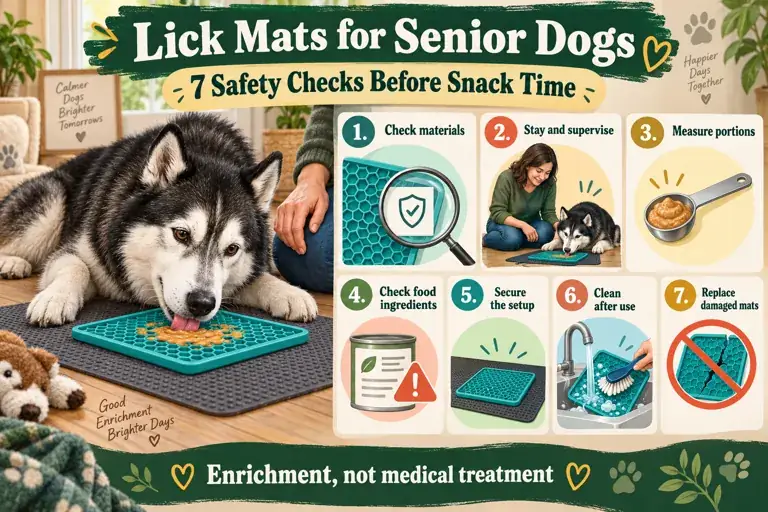
💡 Cooper analogy: A snack tray, not a chew toy
Think of a lick mat as a little activity tray: the food is the activity, and the tray comes away afterward. The goal is a comfortable, supervised moment—not a tougher puzzle, a bigger meal, or a challenge your dog must finish.
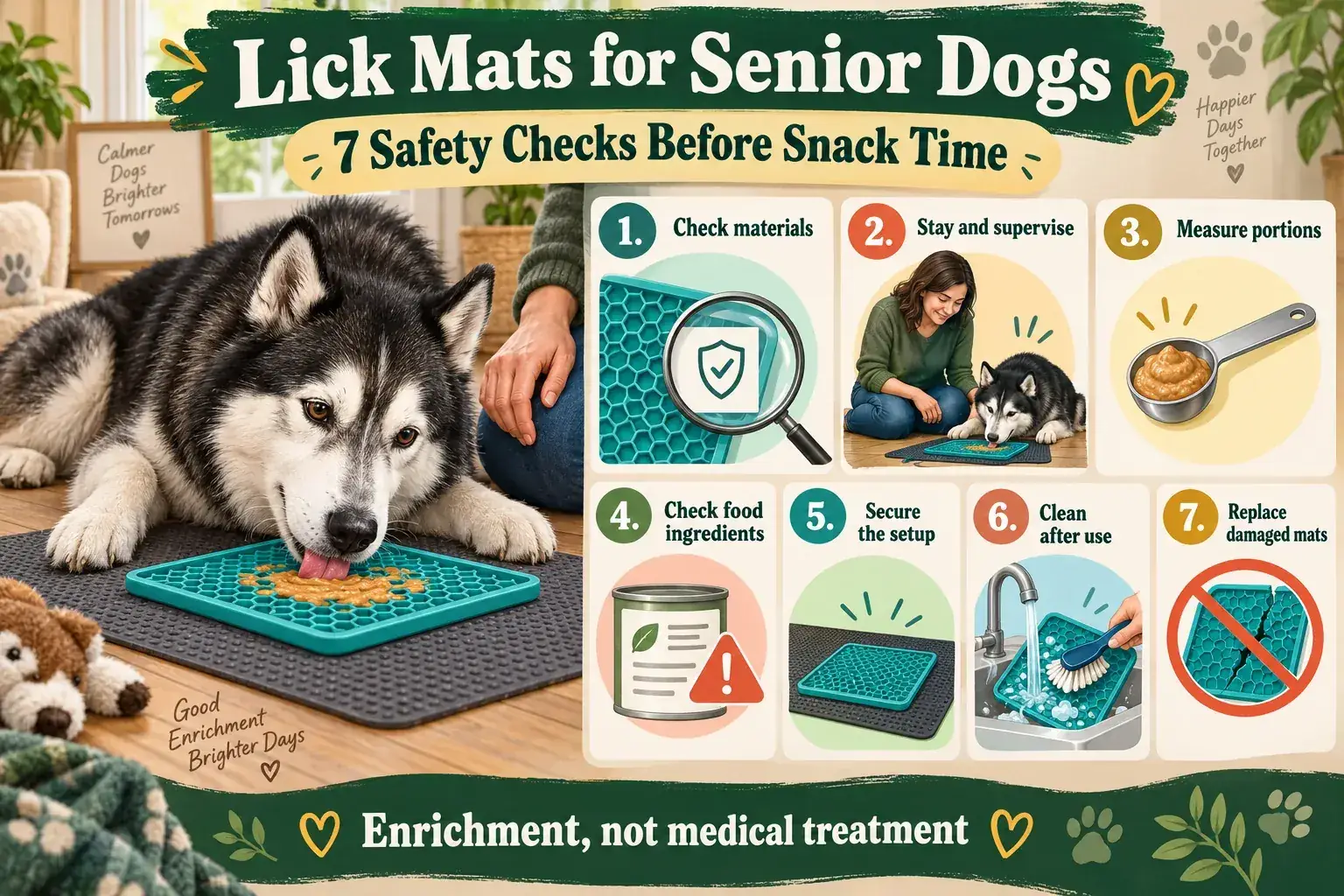
A lick mat has shallow grooves that hold a small amount of spreadable food. It may offer an older dog a food-based activity without a chase or a long walk. That does not make every mat—or every topping—appropriate for every dog. Start with your dog's abilities, diet and interest.
Cornell's senior-enrichment guidance supports adapting food puzzles and activities to an older dog's physical condition. It does not establish that a lick mat treats anxiety, pain, dementia, or digestive disease.
1. Check the material and instructions
Before buying, look for a named manufacturer, a clear material description, intended food-contact use, size, and care instructions. Do not treat a vague “non-toxic” label as proof that a mat is safe to swallow. Check whether the exact model permits dishwashing or freezing; do not assume all flexible mats have the same limits. If the seller cannot explain the material or care requirements, choose a better-documented option.
2. Stay and supervise
Stay close enough to watch how your dog uses the mat. LickiMat's manufacturer explicitly warns that its mats are not chew toys and may not suit chewers. If your dog starts biting edges, lifting the mat, or tearing pieces, stop the activity and safely remove it. A holder is not a substitute for supervision. Put the mat away when snack time ends; it is not an unattended all-day toy.
3. Measure the portion before spreading
Decide how much food belongs in the session before filling the grooves. Spreading thinly can make a modest amount look larger, but it does not remove calories. Count this food alongside training rewards, table scraps and other extras. Ask your veterinarian how it fits your dog's daily allowance, especially during weight management or a prescribed diet. A measured portion of an already-approved food may be simpler than adding several new toppings.
4. Check every food ingredient
Read the full label each time you change a topping. The FDA warns that xylitol is dangerous to dogs; it can appear in some nut butters and sugar-free foods and may also be called birch sugar or wood sugar. If ingestion is suspected, contact a veterinarian, emergency clinic or animal poison-control service immediately.
“Xylitol-free” does not mean a food suits your individual dog's medical or dietary needs. For a dog with allergies, a restricted diet, swallowing difficulty or a condition affected by food choices, get approval for the topping first. Our food-label guide covers the broader diet questions; this article focuses on the snack session.
5. Secure the setup and watch the dog
Our practical setup suggestion is a quiet, reachable spot with secure footing. Check that the mat does not slide or curl as your dog licks. Watch for stretched reaching, repeated repositioning or paws slipping. Let your dog choose a comfortable posture rather than making them stay in one position. Stop if they lose interest or appear uncomfortable. There is no single mounting height or session length that suits every senior dog.
For the surrounding floor, see our route-first traction guide. Keep the snack separate from difficult grooming or handling at first so you can observe the mat response on its own.
6. Clean after each use
Remove food residue, wash according to the exact product's care label, and let the mat dry fully before storage. Inspect the grooves and underside rather than checking only the flat edges. LickiMat's FAQ distinguishes dishwasher-safe models from Classic mats that require sink washing. Dishwasher-safe is a model-specific instruction, not a universal feature of lick mats. Use a suitable brush only if permitted and needed to reach residue.
7. Replace damaged mats
Inspect edges, grooves and attachment points before and after use. Remove a mat from service if pieces loosen or detach; do not keep using a damaged mat because food still sticks to it. The manufacturer's safety advice calls for replacement when pieces become loose. If a piece is missing and you suspect it was swallowed, contact your veterinarian for guidance instead of offering another snack to see what happens.
Before the next snack
- Mat intact, instructions checked, and owner staying nearby?
- Measured food that fits the dog's diet, with every ingredient checked?
- Stable, comfortable access and freedom to stop?
- Plan to wash, dry, inspect and store afterward?
Sources and evidence limits
- LickiMat manufacturer FAQ: supervision, care and replacement. Product instructions, not independent clinical evidence.
- Cornell University: senior dog enrichment. General activity context, not an endorsement of the shopping options below.
- FDA: xylitol safety warning.
- Animal Medical Center: excessive licking.
Evidence checked September 12, 2026. Educational guidance, not veterinary diagnosis or a hands-on product review. Setup and shopping checks are editorial suggestions.
View lick-mat options
Use the seven checks above to compare the current product details and decide what fits your dog.
The three links below are affiliate links. Senior Dog Comfort may earn a commission from qualifying purchases at no additional cost to you.
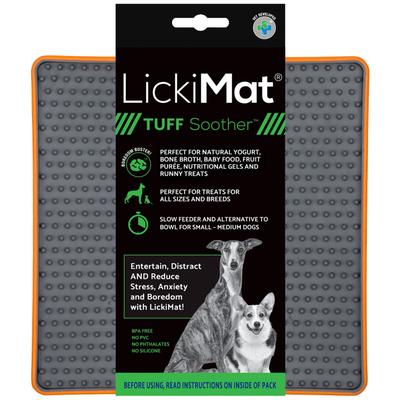 #1Browse Lick MatsActual product example shown: LickiMat Tuff Soother. This affiliate link opens a broader Chewy results page.Browse options ↗
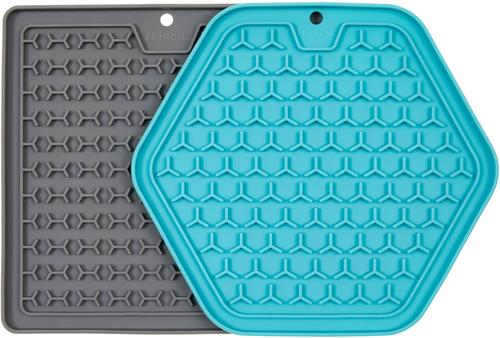 #2Frisco Silicone Treat Lick Mat, 2 countActual linked product shown. Open the affiliate link for current price, color details, and availability.View product ↗
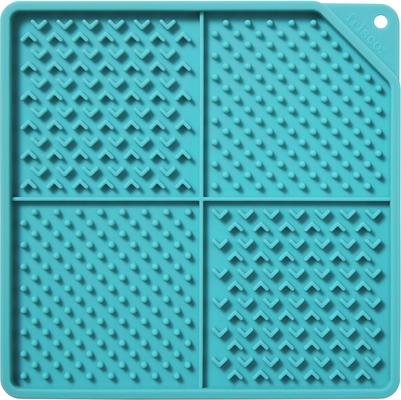 #3Frisco Square Silicone Dog & Cat Lick Mat, TealActual linked product shown. Open the affiliate link for current price and availability.View product ↗
Shopping links supplied by the site owner. Listings, prices and availability may change; these links are not a safety certification.