

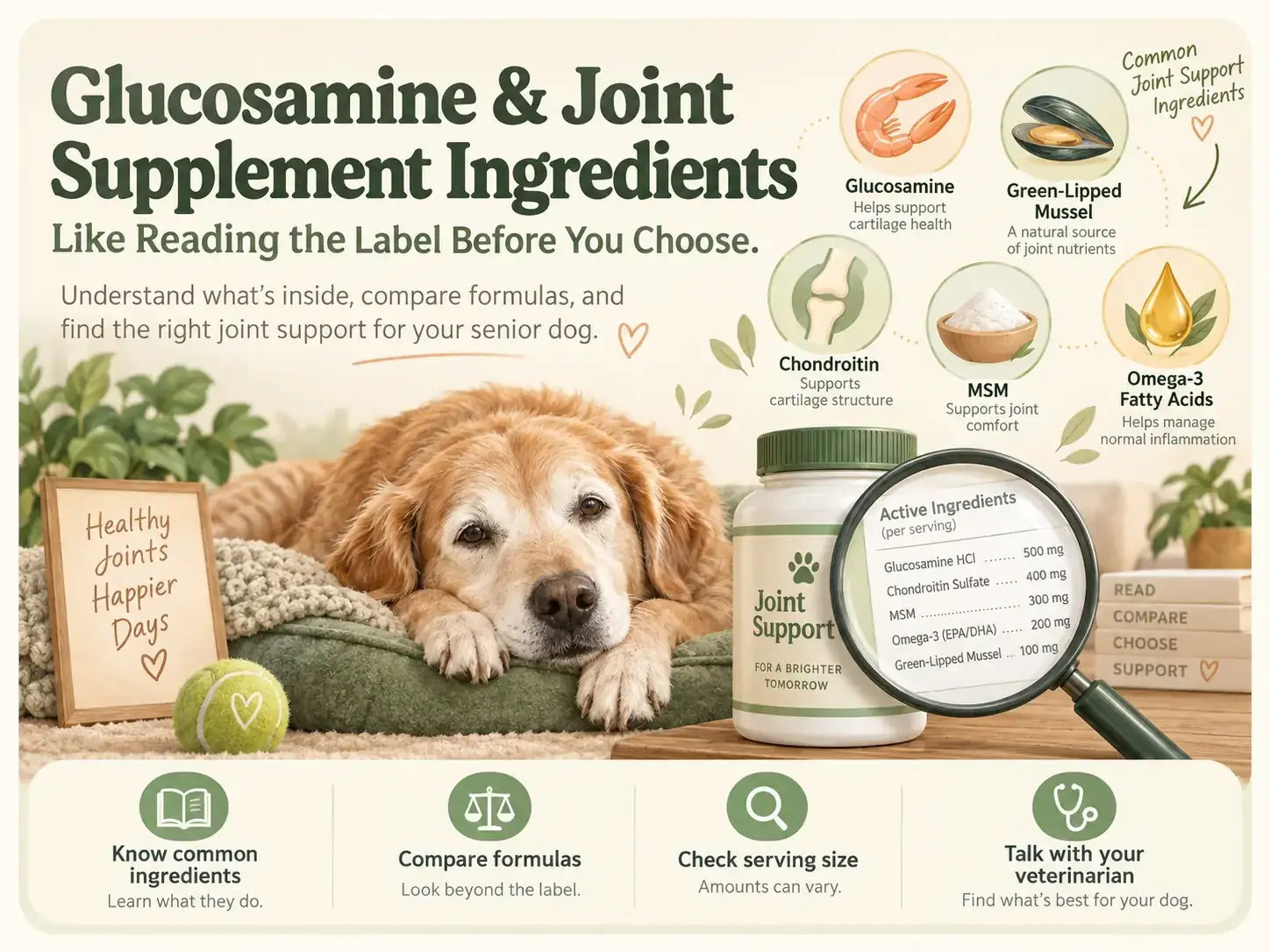
Compare the complete label, not only the front of the package
Look for the serving amount, ingredient quantities when provided, directions, dog-size guidance, cautions, storage instructions, and the manufacturer's contact information. A front label can emphasize one familiar ingredient while the actual daily serving contains a combination of several ingredients in very different proportions.
Separate evidence from ingredient popularity
Some joint-support ingredients have stronger clinical evidence than others. Merck's current osteoarthritis guidance reports no demonstrated pain-management benefit for glucosamine/chondroitin in the systematic review it cites, while omega-3 fatty acids—especially EPA—have better evidence in canine osteoarthritis. This does not make an over-the-counter omega-3 product automatically appropriate; it means the specific active fatty acids, amount, and veterinary context matter.
Separate product quality from proof of effectiveness
A quality seal or manufacturing audit can be meaningful without proving a medical outcome. The NASC Quality Seal, for example, reflects audited quality systems, labeling requirements, adverse-event reporting, and random testing to check label claims. It is a useful manufacturing-quality signal, not a promise that a formula will work for every dog.
Consider the entire routine
Make one list of your dog's medications, complete diet, treats, fortified foods, and other supplements before discussing a new product with your veterinarian. This helps reveal ingredient overlap and keeps the decision focused on the whole dog rather than a single bottle.
Watch for changes that need medical evaluation
Supplements should not delay veterinary evaluation of new pain, sudden weakness, lameness, swelling, repeated falls, or a major change in mobility. A new mobility problem can have causes that require diagnosis and treatment rather than another supplement.