Safety questions belong before the shopping decision
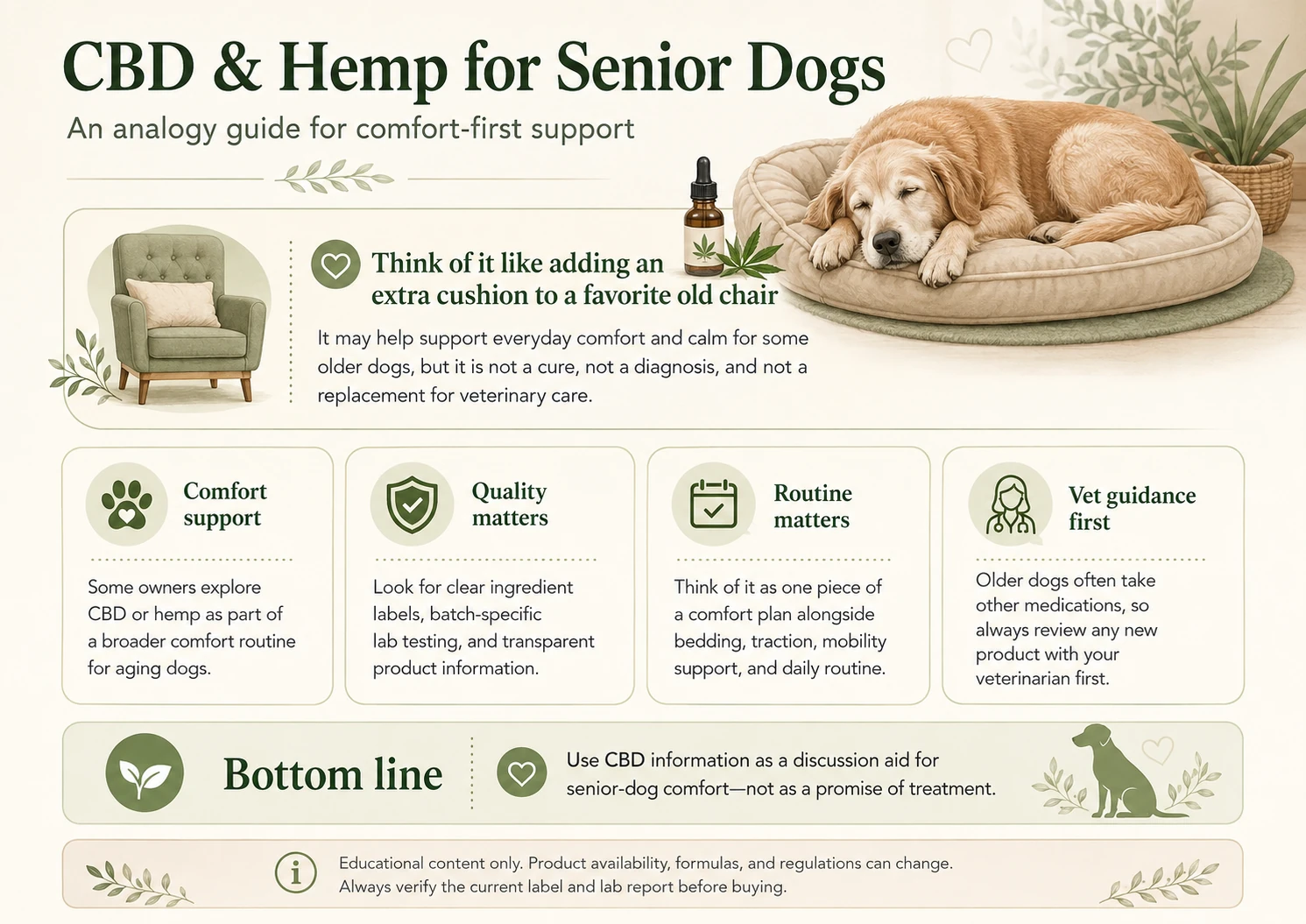
CBD can affect drug metabolism, and veterinary CBD studies have reported findings such as increased alkaline phosphatase in some dogs. A senior dog may also be taking anti-inflammatory drugs, seizure medication, heart medication, sedatives, or other products that change the risk picture. Give your veterinarian the exact product name, ingredient panel, CBD amount per chew, and any available COA before adding it to an existing routine.
Do not use a chew to explain away new mobility symptoms
New pain, sudden weakness, repeated falls, dragging a limb, swelling, marked lameness, loss of appetite, vomiting, unusual sedation, tremors, or a major behavior change deserves veterinary attention. FDA lists lethargy, depression, heavy drooling, vomiting, agitation, tremors, and convulsions among possible signs of adverse cannabis exposure in pets. A product purchase should never delay evaluation of a new medical problem.
We do not publish our own CBD dose
Senior Dog Comfort does not prescribe a CBD dose or tell readers to increase, decrease, split, combine, or substitute doses. Follow the current product label and your veterinarian's instructions. This is especially important for older dogs, dogs with liver disease, dogs taking medication, and dogs using multiple supplements or calming products.
State availability and shipping rules can change
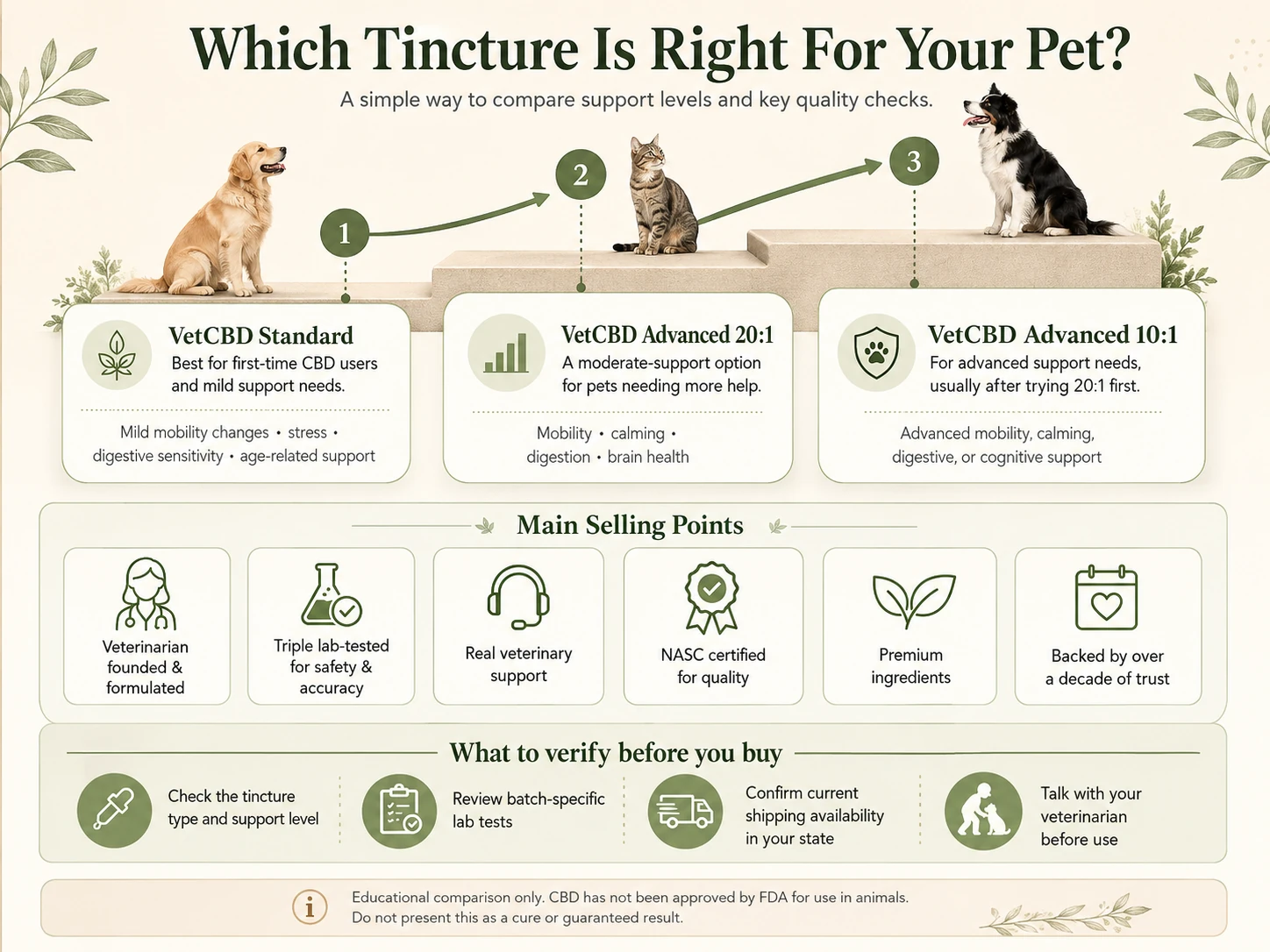
CBD and hemp-product rules are not uniform across the United States. VetCBD's current product-page shipping notice and its sitewide footer do not display identical state restriction lists. Because those notices can change and may apply differently by product, Senior Dog Comfort does not publish a fixed “allowed states” list. Check the current VetCBD product page, checkout eligibility, and your own state rules before ordering. This page is informational and is not legal advice.